Arrival song ORIGINAL / 2029
Open the Gate
CALL OPEN THE GATE
ANSWER LEAVE ROOM ON THE RAIL
A useful first song: short vowels, one visible rest, and an answer a stranger can learn before kickoff.
POINTCAST 25 · AUDIO PRACTICE AREA · YEAR 2029
A stadium song should be learned somewhere kind before it is expected somewhere loud.
WHY A PRACTICE COMMONS?
Songs do not become traditions because they are launched. They become traditions because the easy part is clear, the difficult part belongs to someone, and people have a low-pressure place to try again.
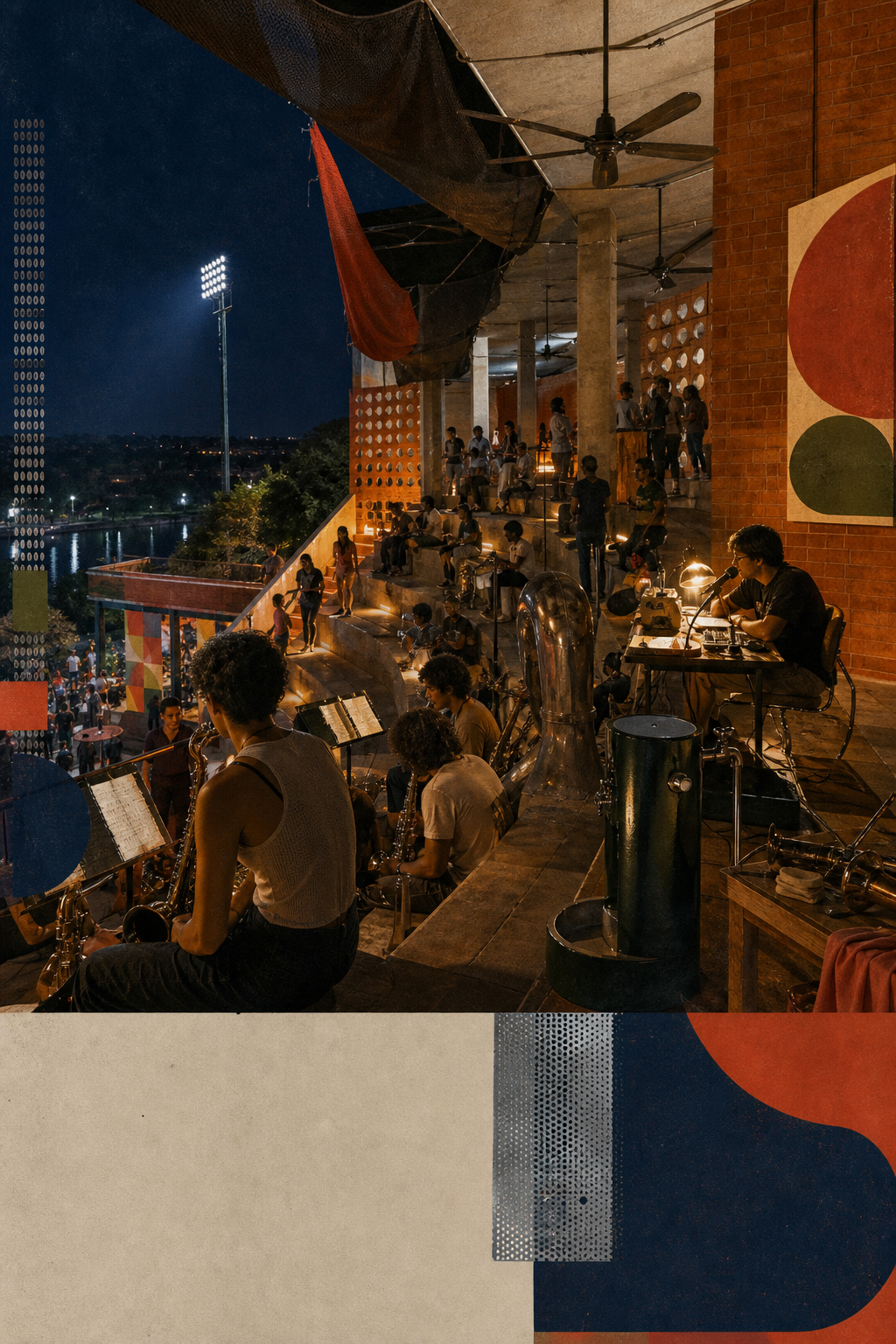
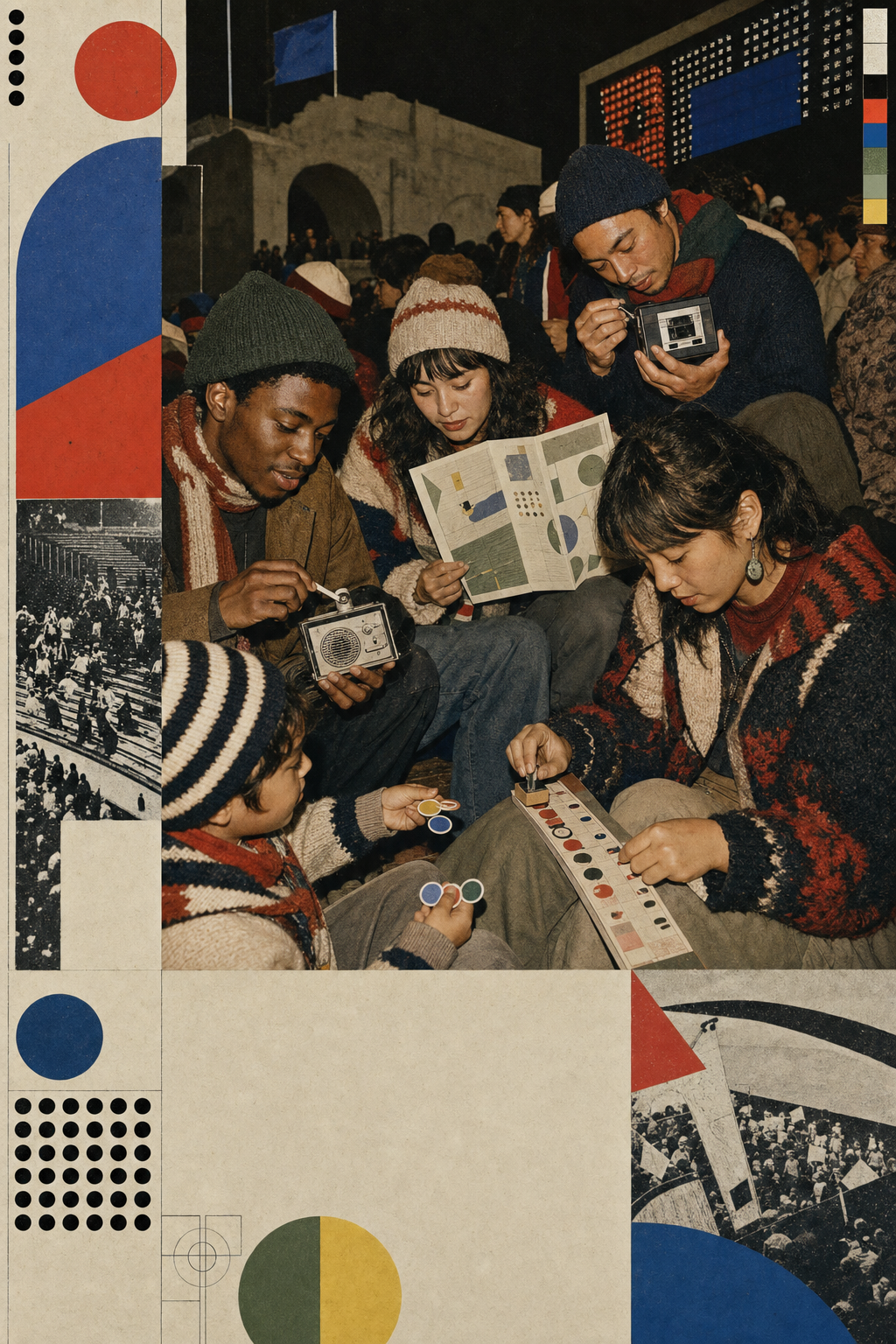
The Song Yard puts that place beside the transit porch and print hall. Learn a call on Tuesday. Print the words on Friday. Let four parts find one another on Saturday. Keep the last version quiet enough for the walk home.
THE PUBLIC REHEARSAL DESK
Every sound is synthesized live from oscillators and generated noise. These are original PointCast exercises—not official school music, sampled crowds, or reconstructed fight songs.
A useful first song: short vowels, one visible rest, and an answer a stranger can learn before kickoff.
The yard is quiet. Choose a part or open the whole bowl.
One clear entrance. Stay in speaking range. Leave air after the phrase.
OPTIONAL LOCAL PITCH LISTENER
Stop the guide, allow microphone access, and hum the target gently. The listener estimates pitch inside this browser. It never records, stores, transmits, identifies, or scores your voice.
Off by default. Microphone permission is optional.
A TWELVE-MINUTE PRACTICE
A simple public rehearsal makes authorship, access, range, and participation visible before the crowd is asked to perform.
The guide sounds once. Hum gently. Nobody earns points for arriving loud.
Half the room takes the call. Half takes the answer. The floor and hands stay silent.
A low two-note part makes the entrances feel inevitable without turning into a backing track.
Transit Porch, Student End, Band Terrace, Afterglow Table. Each zone enters after the previous zone leaves space.
The final pass belongs to people. If it collapses, the phrase is not ready yet—and that is useful information.
EIGHT RULES FOR A SONG PEOPLE CAN ENTER
Seven seconds is enough for a first phrase.
Give the crowd one entrance it can see.
Write the low part for ordinary speaking voices.
Leave an empty beat where the next section can enter.
Print the words; do not require a stadium app.
Practice outside the moment of maximum pressure.
Keep a quiet version for children, elders, workers, and the walk home.
A song becomes tradition through repetition and care, not launch copy.