Make + build
fabricateI can turn a sketch into a useful object, fixture, textile, circuit, vessel, or small run.
A call for skill · not assigned roles
Bring one thing. Ask for one counterpart. Open one line.
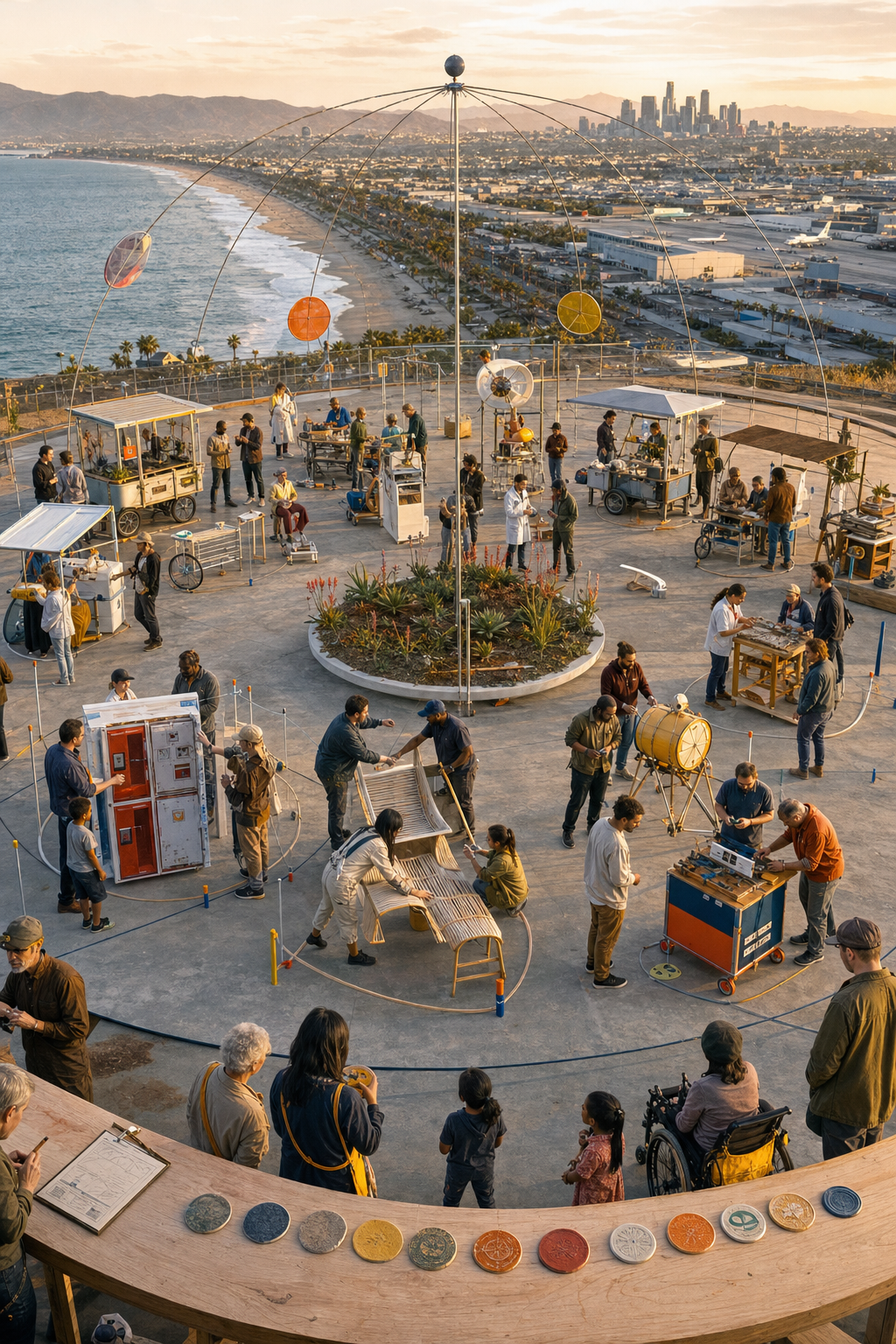
Do not join “the community.” Help finish one useful thing.
01 · What can you bring?
A skill lane is a declaration, not a permanent identity. Choose the useful action you want to offer now. You can change lanes, combine them, or stop.
I can turn a sketch into a useful object, fixture, textile, circuit, vessel, or small run.
I can diagnose failure, service materials, design for return, or teach maintenance.
I can translate a hard system, coach a first attempt, demonstrate a method, or build a lesson.
I can instrument, observe, audit, compare, inspect, or name what would count as evidence.
I can make arrival clear, hold a table, support access, pace a gathering, or help people feel expected.
I can photograph, record, draw, write, map, edit, caption, translate, or make instructions travel.
I can procure, pack, route, transport, inventory, return, or connect a material to its next useful stop.
I can schedule, budget, moderate, check consent, protect habitat, close loops, or give a project a clean ending.
02 · The open board
These six cards are editorial seed briefs from Radius 25. They are not scheduled events, funded jobs, permitted activities, or evidence that a team exists. They show the size of a useful invitation.
No participant names or declarations are published yet. The first release opens a safe way to make and pass a signal without creating a public personal-data directory.
Can one portable bench make beach gear easier to inspect, clean, patch, and return?
Finish line · One packed bench, four repeat repairs, a material log, and everything removed.
What reversible shade room feels calm, carries by hand, and tells every part how to go home?
Finish line · Three assemblies, one access pass, one wind stop rule, and a complete pack-out.
Can a difficult regional system become a ten-minute public lesson without losing the truth?
Finish line · One diagram, one demonstration, three listener tests, and a corrected field card.
Can a traveler move from a regional gateway to one local experience without confusion or a private car?
Finish line · One tested route, one accessible alternative, one multilingual card, and honest timing.
What can wind, waves, tools, and short voices teach when the recording setup stays small?
Finish line · A twenty-minute listening sequence, full credits, safe levels, and no captured conversation without consent.
Can sun, wind, water, and changing light become fair rules for a public game?
Finish line · Four element rules, one weather cancellation rule, one access adaptation, and a playable score.
03 · Declaration instrument
Your card exists only in this page until you choose Copy, Share, or Email. PointCast does not store it, count it, identify you, or post it. Keep private contact details out of public shares.
Browser-local composition · no database · no account · no analytics · no auto-post · no automatic match
04 · The agreement
A useful skill board needs clean edges more than a giant member count. These are the release rules for declaring, relaying, declining, paying, and closing.
Declare a capability, not a personality category or permanent communal role.
Ask for one counterpart around one finishable brief; broad networking comes later.
Use an alias if you prefer. Do not place private contact details in text you plan to post publicly.
A relay means permission for one bounded introduction, not a mailing list or public directory.
Skilled labor, production, hosting, and review should be paid when a project becomes real.
Anyone can decline, pause, leave, or ask for their introduction request to be deleted.
No beach, campus, shop, workplace, agency, or venue is available until its actual steward says so.
The first score is whether a small thing finished safely, usefully, accessibly, and with a clean ending.