Fictional scene / original generated art No people. Just what remains.
OBJECTS THAT HOLD A LIFE
Some lives become a legend. Look closer: a cup, a street, a page that hasn’t given up.
Four original PointCast tribute poems, written by Codex with AI assistance. New writing for this ode; these are not poems or quotations by Bukowski.
Read at your own pace. Each chapter’s motion settles after a few seconds. The motion control and your device’s reduced-motion setting keep everything still.
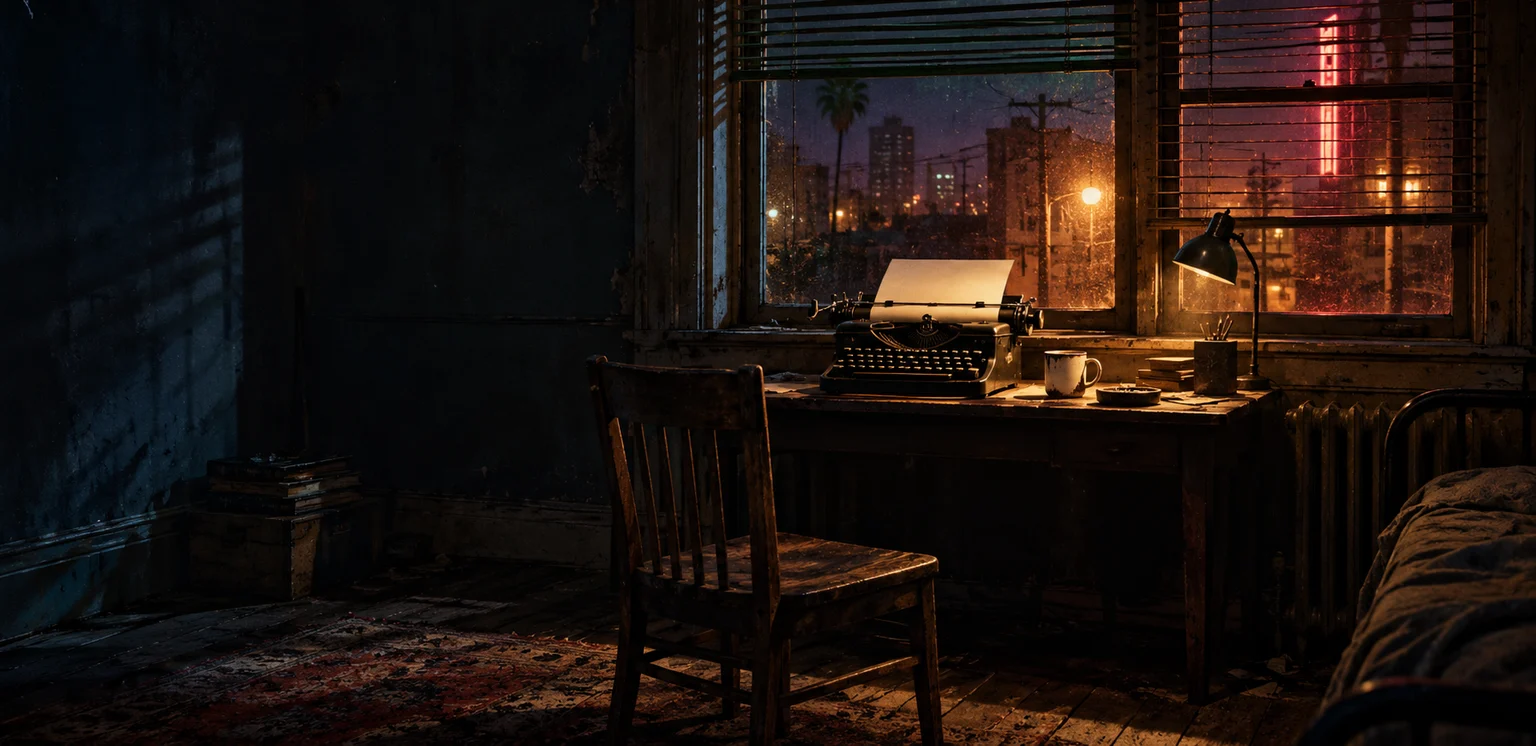
The room / original generated artwork11:47 PM
01 / THE ROOM
A room can hold a whole night.
Start with a desk. No monument. No face. Just the objects left to keep the light company.
After the shift
Original tribute poem / Codex for PointCast
The cup has a small crack.It keeps the coffee anyway. Outside, the last buscarries its rectangle of lightpast the window. On the desk, a blank sheetwaits without askingwhat the day was worth.
A new poem for this tribute, about the dignity of a small, unfinished evening.
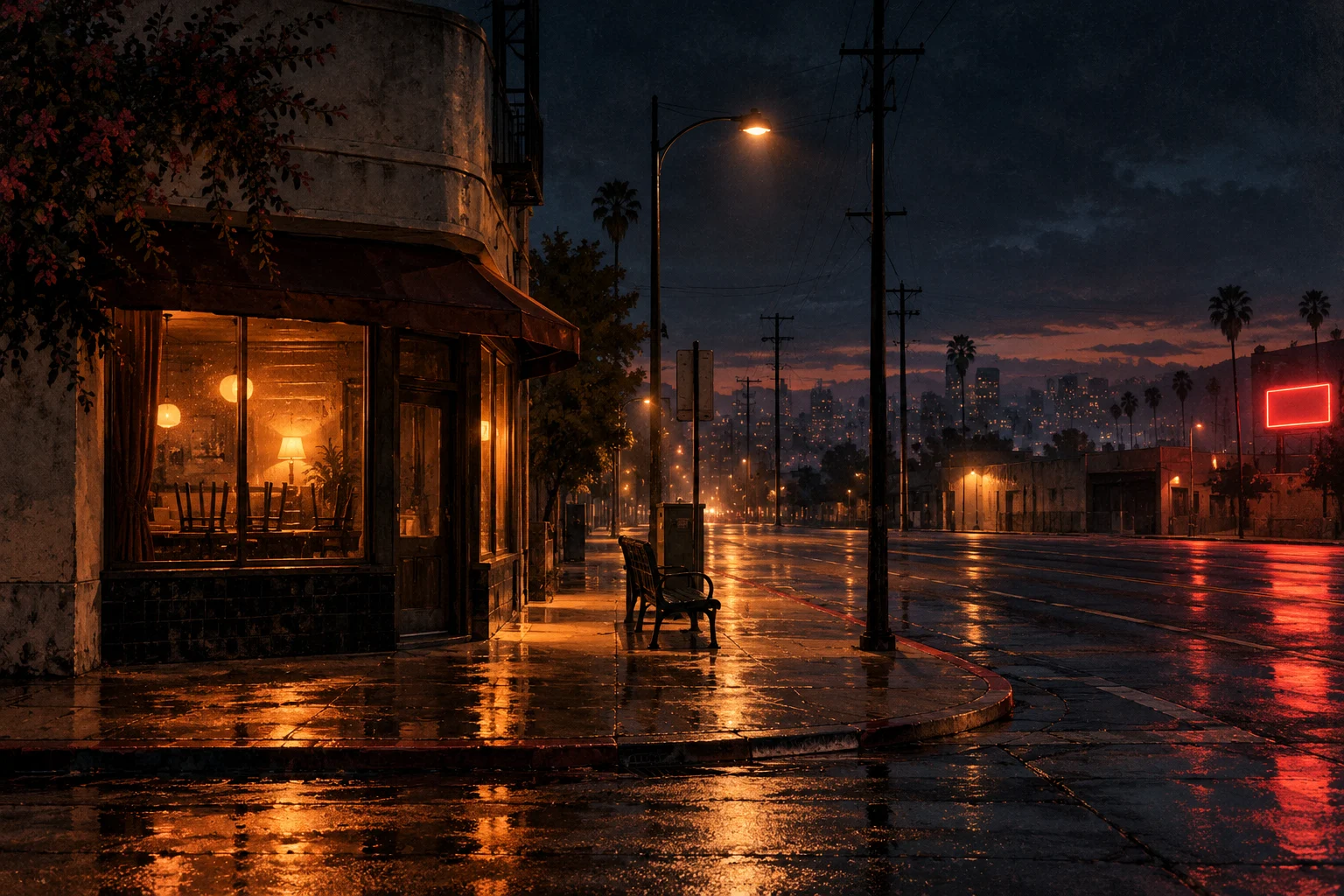
A closed cafe. A bus bench. A pavement that remembers the light longer than the window does.
Corner light
Original tribute poem / Codex for PointCast
The café closes.Its window stays warm. Rain puts the signon the pavementwhere nobody needs to read it. A bus bench holdsthe shape of waiting. The street has roomfor one more ordinary tomorrow.
A new poem for this tribute, about noticing the city after its public day is over.
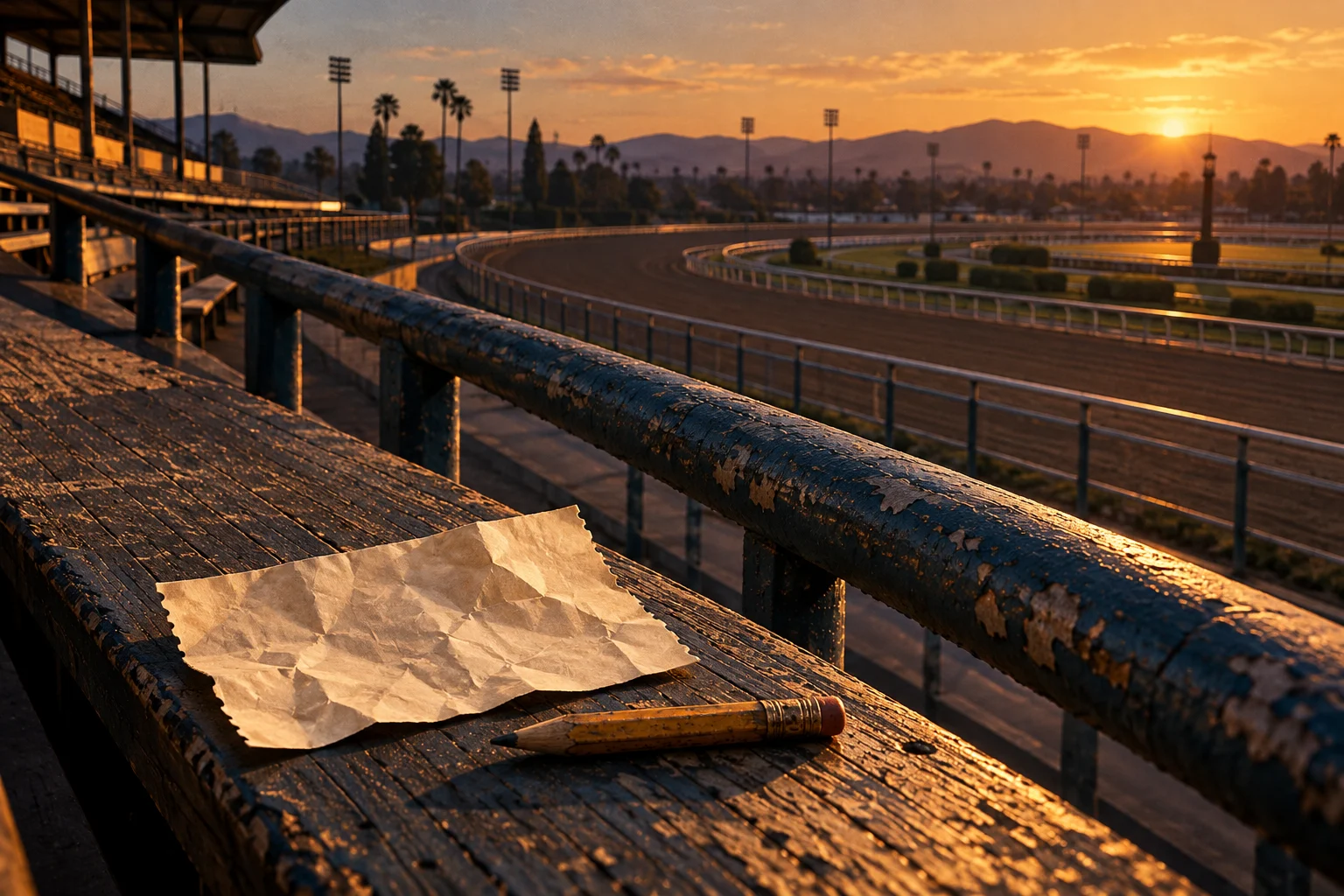
The ticket / original generated artwork03:04 PM / A MEMORY
03 / THE TICKET
Even the losing ticket has a shape.
A brief turn toward daylight. The race is over; what remains is paper, a pencil, and a little weather.
Paper weather
Original tribute poem / Codex for PointCast
The ticket curlsin the afternoon heat. A pencil lies beside it,finished with prediction. Beyond the rail,the track takes backits quiet oval. There is no prizefor keeping this scrap. I keep itfor the light.
A new poem for this tribute, about a small object that outlasts expectation.
The room, returned / original generated artwork04:32 AM
04 / THE PAGE
Leave a little light on the page.
Return to the desk. The night has changed nothing grand. There is still a page. That is enough to begin.
Before morning
Original tribute poem / Codex for PointCast
The first truck movesthrough the sleeping street. A key touches paper.A little mark appears. Nothing is rescued.Nothing is explained. But the room hasone more thing in itthan it had before.
A new poem for this tribute, about making something without requiring it to redeem everything.
Charles Bukowski (1920–1994) was born in Andernach, Germany, grew up in Los Angeles, and died in San Pedro. The city’s jobs, rented rooms and outsiders became recurring material. Academy of American Poets ↗
He sorted mail at the Los Angeles Terminal Annex in the 1950s and 1960s. At 49, support from John Martin of Black Sparrow Press allowed him to write full time. His first novel, Post Office, appeared in 1971. The Huntington ↗
Direct, conversational language could hold humor, loneliness and tenderness alongside the hard public persona. Henry Chinaski, a recurring character, is roughly autobiographical; fiction is not a documentary record. Exhibition context ↗
THE READING DESK
Go to the work.
Books, criticism and archives. Follow the source; keep your own judgment.
01
THE NOVEL
Post Office
Begin with work. The 1971 first novel draws on postal life through Henry Chinaski, Bukowski’s roughly autobiographical fictional character.
Links lead to independent publishers and libraries. Editions, access and availability may change. PointCast does not sell or stock these books.
A few ways to read slowly +
Notice an ordinary object and what the sentence makes it carry. Listen for the break between a joke and a wound. Ask what the speaker observes, and what the speaker refuses to see.
Original PointCast tribute poems, written by Codex with AI assistance, October 2026. These are new writing for this independent tribute, not poems or quotations by Charles Bukowski.
No Bukowski poems or literary excerpts are reproduced here. Biographical prose is newly written from the cited sources. Reading links lead to publishers, criticism, and library or archive records; linked access and availability are controlled by those providers. Fictional generated scenes are not archival photographs. This tribute does not claim estate or publisher endorsement.
Catalog record for Interviews and Encounters, 1963–1993, edited by David Stephen Calonne. Access is restricted; availability may change.
Poetry Foundation’s direct page returned an access error during research; its indexed essay was inspected. Library catalogs describe holdings and restrictions, rather than guaranteeing online reading.