From dark rooms to computational images, the camera keeps changing how we notice, remember and share.
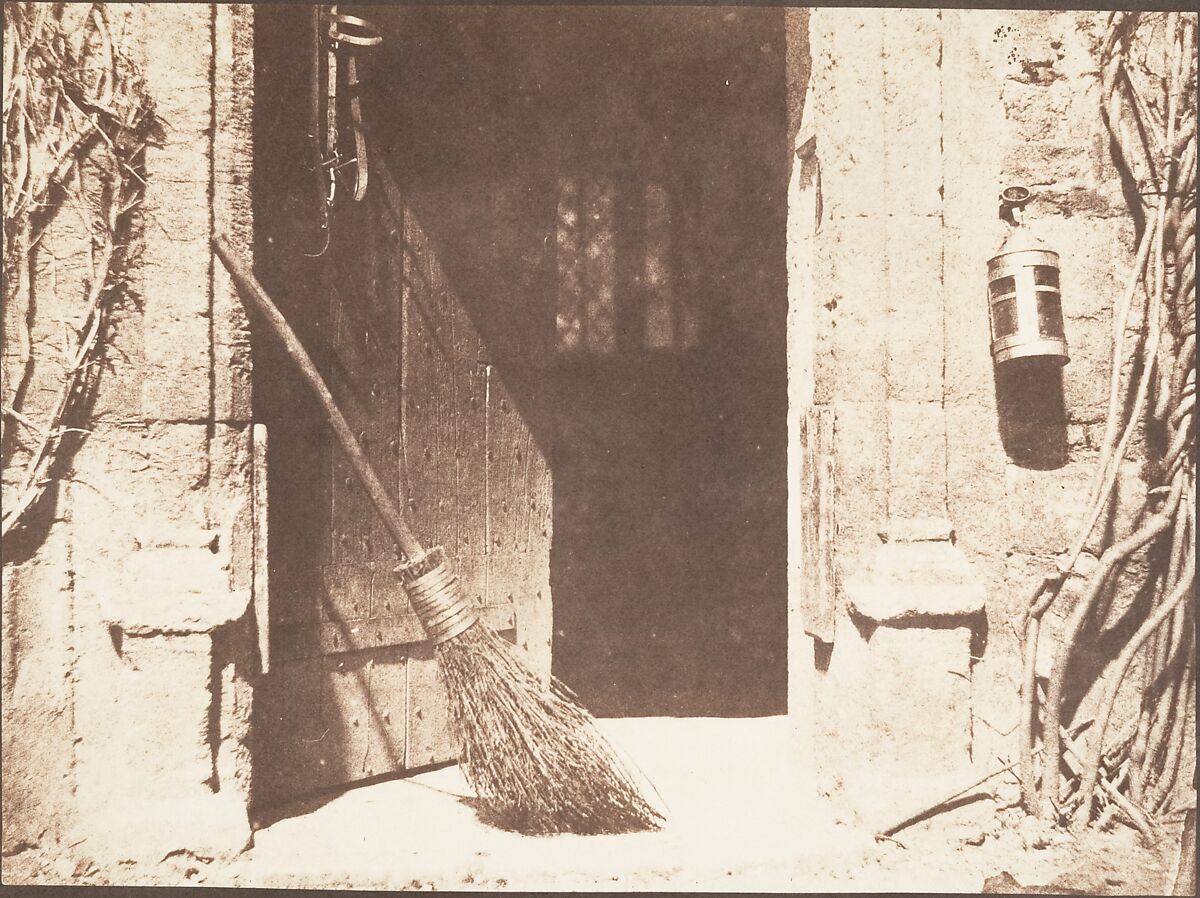
William Henry Fox Talbot, The Open Door, before May 1844. The Metropolitan Museum of Art, Gilman Collection, Purchase, Joseph M. Cohen and Robert Rosenkranz Gifts, 2005. Object 2005.100.498. Public Domain. Museum record · Open Access / CC0
What does this mean for your next camera?
The companion buying guide compares the whole photographic experience: carrying, controls, lenses, transfer, and ongoing cost.
A camera is a machine for deciding what deserves to survive. Sometimes that decision involves a wooden box and a day of sunlight. Sometimes it is a thumb on a phone, with several exposures quietly combined before the result appears. The interesting history sits between those gestures: who could make a picture, how quickly it could travel, and what people believed when they saw it.
That history also makes a better shopping guide. A beautiful camera can invite you outside; an awkward one can stay in a drawer. A print can become a gift; a file can become a publication. Before comparing megapixels, decide which of those experiences you want. Photography's past is a catalog of different answers, not a ladder on which every newer machine makes the older ones pointless.
Before photographs, there was an image with nowhere to stay
The camera obscura turns a dark enclosure into a viewing device: light passing through a small opening projects the outside scene onto an opposite surface, inverted. The principle was studied long before anyone could chemically preserve its image. Lenses and portable boxes made that projection useful to artists and investigators. Calling any one person the inventor of the camera collapses centuries of optical knowledge into a misleading origin story.
The harder problem was persistence. Joseph Nicéphore Niépce experimented with materials that changed under light. His surviving view from a window at Le Gras is now dated 1827 by its custodian, the Harry Ransom Center. Its account describes light-sensitive bitumen on pewter and exposure over several days. The familiar exact eight-hour story is therefore too neat. Even photography's foundational object rewards checking the original record instead of repeating a caption.
Two futures: the precious object and the reproducible image
In 1839, Daguerre's process gave the public something astonishingly detailed: a unique image on silver-plated copper. Its precision matters, but so does its singularity. A daguerreotype was an object to encounter, not a negative from which a stack of identical prints could simply be made. Daguerre had worked with Niépce; the achievement emerged from collaboration, experimentation and institutional backing.
William Henry Fox Talbot pursued a different route. His paper-negative process made reproduction central. Developing a latent image dramatically shortened exposure; he patented the calotype in 1841. John Herschel's work on fixing helped stabilize photographs. These were connected advances, not one eureka moment.
Talbot's The Open Door, made before May 1844, also refuses the idea that early photographs were merely technical demonstrations. A broom, doorway and shifting light could carry a composition. The tool was new; the pleasure of noticing ordinary things was already there.
Frederick Scott Archer's wet-collodion process, introduced in 1851, delivered a powerful practical compromise, but plates had to be exposed and processed while wet. Imagine packing the procedure as well as the camera. Later dry-plate and roll-film systems helped detach the act of seeing from the immediate labor of preparation and development.
The Kodak camera of 1888 made that separation into a consumer proposition. George Eastman's company offered a simple roll-film hand camera within a larger processing system. The Brownie followed in 1900. The lesson for today's buyer is not merely that cameras became smaller. Ease came from everything around the picture: loading, processing, printing and the confidence that the result would arrive.
Modern equivalents include a reliable phone transfer, straightforward editing and an archive you can actually find. A camera that wins a specification chart but loses you at those steps has misunderstood the original snapshot bargain.
Leica's 1925 Leica I, developed from Oskar Barnack's experiments at Leitz, helped establish 35mm still photography as a practical portable system. It did not invent every element of small-camera photography. Its importance lies in the combination: a compact body, cinema-derived film and a way to work with greater mobility.
Portability is also a visual style. You can wait differently, move differently and photograph between destinations. That is an interpretation of the tool's possibilities, not a claim that a particular lens automatically produces great street photography.
Nor should history become a parade of camera brands. Dorothea Lange's 1936 photographs of Florence Owens Thompson in Nipomo remind us that images have subjects, circumstances and consequences. The Library of Congress preserves the surrounding series, not just the frame known as Migrant Mother. A camera comparison can tell you how equipment behaves. It cannot tell you whether you have understood the person in front of it.
Color, systems and the photograph you could hand over
Color film changed the palette of everyday memory. Kodak introduced Kodachrome in 1935, initially for 16mm movies, with 35mm slides following in 1936. That distinction matters: a date for a brand is not automatically a date for every format bearing its name.
The single-lens reflex offered another kind of confidence: viewing through the taking lens. Nikon's F, introduced in 1959, became an important system camera, with interchangeable components and lenses. It was not the first SLR. Its place in history shows why a camera body is also a commitment to a surrounding system.
Instant photography rearranged the social transaction. Edwin Land publicly demonstrated Polaroid's system in 1947; the Model 95 went on sale in 1948. The photograph could become part of the encounter instead of arriving long afterward. The chemistry was sophisticated, but the invitation was simple: stay here and watch the picture appear.
Steven Sasson's 1975 Kodak prototype is a landmark in self-contained digital camera development. It belongs within a wider history of electronic sensors and image processing, rather than a claim that one engineer invented all digital imaging. Recording an image electronically would eventually alter the cost of experimentation, the speed of review and the route to publication.
The architecture changed too. Panasonic's Lumix G1 arrived in 2008 using the Micro Four Thirds system developed with Olympus. Removing the reflex mirror supported a different design approach, with electronic viewing and interchangeable lenses. Calling it the first camera without a mirror would erase a great deal of earlier history.
Phones made another decisive connection: capture and distribution in the same object. Sharp's J-SH04 offered a camera and picture emailing in 2000. The precise first-camera-phone contest depends on definitions; the larger shift is clearer. A photograph could be a message sent from the place where it happened.
Computational photography makes the image-making pipeline part of the camera's identity. Google's HDR+ research describes a finished photograph assembled from a burst of exposures. Combining frames can improve noise and tonal detail, allowing small camera systems to do more than a single exposure might suggest.
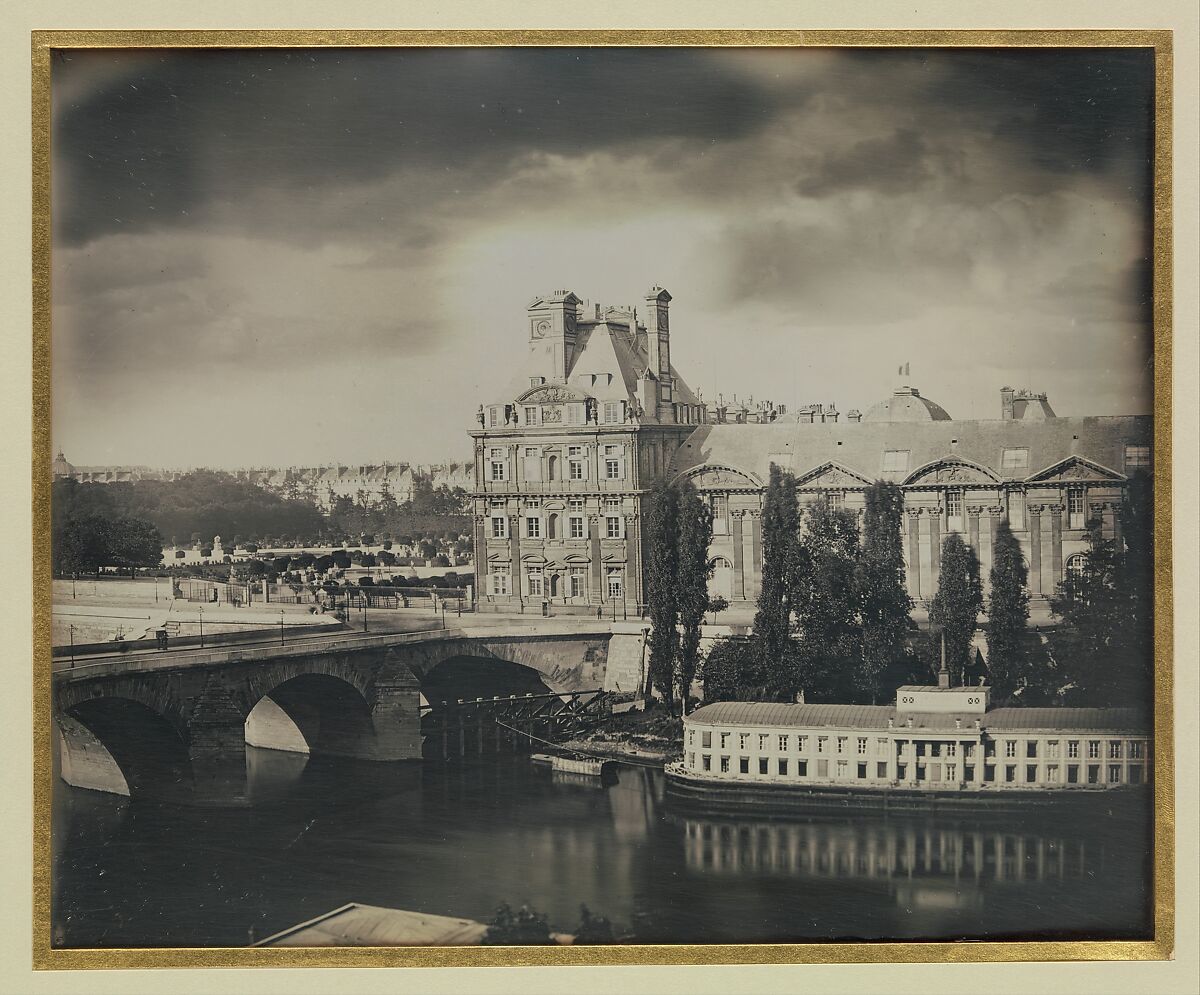
That is not the same operation as generating a fictional scene. But it does complicate the comforting idea that a photograph is simply whatever the sensor saw at one instant. Processing decisions shape the result, whether made in software, a laboratory or an exposure technique. In an 1849 Paris daguerreotype held by the Met, Choiselat and Ratel masked part of the plate during exposure to manage the sky.
For a buyer, the useful question becomes practical: do you like the rendering, and can you change it? Compare faces, difficult highlights, movement and night scenes. A larger number on the box cannot settle those preferences.
Marie-Charles-Isidore Choiselat and Stanislas Ratel, The Pavillon de Flore and the Tuileries Gardens, 1849. The Metropolitan Museum of Art, Gilman Collection, Purchase, The Horace W. Goldsmith Foundation Gift, through Joyce and Robert Menschel, 2005. Object 2005.100.29. Public Domain. Museum record · Open Access / CC0
Why yesterday’s objects still feel current
Two verified signals complicate the story of inevitable dematerialization. Fujifilm reported in April 2025 that cumulative instax sales had exceeded 100 million units, counting both instant cameras and smartphone printers. Ricoh launched the half-frame PENTAX 17 in 2024, with manual winding and zone focusing. Those are concrete products and a manufacturer-reported milestone, not proof that everyone is abandoning phones.
Our editorial reading is narrower: some people want a more deliberate relationship with pictures. A winding lever makes the sequence tangible. A limited roll introduces a budget of attention. An instant print creates something another person can carry away. These are experiences, not automatic improvements in image quality.
Design helps communicate that choice. A metal dial, textured grip or pocketable silhouette can make a camera feel like an everyday companion. That feeling deserves consideration, alongside weight, reliability and cost. Style is useful when it makes you photograph; it becomes expensive when it substitutes for practice.
The next camera skill is knowing what a picture claims
Generative tools make provenance an increasingly important part of photographic literacy. C2PA Content Credentials can provide a verifiable record associated with a file's origin and edits. They do not prove that the scene was unstaged, the caption accurate or the photographer fair. Missing credentials are not proof that a picture is fake, either.
The strongest future-facing habit is to preserve originals, disclose consequential changes and keep the circumstances of a photograph attached to it. When an image matters, ask who made it, where it first appeared and what independent evidence supports the claim. A convincing image is not its own investigation.
Then return to the simpler task: go out and notice something. Camera history offers many ways to do that, from a dark box to a phone. The best purchase is the tool whose compromises you understand and whose company makes you want to look more carefully.
Self-guided exercises from the University of El Segundo context. Use the camera or phone you already have; a sketchbook or a nearby window can support observation. Keep your fieldnotes private. No class schedule, instructor, accreditation, enrollment or purchase is implied.
Materials: Cardboard box, Tracing paper, Tape, Small opening prepared safely by an adult, Bright outdoor scene
Make a closed box with a small opening at one end and a tracing-paper viewing screen opposite it. Shield stray light.
Point toward a bright building or tree, never the sun. Observe the projected screen rather than looking through the opening.
Change the opening size and record changes in brightness and definition.
Reflect: What did the box do without film, a sensor or a battery? What tradeoff appeared as the opening changed?
Never view or photograph the sun through this device. Do not use knives or sharp tools without appropriate supervision. No chemicals are needed.
2. Make a twelve-frame El Segundo walk
Test whether a shooting constraint improves attention.
Materials: Any camera or phone, Notebook
Choose a familiar, safely accessible public-space route in El Segundo. Check current access and posted restrictions.
Make no more than twelve frames: three light studies, three textures, three transitions between spaces, and three frames of your choice.
Keep screens away while crossing streets. Avoid restricted airport, industrial or private property; do not block paths.
Ask permission for close identifiable portraits; skip children and sensitive situations. Do not publish other people’s images as part of this exercise.
Reflect: Which frame needed better observation rather than better equipment?
Choose daylight and an accessible route appropriate for you. Respect privacy and anyone asking not to be photographed.
3. Compare the whole photographic experience
Create repeatable fieldnotes before a purchase.
Materials: Current phone or camera, Optional borrowed alternative, Same still-life scene, Notes template
Photograph the same static subject in daylight and indoor light, with framing matched as closely as possible. Record any differences in angle of view.
Compare a moving subject only with consent and without unsafe staging. Note missed focus, blur and time to capture.
View the outputs at the same display size without assuming more pixels means a better image.
Record carrying comfort, control access, transfer time, editing effort and anticipated ongoing costs. State that a small trial is not a laboratory benchmark.
Reflect: Which limitation affected the photographs you actually want to make? What did the more convenient device do better?
4. Read a photograph’s history
Distinguish image appearance, provenance and factual truth.
Materials: One of your own non-sensitive photographs, A duplicate for editing, An image editor, Paper or notes app
Keep the original intact. Make a crop and a tonal edit on a copy, logging each step.
Write a literal caption containing only what you know firsthand. Write a second, misleading caption without publishing it, and identify why the same pixels cannot settle the claim.
Inspect available metadata or Content Credentials locally if your tools support them. Do not upload a private image merely to complete the exercise.
Compare your record with an open-access museum image’s creator, date, medium and catalog entry.
Reflect: What does the file record establish? What requires outside evidence? What information disappears when an image is copied or stripped of context?
Do not publish the misleading caption or imply that missing credentials establish fakery.
The terms behind the camera
Camera obscura
A dark enclosure that projects an inverted scene through a small opening or lens; it does not inherently record it.
Negative / positive
A negative reverses tonal relationships; a positive restores ordinary light-dark relationships. A reusable negative can make multiple prints.
Daguerreotype
A unique photographic image on a polished silver-plated copper surface; not a print from a negative.
Calotype
Talbot’s developed paper-negative process, patented in 1841.
35mm
A film width; the familiar full-frame still image is approximately 36×24mm, but other frame sizes can use 35mm film.
SLR / DSLR
A single-lens reflex uses a mirror for optical viewing through the taking lens. A DSLR records digitally.
Mirrorless
A digital-camera category without an SLR reflex mirror; electronic viewing is common. The absence of a mirror alone is not a modern invention.
Focal length / equivalent
Focal length describes an optical property of a lens. A 35mm-equivalent focal length makes angle-of-view comparisons across formats easier.
Aperture
The lens opening, stated as an f-number; it influences light transmission and depth of field along with other factors.
Shutter speed
The exposure duration; it changes motion rendering and the risk of camera-shake blur.
ISO
A standardized sensitivity or exposure-index setting; on digital cameras, raising it does not physically collect more light.
Dynamic range
The span between dark and bright scene information a capture can usefully retain.
RAW
A file retaining relatively early-stage image data for processing; it is not an untouched or automatically truthful picture.
Computational photography
Image formation or improvement through computation, often including multi-frame alignment and merging.
Provenance
Information about a file’s origin and changes; useful evidence, not a substitute for verifying a depicted claim.
Sources and image credits
Checked October 5, 2026. Museum dates and object records are preferred to repeated folklore. Manufacturer milestones do not measure consumer motives.
June 18, 2024 new half-frame film camera; manual winding, zone focus. Youth interest claim is manufacturer observation, not independent market estimate.