An independent learning and original-art project. All shop controls are local simulations. No deposits, payments, redemption or orders.
001 / Original Currency artwork · digital mockup · no monetary value Not a historical note, issued currency, or approved physical specimen.
24OBJECT & SYSTEM CASES
18SELECTED CURRENCY CODES
12UES LEARNING MODULES
05PRODUCTION RESOURCE ROUTES
01 / The atlas
Many histories. Shared questions.
Credit, paper, metal, relationships and networks overlap. These selected cases are entry points—not a universal barter-to-crypto timeline.
Reading key / six useful distinctions
Money: a community’s means of expressing prices, making payments or carrying purchasing power. Currency: an identified unit or circulating monetary system; a registry must say whether it describes a unit, issuer or physical issue.
Payment rail: infrastructure or instructions that move balances. Collectible: an object with historical, artistic or personal interest; face value and collector price are separate. Token: a context-dependent entitlement or digital record whose rights come from its design and terms. Legal tender: a jurisdiction-specific legal category, never inferred from appearance.
Dates below identify selected objects or events. They are not a claim about the origin of all money.
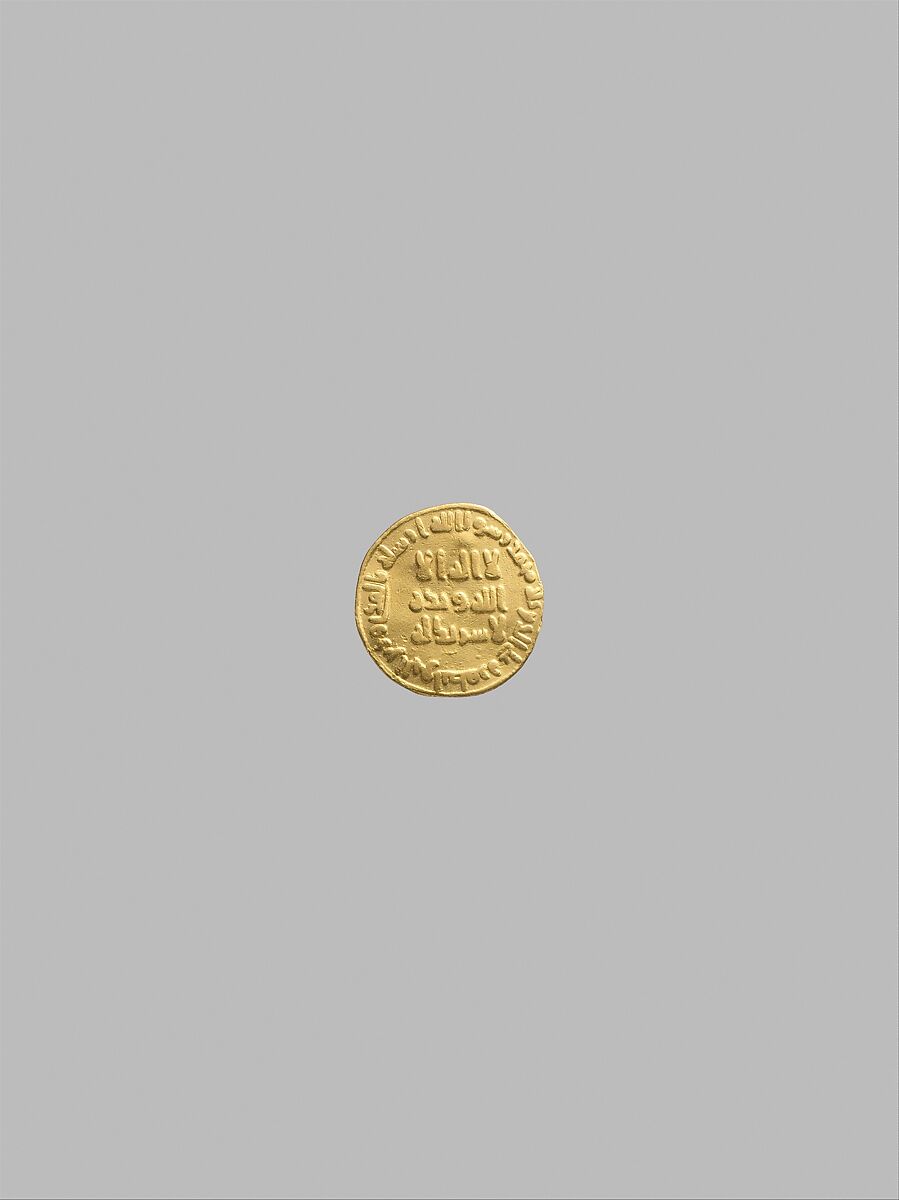
West Asia: silver lending at Kanesh, ca. 20th–19th century BCE; Lydian electrum example, ca. 575 BCE; Syrian dinar, 698–99 CE.
South and East Asia: distinct ancient punch-marked and cast-bronze coinage; Qi knife example, ca. 350 BCE; Ming note example, 1368–98.
Africa and Oceania: cowrie trade networks span multiple periods; the Yapese rai museum example is 20th-century, not the tradition’s origin.
The Americas: Potosí mining from the 16th century; encased U.S. postage, 1862; Pismo Beach clamshell, 1933; Brazil’s Pix launch, 2020.
Europe: English running cash-note fragment, 1697; Penny Black, 1840; German Notgeld, 1914–24.
Source links and object-level uncertainties appear in the cards below. Living traditions such as wampum should not be confined to a distant past.
24 cases shown
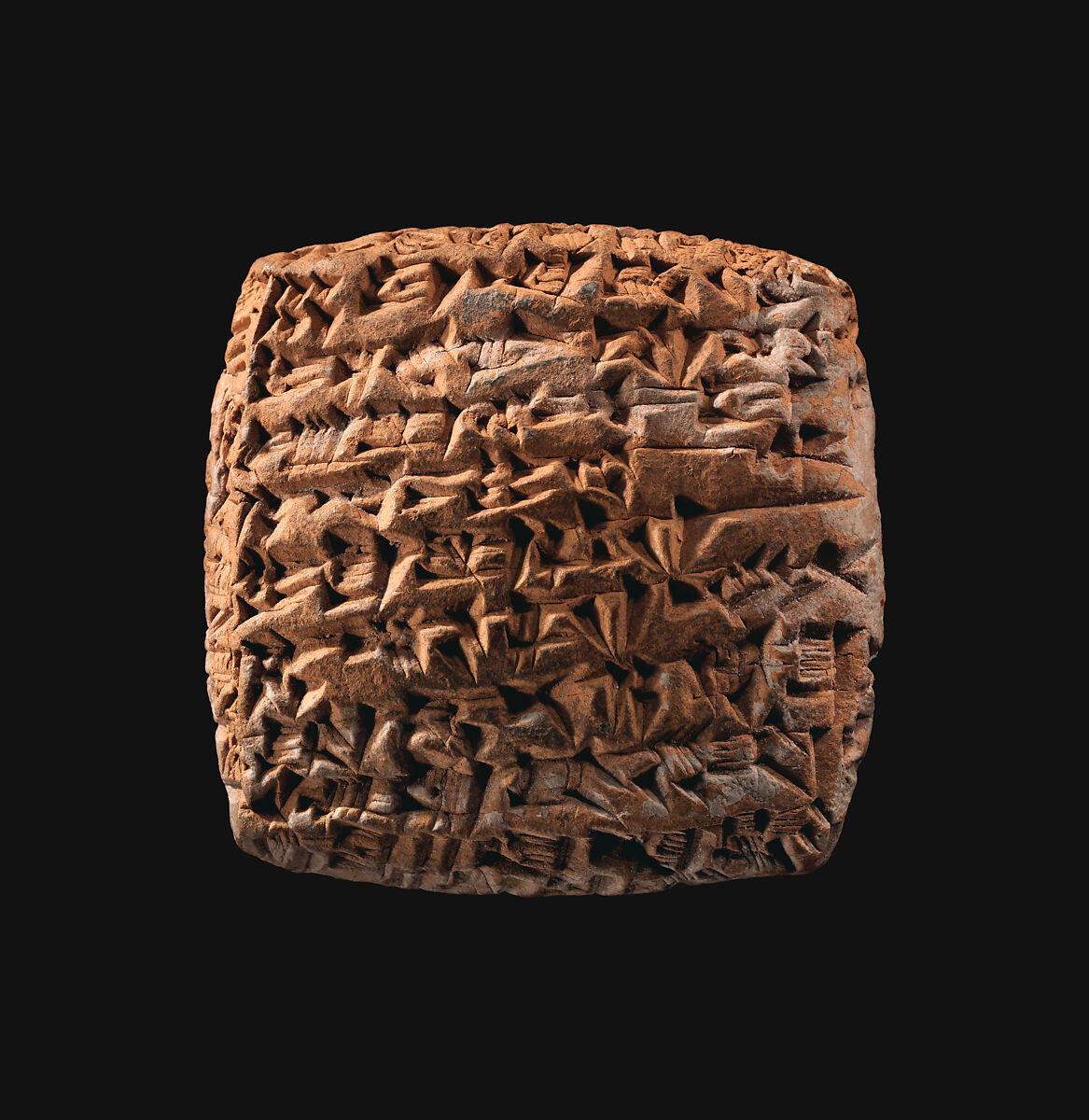
West Asia / CreditThe Met · 66.245.17a · Klejman gift, 1966 · Public Domain
A debt, written in clay
ca. 20th–19th c. BCE
An Old Assyrian tablet from Anatolia records silver owed to a merchant, staged repayment and witnesses. The object puts writing and enforceable promises at the center of monetary history. Coins are not required for a sophisticated loan.
Read the terms: who owes whom, in what unit, and when?
The Met’s Ming-period yi guan is ink on mulberry-bark paper. Its stated denomination translates a count of cash into a portable printed object. A denomination is a claim; it does not by itself establish purchasing power.
Compare the physical size and material with a modern note.
Onondaga describes wampum as a vital Haudenosaunee cultural practice. Shell beads and belts carry commitments and histories. Reducing these objects to a primitive form of cash removes the social and political relationships they record.
Use community-authored accounts before assigning an economic category.
Potosí connects the material history of money to colonial extraction. UNESCO’s account includes the mining infrastructure and forced Indigenous labor. Study the people and landscape behind precious metal, alongside the objects minted from it.
Map the route from a mine to a monetary object. Who bears the cost?
The Bank of England explains that commercial-bank lending creates deposits. A bank balance is a claim on an institution, rather than a box of banknotes assigned to one customer. Lending is constrained by policy, risk and the bank’s balance sheet.
Draw the loan and matching deposit on two balance sheets.
Legal tender has a narrow debt-settlement meaning in the UK. The term does not require every shop to accept every note. Monetary acceptance, contract terms and legal-tender status are related questions with different answers.
Separate a shop’s acceptance policy from settlement of a debt.
Brazil’s Pix is an instant-payment arrangement. Moving a balance quickly is different from creating a new unit of account. Interface, directory, settlement and underlying money belong in separate parts of a system diagram.
Draw what changes and what stays in reais when a payment moves.
NIST describes distributed ledgers and mechanisms for agreeing on their contents. A blockchain can record tokens and transfers, but the meaning and rights of an entry depend on its application. Technical immutability does not settle every off-chain dispute.
Identify the validators, upgrade authority and failure recovery.
The BIS examines stablecoins through monetary-system criteria including singleness, elasticity and integrity. Studying a stablecoin requires inspecting reserves, redemption terms, issuer and operating network; its name is not evidence of guaranteed value.
Compare holder rights with commercial-bank deposits.
The Federal Reserve describes a CBDC as a digital form of central-bank money. This is a definition, not a claim that a particular proposed public system is operating. Design choices include intermediaries, privacy, resilience and access.
List the choices a pilot must resolve before a launch.
The US Copyright Office and USPTO examine the gap between token ownership and intellectual-property rights. An edition record should say which physical item, file and license are included. A token alone does not automatically transfer copyright.
Write separate clauses for object ownership and reproduction rights.
An original art note can use numbering, narrative and print craft without promising redemption. This proposal treats the artifact as a collectible, with a visible creator record and no monetary value. No physical samples have been approved.
Design a civic story; document whose permission is needed.
Cowries were monetary objects in several regions, as well as adornments and cultural objects. The Smithsonian’s account connects their African trade history to power and enslavement. Avoid treating a material’s portability as a complete explanation of its social role.
Track supply and exchange power alongside the shell itself.
The Smithsonian’s forms-of-money exhibition includes a Yapese stone ring. Rai invites inquiry into remembered ownership and the story of an object’s acquisition. This museum object’s date is not the origin date of the tradition.
What must a community know for a stationary object to retain value?
The British Museum catalogs a Lydian third-stater made from electrum, weighing 4.67 g and measuring up to 13 mm. Its lion and incuse marks invite questions about issuing authority and recognition. It is an early coin example, not a claim to the first money.
Compare what a mark tells a user with what must be measured.
The RBI Museum presents silver punch-marked coinage among ancient Indian monetary forms. Individually punched symbols differ from cast shapes and later portrait coins. Regional chronology varies; a single date would flatten those differences.
Why does a coin need neither a round outline nor a ruler’s portrait?
The British Museum’s Qi bronze knife-money example is approximately 186 mm long. Its form opens a question about monetary recognition: an object can keep a familiar shape while acquiring a different use within exchange.
Distinguish evidence of shape from claims about actual tool use.
The Met’s Syrian gold dinar bears inscriptions following Abd al-Malik’s late-seventh-century monetary reform. Its textual design shows that repeated public messages need not be portraits. The date and collection identity are documented; interpretation should remain source-linked.
Annotate authority, lettering and material without inventing a reading.
The Bank of England Museum documents an early running-cash-note fragment recording a £22 deposit withdrawn in two payments. It brings a paper promise and the underlying account into the same story. Its function differs from the Ming paper object.
Where does a receipt end and transferable money begin?
The Smithsonian catalogs a one-dollar Pismo Beach clamshell made by Restwell Cabins. It offers a California case of improvised local money in 1933. Appearance and denomination alone do not tell us the full redemption or acceptance arrangements.
What evidence would establish who accepted it and on what terms?
The British Museum’s exhibition examines German emergency money over the First World War and its aftermath. Emergency use and collecting appeal are distinct roles; an issue’s design, date and use need to be checked individually.
The Penny Black prepaid postage. Its later value to collectors is a different question from the postal service represented by its original face value. Keep service entitlement, physical artifact and collector asking price in separate catalog fields.
How is prepaid postage different from general-purpose money?
During the U.S. Civil War coin shortage, encased postage protected stamps used as small-payment substitutes. Gault’s cases also carried advertising. The monetary role came from particular circumstances, not a timeless identity of all postage stamps.
The Bank of Canada Museum describes the made-beaver unit in fur-trade exchange. A company’s account unit and exchange terms affected the relationships between traders and Indigenous communities. Record power and negotiated terms alongside the token or tally.
Who determines a unit’s exchange terms, and who can challenge them?
Record issuer or creator, denomination, material, dimensions, date range, provenance, condition and rights. Keep face value, asking price and your interpretation separate. Never invent authenticity, scarcity, appreciation or community affiliation.
Related PointCast projects: Nouns Money explores its own collectible notes and sandbox journeys; Money is the existing spend ledger. Coast Reimagined remains a separate held art-chain study.
02 / Reference shelf
Currency code index.
A deliberately bounded selection from ISO 4217. Codes identify units; they are not exchange rates, payment networks or a verdict on where cash is accepted.
18 selected codes · source published 2026-09-17 · retrieved 2026-10-05. Country/entity mappings are from SIX List One. This is not a complete world registry, an issuer directory or a live legal-status service. EUR is a shared code; entities shown include Bulgaria from the current source.
18 entries shown
Code
Currency
Numeric
Minor-unit digits
Source entities
USD
US Dollar
840
2
AMERICAN SAMOA; BONAIRE, SINT EUSTATIUS AND SABA; BRITISH INDIAN OCEAN TERRITORY (THE); ECUADOR; EL SALVADOR; GUAM; HAITI; MARSHALL ISLANDS (THE); MICRONESIA (FEDERATED STATES OF); NORTHERN MARIANA ISLANDS (THE); PALAU; PANAMA; PUERTO RICO; TIMOR-LESTE; TURKS AND CAICOS ISLANDS (THE); UNITED STATES MINOR OUTLYING ISLANDS (THE); UNITED STATES OF AMERICA (THE); VIRGIN ISLANDS (BRITISH); VIRGIN ISLANDS (U.S.)
EUR
Euro
978
2
ÅLAND ISLANDS; ANDORRA; AUSTRIA; BELGIUM; BULGARIA; CROATIA; CYPRUS; ESTONIA; EUROPEAN UNION; FINLAND; FRANCE; FRENCH GUIANA; FRENCH SOUTHERN TERRITORIES (THE); GERMANY; GREECE; GUADELOUPE; HOLY SEE (THE); IRELAND; ITALY; LATVIA; LITHUANIA; LUXEMBOURG; MALTA; MARTINIQUE; MAYOTTE; MONACO; MONTENEGRO; NETHERLANDS (THE); PORTUGAL; RÉUNION; SAINT BARTHÉLEMY; SAINT MARTIN (FRENCH PART); SAINT PIERRE AND MIQUELON; SAN MARINO; SLOVAKIA; SLOVENIA; SPAIN
GBP
Pound Sterling
826
2
GUERNSEY; ISLE OF MAN; JERSEY; UNITED KINGDOM OF GREAT BRITAIN AND NORTHERN IRELAND (THE)
JPY
Yen
392
0
JAPAN
CNY
Yuan Renminbi
156
2
CHINA
INR
Indian Rupee
356
2
BHUTAN; INDIA
KES
Kenyan Shilling
404
2
KENYA
ZAR
Rand
710
2
LESOTHO; NAMIBIA; SOUTH AFRICA
NGN
Naira
566
2
NIGERIA
BRL
Brazilian Real
986
2
BRAZIL
MXN
Mexican Peso
484
2
MEXICO
CAD
Canadian Dollar
124
2
CANADA
AUD
Australian Dollar
036
2
AUSTRALIA; CHRISTMAS ISLAND; COCOS (KEELING) ISLANDS (THE); HEARD ISLAND AND McDONALD ISLANDS; KIRIBATI; NAURU; NORFOLK ISLAND; TUVALU
NZD
New Zealand Dollar
554
2
COOK ISLANDS (THE); NEW ZEALAND; NIUE; PITCAIRN; TOKELAU
Download bounded dataset JSON · Review SIX amendments before updates. No Bitcoin, payment apps or art tokens are silently classified as ISO currencies.
03 / Original-art studio
Make a small edition.
Choose a format, palette and draft edition range. This is a local design-and-quote sketch using original procedural artwork; no customer upload or checkout is enabled.
$12.00
Test price hypothesis; excludes shipping and taxes.
150 × 75 mm · 1 license
CU-000001 → CU-000001
No identifiers are issued or reserved. Three-note physical sets may share a set ID; a per-note allocation policy is unresolved. Proposed license: personal use; commercial reproduction terms need approval.
Original art noteCU-000001
Original procedural concept, not an approved physical specimen. Stamp perforation marks are illustrated; medallion relief is a mockup. Vendor layouts and finishes remain unresolved.
Digital concept includes no monetary or postal value. Download does not issue an edition or grant a purchased license.
0 local items
This simulation resets when you reload. No account, customer data or payment.
Three separate objects, three clear descriptions.
Art notes have no monetary value. Artist stamps are decorative and not valid for postage. Original medallions are collectible metal art. Printing a familiar word or adding a SPECIMEN mark does not authorize reproducing actual currency or postage.
Practical files, materials, production routes and a proofing sequence. Start with a physical sample; vendor capability is not evidence of the result on your artwork.
Production route directory
Cotton-linen notes
Lanklu Designs
25 notes / $39
Default U.S.-size, visible-fiber cotton-linen, no enhancements; $1.56 per note before shipping and tax. Sequential numbering available and included. A 150 × 75 mm custom size needs its own quote. Laser printing; physical quality untested.
Benchmark checked 05 Oct 2026 · no order / no approved sample
Parent research recorded $16.35 for 3 duplex pieces and $18.35 for 15 unique duplex pieces: 150 × 75 mm (rounded inches), 80 lb text Medium Letter Plain, full color/full bleed, quantity one per design, no finishing; before shipping/tax. Recreate all settings before relying on it.
Benchmark checked 05 Oct 2026 · no order / no approved sample
40 mm, double-sided brass laser engraving, before shipping and tax. A prototype route; engraving is not die striking. No physical inspection or commissioned proof has occurred.
Benchmark checked 05 Oct 2026 · no order / no approved sample
1.5-inch no-color benchmark: 25 × $9.18 plus $100 mold. Standard shipping advertised as included; confirm upgrades/tax and quote applicability. Manufacturing and delivery remain unconfirmed for our design.
Benchmark checked 05 Oct 2026 · no order / no approved sample
Vendor describes cotton material, offset, intaglio and numbering. Price and minimum run remain unresolved. Capabilities are vendor claims, not an inspected specimen.
Benchmark checked 05 Oct 2026 · no order / no approved sample
Note bleed is 3.175 mm on every side: canvas 156.35 × 81.35 mm. Suggested 4 mm safe inset is a conservative studio assumption. Front and back use separate files. Templates are construction guides with labels; remove guide layers only in an approved production export. They are not currency-reproduction compliance templates.
Stamp template is a layout grid, not physical perforation. Metal linework is a design boundary, not a toolpath. Confirm vendor tolerances, minimum stroke and dielines.
Uncoated paper: economical proofs; record weight, opacity, grain, duplex show-through and ink behavior.
Cotton / cotton-linen: specify exact stock and sample it. Fiber content alone does not establish durability or security.
Polymer: vendor-specific surface, ink and finishing compatibility; do not promise paper-printer compatibility.
Laser vs offset vs intaglio: laser is a digital toner process; offset transfers from a plate; intaglio transfers ink from recessed engraving. A screen simulation cannot reproduce their tactile result.
Metal: laser engraving marks/removes surface material; die striking forms relief with tooling. Specify diameter, thickness, alloy and plating separately.
Artist stamps: adhesive, paper, kiss cuts and real perforations need different tooling. Printed dots are decorative, not a finish.
Confirm trim size, bleed and safe area against the actual printer’s template.
Keep front/back upright; mark the intended flip edge. Test a duplex sheet at actual size before imposition.
Embed or outline licensed fonts. Package permitted linked assets and retain originals.
Use vector linework where practical; evaluate raster images at final physical size. A 300 ppi starting target is a studio convention, not a guarantee of adequate detail.
Use the printer’s requested color space and profile. Soft proofs predict imperfectly; retain a physical reference.
Export the requested PDF/SVG format. Check page size, overprint, transparency, border spacing and crop marks.
If using a QR code, specify its destination, contrast and quiet zone. Test printed scans at actual size; no QR code is minted or published here.
A replacement should be logged and the original’s status retained. An unlimited personal-use download and a numbered physical edition need different scarcity descriptions. Token ownership and copyright are separate.
An adjustable operating hypothesis for 25 three-note sets. Count artwork, fulfillment time and unsold stock before treating a print markup as profit.
Start with original downloads and fixed-scope commissions for collectors, worldbuilders and event organizers. Approve outsourced samples before offering physical editions. Buy finishing equipment only after repeat demand shows a positive saving per usable item.
Model assumptions shown.
Cash left after the modeled batch
$68.65
After all batch costs and modeled order costs. Before income tax and any unmodeled expenses; not a revenue or profit forecast.
23 setsBREAK-EVEN
$22.91CONTRIBUTION / ORDER
$504.00WHOLE BATCH + FIXED COST
0 sets unsoldINVENTORY REMAINING
Try 15 sets sold.
The reference model falls to −$160.41. The unsold inventory still has to be paid for. Changing batch capacity does not auto-scale print cost; enter the actual whole-batch vendor quote.
Print benchmark: three separate 25-note jobs at $39 = $117. That is Lanklu’s default U.S.-size configuration, not a quote for our 150 × 75 mm art. All other reference costs are assumptions. Processing benchmark 2.9% + $0.30 per U.S. domestic-card transaction; account/platform and cross-border fees can differ. Fees apply to product + charged shipping. Sales tax collected for remittance is excluded. Adjust the aggregate percentage if adding platform fees.
Test a $12 personal-use download, $24 collection and $250–$600 fixed-scope front/back commission with two revision rounds. These are price hypotheses; customer demand, rights and support terms remain unvalidated.
Phase 02
Outsourced edition
Approve a physical proof and one small run. Inspect centrally and fulfill directly. Do not assume blind dropshipping or a supplier’s standard timing applies to custom work.
Phase 03
Repeatable studio
Standardize briefing, preflight, proofs and inventory. Compare equipment cost, operator time, maintenance, spoilage, calibration and space before moving work in house.
06 / University of El Segundo
A school of shared value.
Twelve independent study modules with a reading, practical exercise and self-check. UES here is an informal learning area; no accreditation or academic credit is claimed.
0 of 12 modules marked read for this page session. Progress is not stored or transmitted.
01 / Reading an object25 min
Inspect an object’s material, marks, issuer and denomination. Distinguish catalog facts from what you infer.
Make: Produce a 150-word label with a source, date, uncertainty and rights note.
Self-check: A label is successful when another reader can verify each factual claim.
Read the Old Assyrian loan tablet. Compare a written obligation with a transferable object; neither is a complete account of all early monetary systems.
Make: Diagram borrower, lender, witnesses, unit and repayment schedule.
Self-check: Check: is the tablet evidence of a promise or the silver itself?
Scenarios to investigate, not predictions or investment guidance. The BIS’s 2026 tokenization study is an institutional perspective, not a settled public consensus. Changing the ledger does not settle questions about access, rights, power or trust.
Ledger
Who can change the rules?
Inspect validators, upgrades, key custody, dispute handling and recovery. Compare a public chain with a permissioned database.
Project briefs for discussion, not open vacancies. Compensation, hours, mentor, duration, eligibility, location, IP terms and any school relationship are unresolved.
Proposed / terms unresolved
Currency research editor
Maintain object labels, date ranges and primary-source bibliography; deliver five reviewed case additions.
Editorial mentor approval before any publication.
Proposed / terms unresolved
Print resource librarian
Version templates and vendor requirements; deliver a dated comparison and reusable preflight sheet.
Production mentor verifies each technical claim.
Proposed / terms unresolved
Specimen lab assistant
Photograph authorized samples and record trim, registration, line detail and paper behavior.
A production mentor controls sample ordering and quality sign-off.
Proposed / terms unresolved
Edition provenance researcher
Prototype serial registers, artist credits, license fields and replacement records.
Rights and edition policies approved by project lead.
Proposed / terms unresolved
Access and learning tester
Test mobile navigation, keyboard controls and UES exercises; deliver reproducible issues.
Learning mentor reviews exercises and accessibility findings.
Proposed / terms unresolved
Print economics analyst
Compare sell-through, fulfillment time and packaging with approved cost data.
Business mentor owns assumptions and commercial decisions.
The shared PointCast opportunities hub owns recruitment listings. These briefs add no application form, candidate data or competing job catalog. Do not presume an internship is unpaid.US Department of Labor · internships ↗
Bank of El Segundo / separate concept.
A provisional community-art identity and possible future place. This Currency guide does not offer accounts, deposits, credit, custody, redemption or bank insurance. The brand and intended activities require separate review before public use; the physical location remains undecided.
09 / Evidence & next decisions
A cabinet with receipts.
Primary-source links are attached to claims. Vendor prices are dated benchmarks, not quotes. Our template dimensions, art, learning exercises and operating model are original proposals.
Choose art/license, vendor, stock, format, edition/identifier policy, approved proof, final landed costs, support and dispatch terms. No specimen inspection is asserted.
Before a live shop
Confirm business operations, tax, rights, payment/fulfillment integration and reviewed product descriptions. The studio simulation has no live checkout or customer collection.
Before a new address
Keep Currency inside PointCast for now. A registrar snapshot on 5 October 2026 listed LocalTender.xyz, MoneyObjects.xyz, SpecimenPress.xyz, TenderArchive.xyz, CurrencyCabinet.xyz, PrintedTender.xyz, PocketIssues.xyz and MoneyEphemera.xyz available at Porkbun: $2.04 first year / $14.21 renewal, USD. This is a dated observation, not a reservation or trademark clearance. Recheck availability and the full checkout/renewal price before any future purchase.