University of El Segundo · Case No. 001
El Segundo
MotorsThe second car. A first principle.
A European-luxury, beach-friendly electric car brand for the town that builds satellites: co-produced with residents, coordinated by AI, paid in Blue Notes.
A speculative concept. Vehicles unbuilt; Blue Notes proposed as collectible contribution receipts.
Read the case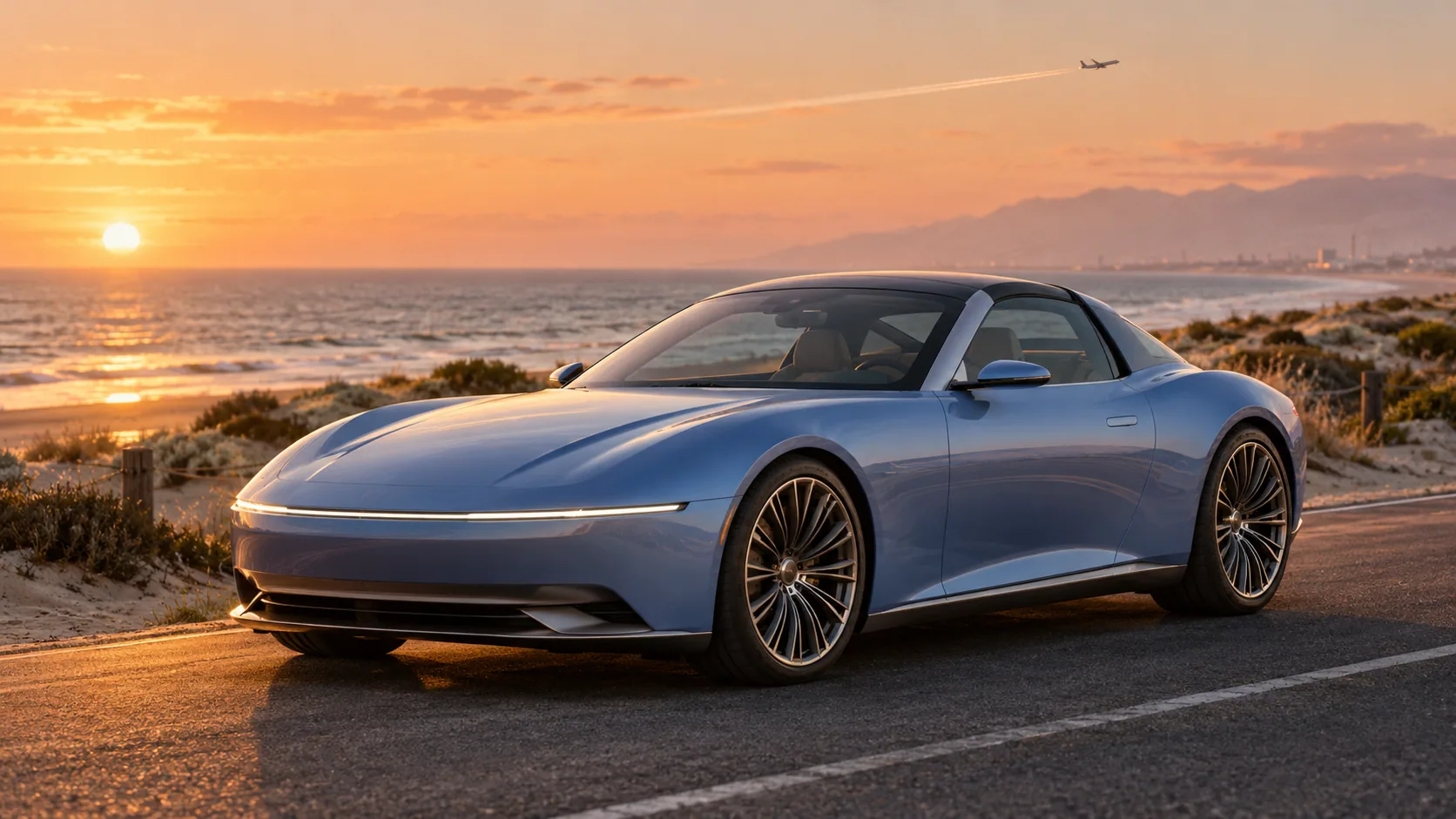
A town named
for a second.
El Segundo’s name recalls Standard Oil’s second refinery, established here in 1911. A second was enough to name a town. What else might a second make possible?
Start with the second car in a Beach Cities driveway: the one imagined here for the short local trips, the market stop, the beach gear, the small errand that never needed a large machine.
El Segundo Motors proposes building that car the way a watchmaker builds a second hand. A modest task, treated precisely. Something European in proportion, coastal in temperament and useful enough to become part of an ordinary day.
This is a brand and a company imagined together: residents as co-producers, AI as a coordinator, and the town that builds satellites as a place to learn how to make something smaller.
Five ways to
be a second car.
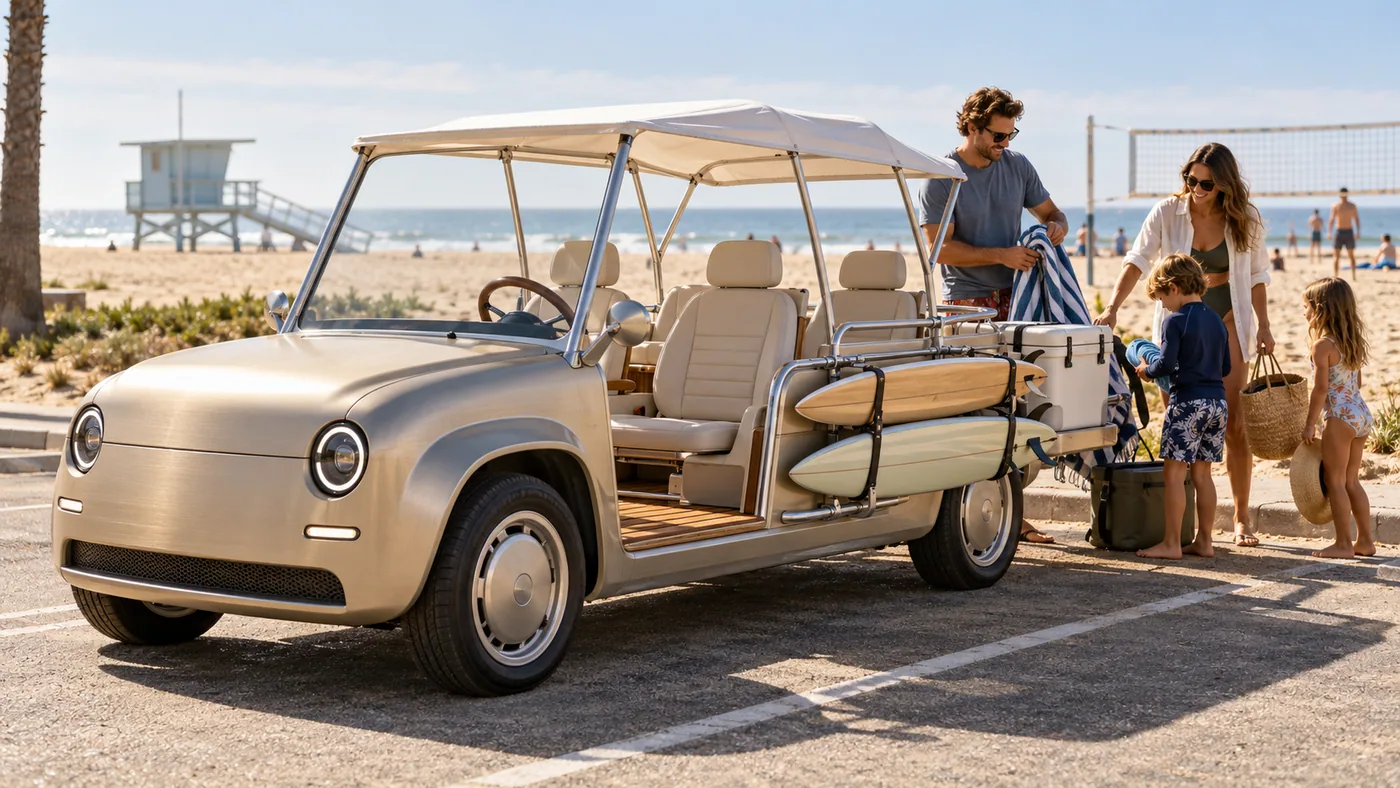
The beach runabout
Strand
25 mph design target · open air
A small, open-air second car for the local loop: beach gear, market bags, a slow arrival. Dune sand, brushed aluminum and a canopy that belongs to the coast.
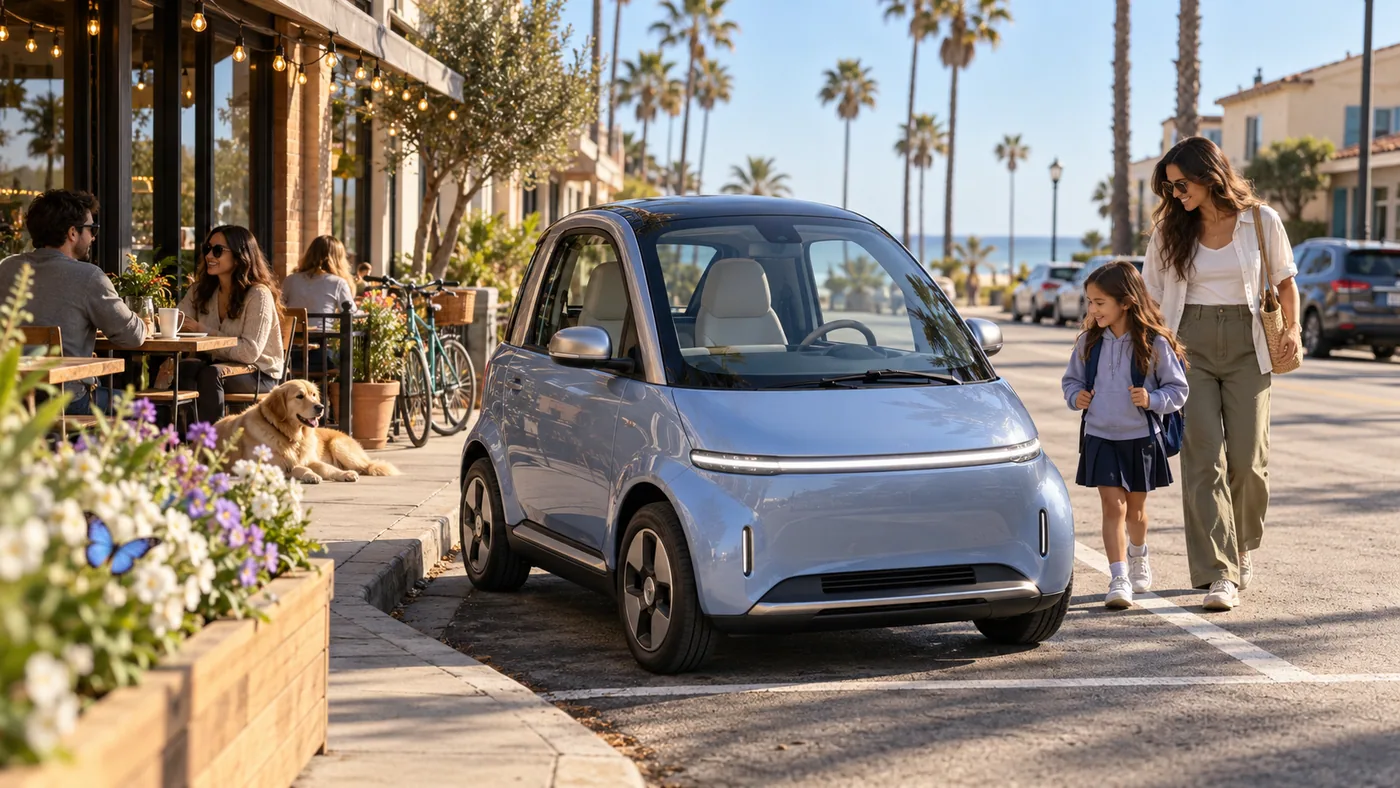
The city pod
Allyni
Two seats · a smaller daily footprint
Named for the El Segundo blue butterfly, Allyni imagines two seats and just enough car for the short trip. A friendly face for Main Street, in Butterfly Blue.
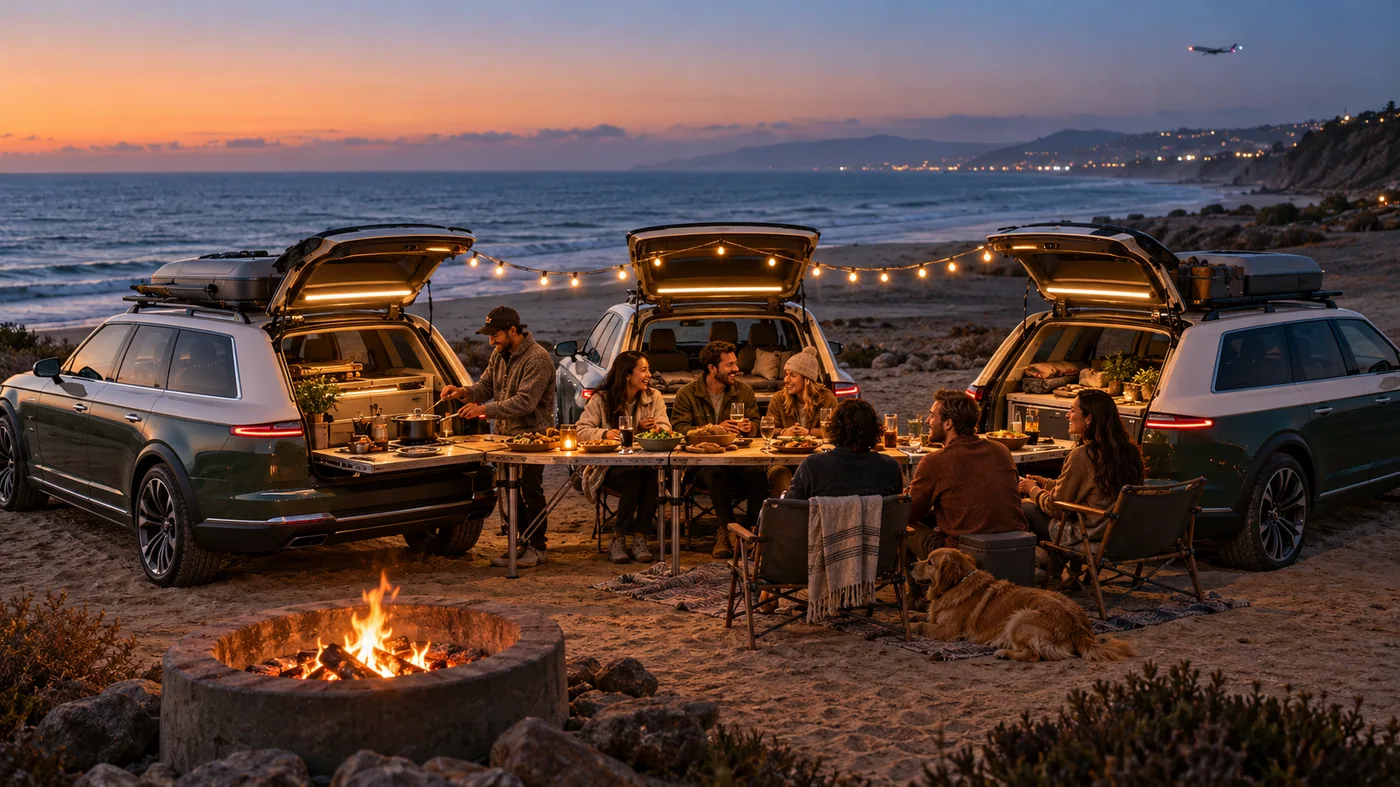
The camp wagon
Dockweiler
Long roof · shared evenings
Coachwork for the things that make a place worth staying: a tailgate, a camp meal, a dry place for the gear. The destination becomes a gathering.
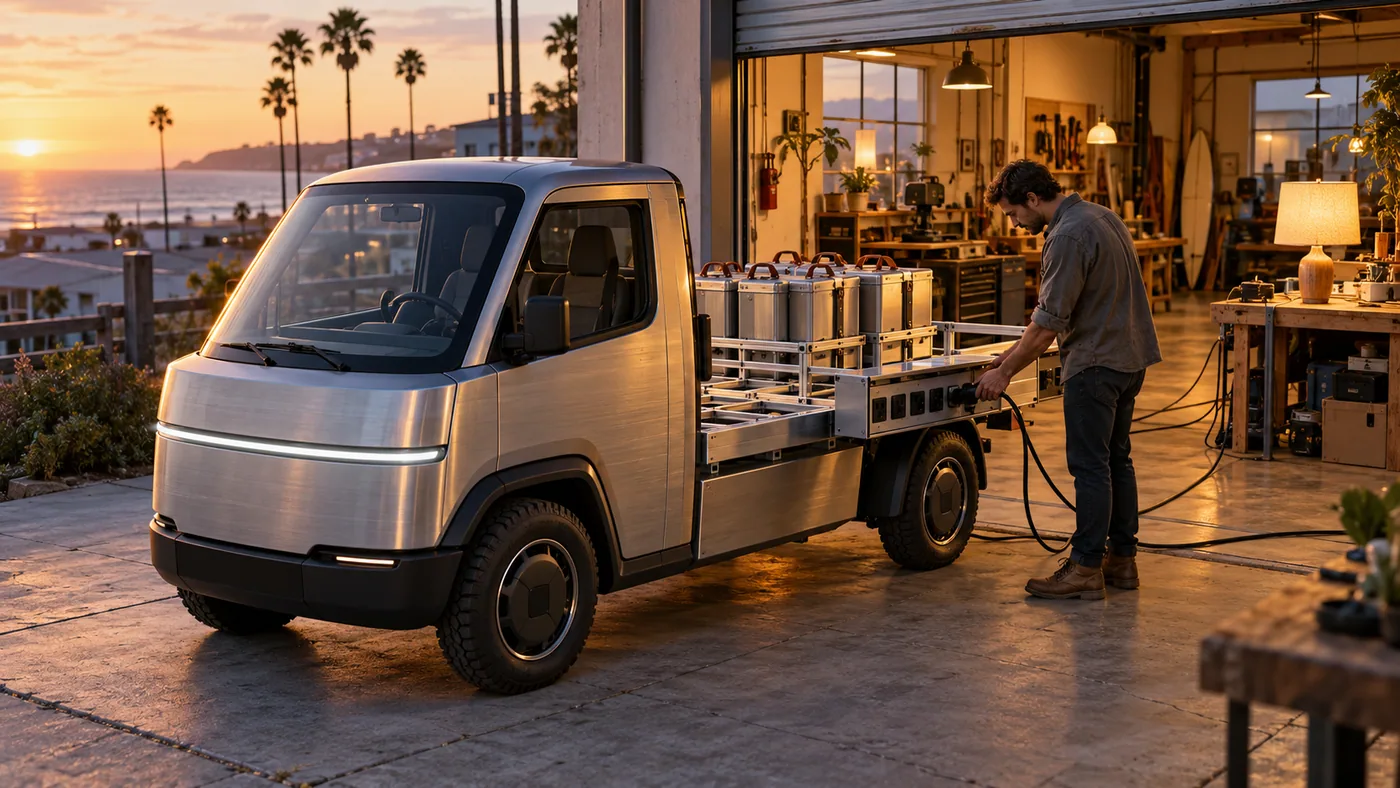
The working microtruck
Lumen
Cargo rail · proposed mobile power
A little truck with a second job: carrying the tools, then becoming a mobile power plant for the workshop, the pop-up or the evening outside.
And then, Vista.
The commission-only grand tourer in the opening image is the long view: quiet coachwork, a low roof and the coast at the end of the day. It belongs to Phase 3, after the everyday vehicles have earned their place.
All five are design concepts. The 25 mph target does not establish road legality, safety approval or beach access. No vehicle is offered for sale.
One channel.
Many possibilities.
Begin with one aluminum channel: a common interface for a small family of machines.
The proposed Segundo Rail is the organizing idea, rather than a finished engineering solution. Swappable Cells target charging from an ordinary 120 V outlet. A removable Motor Module is imagined powering other machines as well as a car.
Link is the social architecture: six cars, one table, one sound system. A parking arrangement becomes a place to stay.
Twelve snap-on Pods
- Beach
- Surf
- Market
- Cargo
- Camp
- Galley
- Workshop
- Garden
- Stage
- Light
- Access
- Field Lab
Open RFCs · questions before answers
RFC 001 — What should the Rail standardize?
Explore interface geometry, loads, repair access and an understandable way to identify compatible Pods. Proposed discussion only; no dimensions or build-ready specification are published.
RFC 002 — What makes a Cell practical?
Have qualified engineers examine weight, handling, charging protection, thermal behavior and the full safety case. The 120 V idea is a target to investigate, not a validated charging instruction.
RFC 003 — What does Link need to share?
Separate a shared table and sound experience from the much harder questions of electrical connection, access, consent and public-space use. Establish those boundaries before a demonstration.
Rail, Cells, Pods, Link and the Motor Module remain proposals. Engineering, testing and applicable approvals must precede use.
Retire the Beach Cities’
second car by 2032.
An ambition, not a delivery date. Make the smaller machine useful enough that a household can choose it. Each phase must earn the next.
- 0
Rail first
Define interfaces. Make the Rail, Cell and Motor Module questions testable before dressing them as a car.
Earn: independently reviewed architecture and a safe prototype plan.
- 1
Strand + Allyni fleets
Propose small, supervised local fleets. Learn from actual short-trip needs before adding breadth.
Earn: applicable approvals, safety validation and demonstrated use.
- 2
Dockweiler + Lumen
Add camp and work coachwork only after the common platform has proved useful.
Earn: maintainability, dependable supply and a credible operating model.
- 3
Vista + chapters
Commission the grand tourer and let other places adapt the chapter model.
Earn: a durable first chapter before inviting the next.
Every ad is
an invitation.
Advertising as coordination: help the right neighbors find the right question, the right tool, the right next piece of work.
The Luxury of Twenty-Five
An invitation to design a better short trip, rather than a faster long one.
Built where satellites are born
An invitation to bring the town’s precision, patience and making culture down to street level.
Plug in the party
An invitation to imagine energy as something that supports a gathering.
Link Six
An invitation to turn six parked cars into one table and one shared sound system.
Your time is the currency
An invitation to recognize a contribution before talking about a transaction.
Proposed campaign concepts. No submissions, sign-ups or tracking on this page.
A second of time.
A note of thanks.
In the concept, a Segundo represents one second of contributed time.
The imagined time currency makes a contribution legible: a sketch, a repair, a lesson, a careful hour. Edition one is proposed as collectible contribution receipts, labeled Community Time Note — Not Legal Tender.
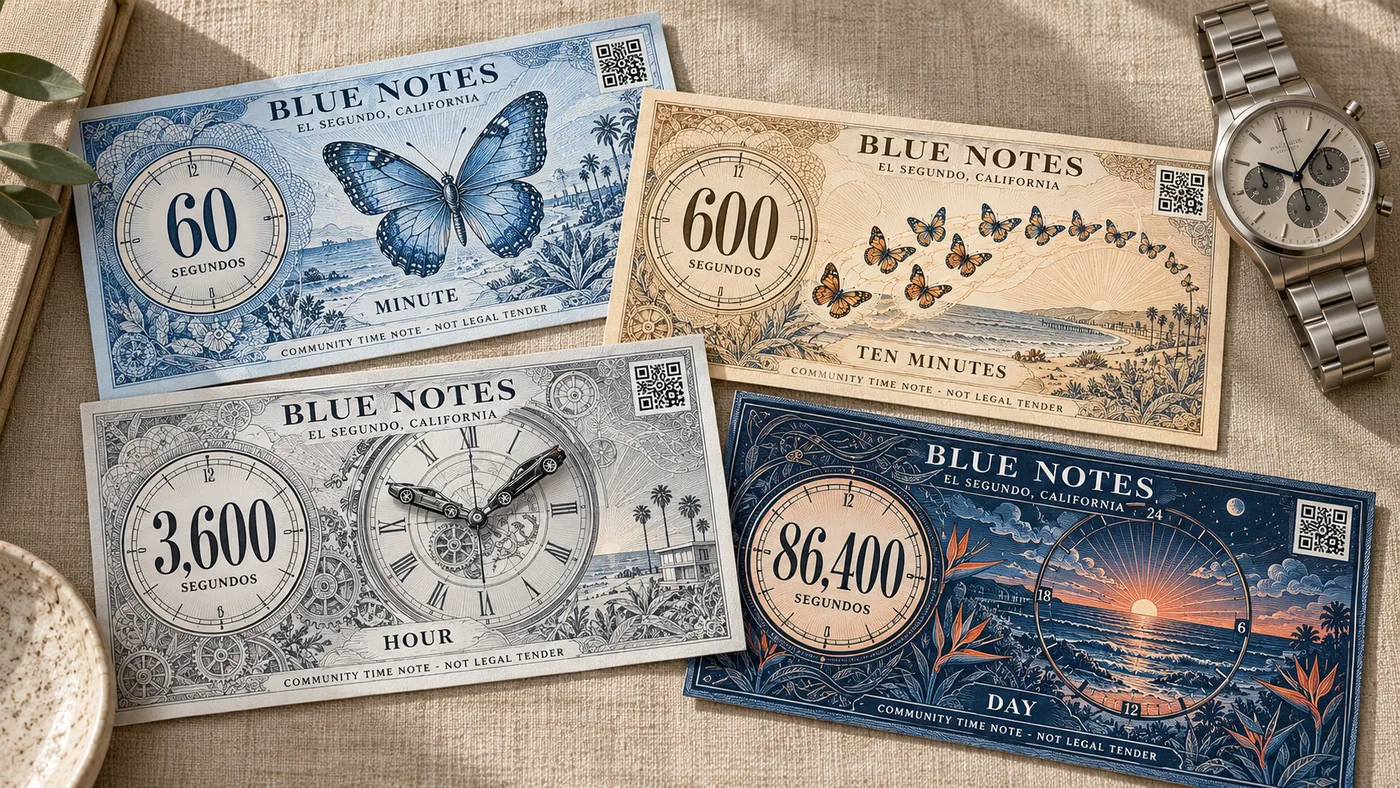
- 60 Segundos
- MinuteOne minute
- 600 Segundos
- Ten MinutesTen minutes
- 3,600 Segundos
- HourOne hour
- 86,400 Segundos
- DayTwenty-four hours
Community Time Note. Not legal tender. Collectible concept artwork, with no cash value, backing or redemption promise. No note issuance, payroll or payment service is activated here.
The town is the campus.
The company is the lab.
The work is the curriculum.
A proposed independent learning model: learn in public by making something useful, documenting the decisions and letting the evidence change the plan.
Surge protocol
Frame a question. Form a small team. Make a bounded experiment. Review what happened. Publish the learning. Decide whether to continue.
Eight proposed AI roles support the loop. Humans approve the brief, review engineering and impact, authorize any real-world action and decide whether a phase advances.
- Listen & research
- Frame the brief
- Develop the design
- Explore the engineering
- Coordinate the making
- Review access & impact
- Document the evidence
- Convene the next decision
Six studios
- Coachwork & form
- Rail, Cells & energy
- Pods & everyday use
- Making & repair
- Advertising & coordination
- Time notes & contribution
A concept curriculum, not an operating accredited university, an enrolled program or a claim that these teams already exist.
A guest collaboration.
For Michael Hoydich.
Claude Opus 5.5 + Codex (GPT-6.1 Sol)
The creative roster credited in the supplied concept brief:
- Claude Opus 5.5 — orchestrator, with Claude Fable 5.1, Sonnet 5.5 and Haiku 5.5
- ChatGPT image generation — the six concept illustrations shown here, 17 October 2026
- Midjourney V8 · Ideogram · ElevenLabs Music v2.5
- Codex GPT-6.1 Sol — PointCast page and publication collaboration
Roster and model labels are guest-supplied creative credits, not an independent verification of every named model or tool’s use. No audio is embedded on this page.
“God bless us all.”
Michael Hoydich and Opus 5.5
Factual references & image credits
- Chevron — the El Segundo refinery and its history
- U.S. Fish & Wildlife Service — El Segundo blue butterfly
- Boeing — satellite production in El Segundo
- U.S. Department of Energy — residential charging
- Federal low-speed vehicle standard — speed alone is not approval
AI-generated speculative concept illustrations. These images do not depict manufactured vehicles or issued currency. ChatGPT image generation · 17 October 2026. The published WebPs are proportionally resized derivatives of the supplied artwork.