Can read a book, weak shadow, far from bright glass.
HOUSEPLANT SCHOOL · INDOOR GARDENING
Learn the room before you treat the leaf.
A practical learning module for house plants: light, watering, roots, soil, humidity, feeding, repotting, propagation, pests, and the common plants that teach each skill.
LESSONS8
PROFILES12
SYMPTOMS8
BLOCK0333
CARE DESK · DIAGNOSE THE SYSTEM
Pick a plant, a room, and a symptom.
This is not a magic answer box. It is a better first move: compare the plant's needs against actual light, watering habit, and visible symptom before changing anything.
forgiving vine Pothos Epipremnum aureum
- Light
- Low to bright indirect light; faster growth and stronger variegation with more indirect light.
- Water
- Let the top 1-2 inches dry, then water through the pot and empty the saucer.
- Mix
- Standard indoor mix loosened with perlite or bark.
- Skill
- Learn nodes, vines, and pruning for fullness.
FIRST READ
Check the root zone before watering again. If the pot is wet and heavy, add light/air and let it dry.
Do not fertilize a soggy plant to green it up.CURRICULUM · EIGHT MOVES
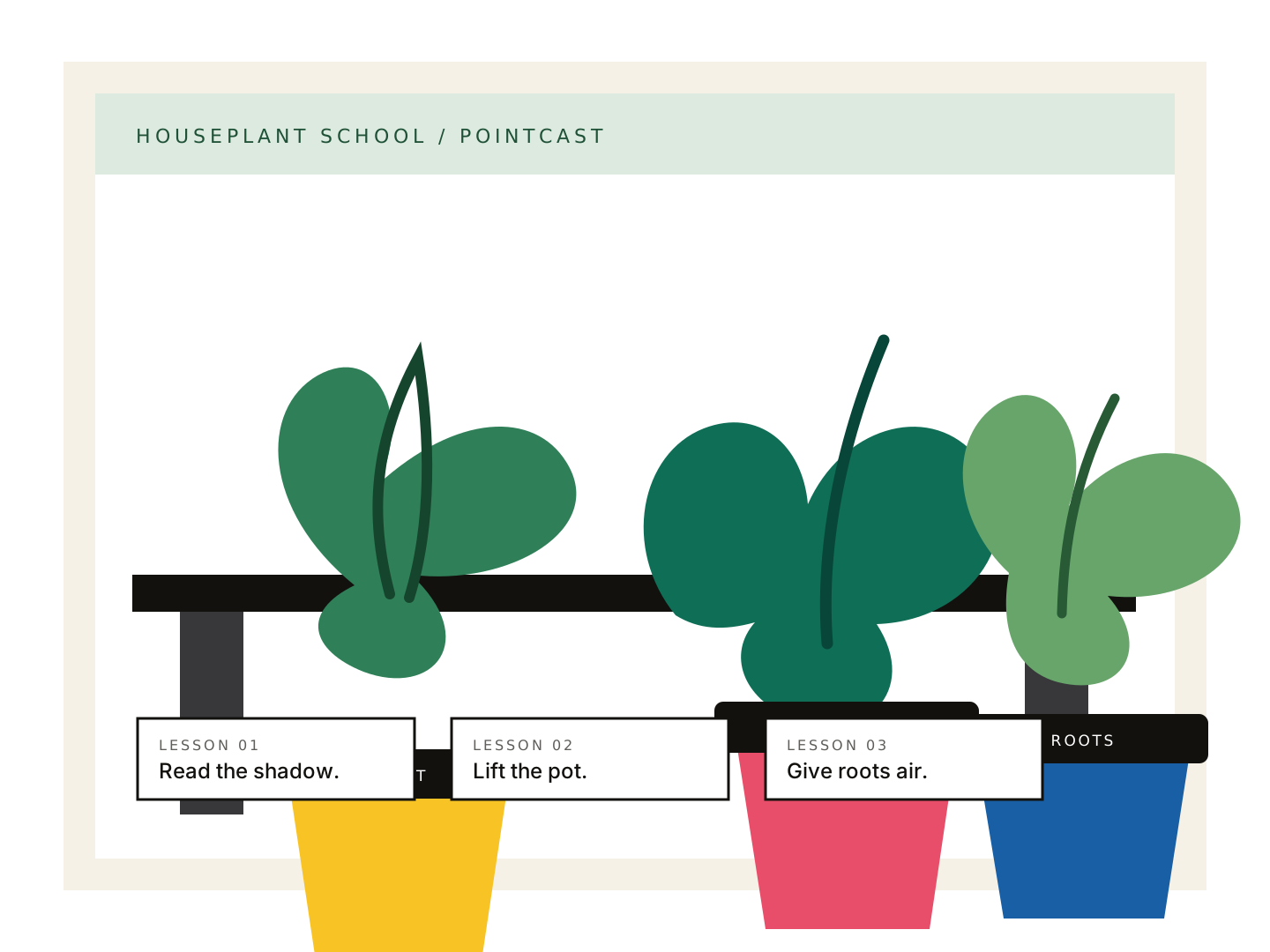
The plant is the teacher.
- 01
Read light like weather
Window direction, shadow sharpness, distance from glass, and seasonal drift.
Most foliage plants want bright indirect light: enough sky to grow, not enough direct sun to scorch. Stand where the plant sits at noon. If your hand throws a soft shadow, you are in useful indirect light. - 02
Water the root zone
Soil moisture, pot size, root mass, drainage, and the difference between dry surface and dry pot.
The calendar is a hint, not a rule. Check the mix, then water thoroughly when the plant actually needs it. Lift the pot after watering, then again when dry. Weight teaches faster than guessing. - 03
Build oxygen into soil
Drainage holes, chunky amendments, compaction, and root rot prevention.
Roots need water and air. A potting mix that stays wet forever is usually a root problem waiting to happen. Add perlite or bark when a tropical foliage mix dries too slowly. - 04
Use humidity without drama
Grouping plants, pebble trays, bathrooms, kitchens, and humidifier discipline.
Humidity helps thin-leaf tropicals, but wet soil plus low light is still the bigger danger. Move ferns and calatheas together near bright indirect light before buying another gadget. - 05
Feed growth, not guilt
Dilute fertilizer, active growth windows, salt buildup, and rest periods.
Fertilizer cannot fix bad light, soggy roots, or pests. Feed lightly when the plant is actively growing. Use half-strength balanced fertilizer in spring/summer, then flush occasionally with plain water. - 06
Repot for roots
Root circling, pot jumps, drainage, post-repot stress, and when not to disturb a plant.
Repot one size up when roots have filled the pot, not because the leaves look bored. Check roots in spring. If the rootball is a tight net, move up 1-2 inches in diameter. - 07
Propagate from structure
Nodes, crowns, offsets, rhizomes, cane cuttings, and callusing succulent leaves.
Propagation is plant anatomy in your hand. Find the growth point before making the cut. On vines, cut below a node with one leaf attached; roots and shoots need that node. - 08
Diagnose before treating
Pests, root stress, light stress, watering mistakes, and pattern recognition.
A symptom is evidence, not a verdict. Check light, roots, soil moisture, and leaf undersides first. Quarantine new or suspicious plants for two weeks and inspect under bright light.
LIGHT LADDER · READ THE SHADOW
Light is the budget. Water spends it.
Bright room, soft shadow, no harsh sun on leaves.
Strong sky exposure, crisp shadow, filtered or direct sun nearby.
Lower light means slower growth, slower drying, and less fertilizer. Brighter light raises every other need.
PLANT PROFILES · WHAT EACH ONE TEACHES
Pick a plant by the skill you want.
forgiving vine medium
Pothos
Epipremnum aureum
- Light
- Low to bright indirect light; faster growth and stronger variegation with more indirect light.
- Water
- Let the top 1-2 inches dry, then water through the pot and empty the saucer.
- Propagation
- Stem cuttings with at least one node root easily in water or mix.
Yellow lower leaves usually point to repeated wet soil or old foliage shedding.
Keep away from pets and kids who chew leaves. Penn State Extension architectural survivor medium
Snake plant
Dracaena trifasciata
- Light
- Tolerates low light, but prefers medium to bright indirect light.
- Water
- Let the mix dry deeply. In low light, water sparingly.
- Propagation
- Division is fastest; leaf cuttings work but variegation may not return true.
Mushy leaves are a wet-root warning.
Keep out of reach of chewing pets. University of Minnesota Extension low-light rhizome tank low
ZZ plant
Zamioculcas zamiifolia
- Light
- Low to bright indirect light; avoid harsh direct sun.
- Water
- Let the pot dry well between waterings; thick rhizomes store water.
- Propagation
- Division or leaf cuttings, slowly.
Yellowing stems often mean the plant stayed wet too long.
Do not allow pets or kids to chew it. Penn State Extension big-leaf climber bright
Monstera
Monstera deliciosa
- Light
- Bright indirect light for strong leaves and fenestration.
- Water
- Water when the upper mix dries; keep evenly moist but never swampy.
- Propagation
- Node cuttings; aerial roots help, but the node is the key.
Small uncut leaves usually mean low light or immature growth.
Keep away from chewing pets. Penn State Extension offset factory medium
Spider plant
Chlorophytum comosum
- Light
- Bright indirect light; tolerates medium light.
- Water
- Water when the top inch dries; avoid letting it sit in water.
- Propagation
- Pot or water-root the plantlets that form on runners.
Brown tips can come from dry air, salts, or inconsistent watering.
Often grown as a pet-friendlier foliage option, but discourage chewing. Penn State Extension dramatic moisture reporter medium
Peace lily
Spathiphyllum
- Light
- Medium indirect light; too little light reduces bloom.
- Water
- Keep lightly moist, then water when it starts to soften or the surface dries.
- Propagation
- Division during repotting.
Repeated collapse means the root zone is swinging too dry or too wet.
Keep away from chewing pets. Penn State Extension humidity truth-teller medium
Calathea / prayer plant
Goeppertia and Maranta relatives
- Light
- Medium indirect light; avoid direct sun on patterned leaves.
- Water
- Keep evenly moist with good air in the mix; avoid hard drybacks.
- Propagation
- Division, not leaf cuttings.
Crispy edges point to dry air, salts, drought swings, or harsh sun.
Often chosen where pet safety matters, but still prevent chewing. University of Minnesota Extension thin-leaf humidity meter bright
Boston fern
Nephrolepis exaltata
- Light
- Bright indirect light, away from hot direct sun.
- Water
- Keep evenly moist; do not let the rootball crisp completely.
- Propagation
- Division or runners depending on type.
Leaflet drop means the plant dried too much, sat too hot, or lacked humidity.
Usually a pet-friendlier classic, but avoid chewing messes. University of Minnesota Extension windowsill bloomer bright
African violet
Streptocarpus sect. Saintpaulia
- Light
- Bright indirect light; east or bright filtered windows work well.
- Water
- Keep evenly moist but avoid cold water on leaves; bottom watering can help.
- Propagation
- Leaf cuttings with petiole.
No flowers usually means low light, cold, crowding, or nutrient imbalance.
Keep leaves from becoming a snack even when considered gentle. University of Minnesota Extension bright-window desert lesson bright
Succulent / cactus
Mixed drought-adapted genera
- Light
- Very bright light; many need direct sun indoors to stay compact.
- Water
- Water deeply, then let the mix dry thoroughly.
- Propagation
- Offsets, pads, stem pieces, or callused leaves depending on plant.
Stretching and pale growth mean not enough light.
Spines and sap can injure; place thoughtfully. University of Minnesota Extension epiphyte teacher bright
Moth orchid
Phalaenopsis
- Light
- Bright indirect light; leaves should be firm green, not scorched.
- Water
- Water bark thoroughly, then let it approach dry; never let the crown sit wet.
- Propagation
- Usually division or keikis, not casual cuttings.
Wrinkled leaves can mean underwatering or dead roots, so inspect roots before adding more water.
Commonly treated as pet-friendlier, but keep flowers intact. University of Minnesota Extension teaching vine medium
Heartleaf philodendron
Philodendron hederaceum
- Light
- Medium to bright indirect light; tolerates lower light with slower growth.
- Water
- Let the surface dry before watering thoroughly.
- Propagation
- Node cuttings in water, sphagnum, or potting mix.
Long gaps between leaves usually mean light is too low.
Keep away from pets and kids who chew leaves. Penn State ExtensionSYMPTOM DECODER · EVIDENCE FIRST
Old damage is history. New growth is the report.
Yellow leaves
Likely: wet roots, old lower foliage, low light, nutrient stress
Check: soil moisture at root depth, drainage hole, new vs old leaves, recent move
Check the root zone before watering again. If the pot is wet and heavy, add light/air and let it dry.
Do not fertilize a soggy plant to green it up.Brown tips
Likely: dry air, salt buildup, inconsistent water, leaf sensitivity
Check: humidity, fertilizer strength, tap-water minerals, pot drying pattern
Trim damage for looks, flush the mix with plain water, and stabilize watering.
Do not mist once and call humidity solved.Drooping
Likely: too dry, too wet, heat stress, root damage
Check: pot weight, soil smell, stem firmness, temperature spike
If dry, water thoroughly. If wet, stop watering and inspect roots if it keeps collapsing.
Do not keep adding water without checking whether the roots can breathe.Leggy growth
Likely: not enough light, no pruning, seasonal stretch
Check: distance from window, shadow strength, spacing between nodes, direction plant leans
Move closer to brighter indirect light and prune above nodes to restart fullness.
Do not solve low light with more fertilizer.Fungus gnats
Likely: constantly moist mix, organic debris, slow-drying pot
Check: top inch moisture, saucer water, pot size, soil surface debris
Let the top layer dry, remove debris, improve airflow, and use sticky cards to monitor adults.
Do not drench every plant with pesticide before fixing the wet-soil habit.Sticky leaves
Likely: scale, aphids, mealybugs, whiteflies
Check: undersides of leaves, stems and nodes, new growth, nearby plants
Isolate the plant, wipe leaves, identify the pest, then repeat treatment weekly until clear.
Do not put it back near the collection after one cleaning.No flowers
Likely: too little light, wrong season, overpotting, imbalanced feeding
Check: light level, plant maturity, root crowding, temperature pattern
Increase appropriate light and learn the plant-specific bloom trigger before changing everything.
Do not overfeed a plant that is already in low light.Root rot smell
Likely: waterlogged mix, oversized pot, blocked drainage, cold wet roots
Check: black mushy roots, sour soil smell, standing saucer water, pot size
Unpot, remove dead roots, repot into fresh airy mix, and reset watering after recovery.
Do not reuse sour compacted soil.SOURCES · EXTENSION BACKBONE
Learning beats plant folklore.
- Penn State Extension - Caring for HouseplantsGeneral indoor care principles: light, watering, fertilizer, and common culture.
- University of Minnesota Extension - Cacti and succulentsBright-light drought-adapted care and dryback guidance.
- University of Minnesota Extension - African violetsBlooming windowsill plant care and propagation.
- University of Minnesota Extension - OrchidsEpiphyte care, bark media, light, and watering rhythm.
- University of Minnesota Extension - Tropical fernsHumidity and even-moisture care for thin-leaf tropicals.
