Access policy is now a model feature.

PointCast research desk · 001
The next
models.
A field guide to the systems arriving now: from Astra and Mythos to China’s open-weight wave and video models that are becoming full editing rooms.
9models tracked
3signal lanes
0rumors passed as fact
01 / Reading the weather
Capability is only half the story now.
The useful map has three axes: what the model can do, who can actually use it, and what can be owned or inspected. This desk keeps vendor facts, PointCast interpretation and unknowns visibly separate.
Open weights are a deployment spectrum, not a synonym for open source.
Video is becoming an editing system, not just a prompt-to-clip trick.
Reading lens
No signals match that filter. Clear the search and try again.
02 / Controlled frontier
Controlled frontier
The release boundary is becoming part of the model: capability, access and safeguards now ship together.
01 Upcoming
OpenAI
Astra
A model whose deployment clock is being set by cyber-capability evaluations, not only product readiness.
- Release
- Not released
- Access
- Unavailable; external safety testing planned
- License
- Proprietary
Why it matters
The headline is not a benchmark. OpenAI says preliminary evidence may place Astra at its Critical cybersecurity threshold and has slowed work while it strengthens safeguards.
Implementation read
No public model ID, API surface, price, context window or stable capability spec. Do not treat GPT-6 naming, parameter counts or launch dates as confirmed.
Facts + sources +
- Officially described as an upcoming model
- Critical cyber capability cannot yet be ruled out
- Not the model involved in the Hugging Face incident
languagecodetools
Watch next: A system card, public model identifier, access policy and the mitigations attached to any release.
02 Controlled
Anthropic
Claude Mythos 5
One underlying model, two deployment envelopes: Mythos 5 for vetted partners and Fable 5 with stronger safeguards for general use.
- Release
- 2026-06-09
- Access
- Vetted partners; broader access not promised
- License
- Proprietary
Why it matters
Mythos is the clearest example of capability-gated distribution becoming a product tier. The same underlying model can reach different audiences with different safeguards.
Implementation read
Treat Mythos 5 and Fable 5 as access variants, not interchangeable API aliases. Mythos availability is narrow and organization-vetted.
Facts + sources +
- Same underlying model as Claude Fable 5
- Focused on cybersecurity and biology research
- Distributed through Project Glasswing partners
languagecodecyberbiology
Watch next: Whether restricted capabilities graduate into broad access—or remain a permanent high-trust tier.

03 / Open-weight wave
Open-weight wave
The center of gravity is multipolar. The practical question is no longer whether open weights matter, but which license and serving footprint fit the job.
01 Open weights
Moonshot AI
Kimi K3
The first open 3T-class model: 2.8T total parameters, native vision and extremely sparse expert activation.
- Release
- 2026-07-27 weights
- Access
- Weights + API + consumer apps
- License
- Kimi K3 custom license
- Context
- 1M tokens
Why it matters
K3 makes “frontier open weights” literal at enormous scale. The catch is equally important: open-weight does not mean lightweight, and its custom license deserves a real read.
Implementation read
2.8T MoE; 16 of 896 routed experts per token; 1M context. Budget for multi-node inference and verify Kimi K3 License obligations before deployment.
Facts + sources +
- 2.8T total parameters
- Native visual understanding
- Weights and technical report released together
textimagevideo understandingtools
Watch next: Independent serving reports, quantization quality and how often teams use the weights rather than a hosted API.
02 Open weights
Z.ai
GLM-5.2
A permissively licensed long-horizon agent model with a full million-token context.
- Release
- 2026-06-17
- Access
- Weights + API
- License
- MIT
- Context
- 1M tokens
Why it matters
GLM-5.2 is the cleanest “use it and modify it” proposition in this group: a strong coding and agent model, MIT-licensed, with hosted and self-served paths.
Implementation read
753B-parameter MoE on the published model card; selectable thinking effort; official local serving support includes Transformers, vLLM and SGLang.
Facts + sources +
- MIT-licensed weights
- 1M-token context
- Built for long-horizon coding and tool use
textcodetools
Watch next: Reliability across truly long tasks, not just maximum context acceptance.
03 Open weights
Alibaba · Qwen
Qwen3.8-27B
A current-generation, dense multimodal agent model at a size teams can plausibly own.
- Release
- 2026-08-14
- Access
- Weights + API + local runtimes
- License
- Apache 2.0
- Context
- 262K tokens
Why it matters
The 27B release may be more consequential than the 2.4T flagship: it packages the Qwen3.8 generation into a far more deployable footprint under Apache 2.0.
Implementation read
Dense 27B; 262,144-token serving examples; OpenAI-compatible local routes documented for Transformers, vLLM and SGLang.
Facts + sources +
- Dense 27B model
- Apache 2.0
- Native image-text input
textimagecodetools
Watch next: High-quality MLX/GGUF quantizations and real memory/latency reports on workstation-class hardware.
04 Open weights
DeepSeek
DeepSeek V4 Flash
A 284B/13B-active model built to make million-token work cheaper—and improved through post-training rather than another architecture change.
- Release
- 2026-07-31 update
- Access
- Weights + API
- License
- MIT
- Context
- 1M tokens
Why it matters
Flash is the efficiency story: a large model that activates a small fraction of its weights and ships with a permissive license. The July update concentrated on agent behavior.
Implementation read
284B total / 13B active in the base release; 1M context; MIT. The 0731 update keeps the architecture and changes post-training.
Facts + sources +
- 284B total / 13B active
- MIT-licensed weights
- July update was post-training only
textcodetools
Watch next: Whether the agent gains survive across harnesses and production tool environments.
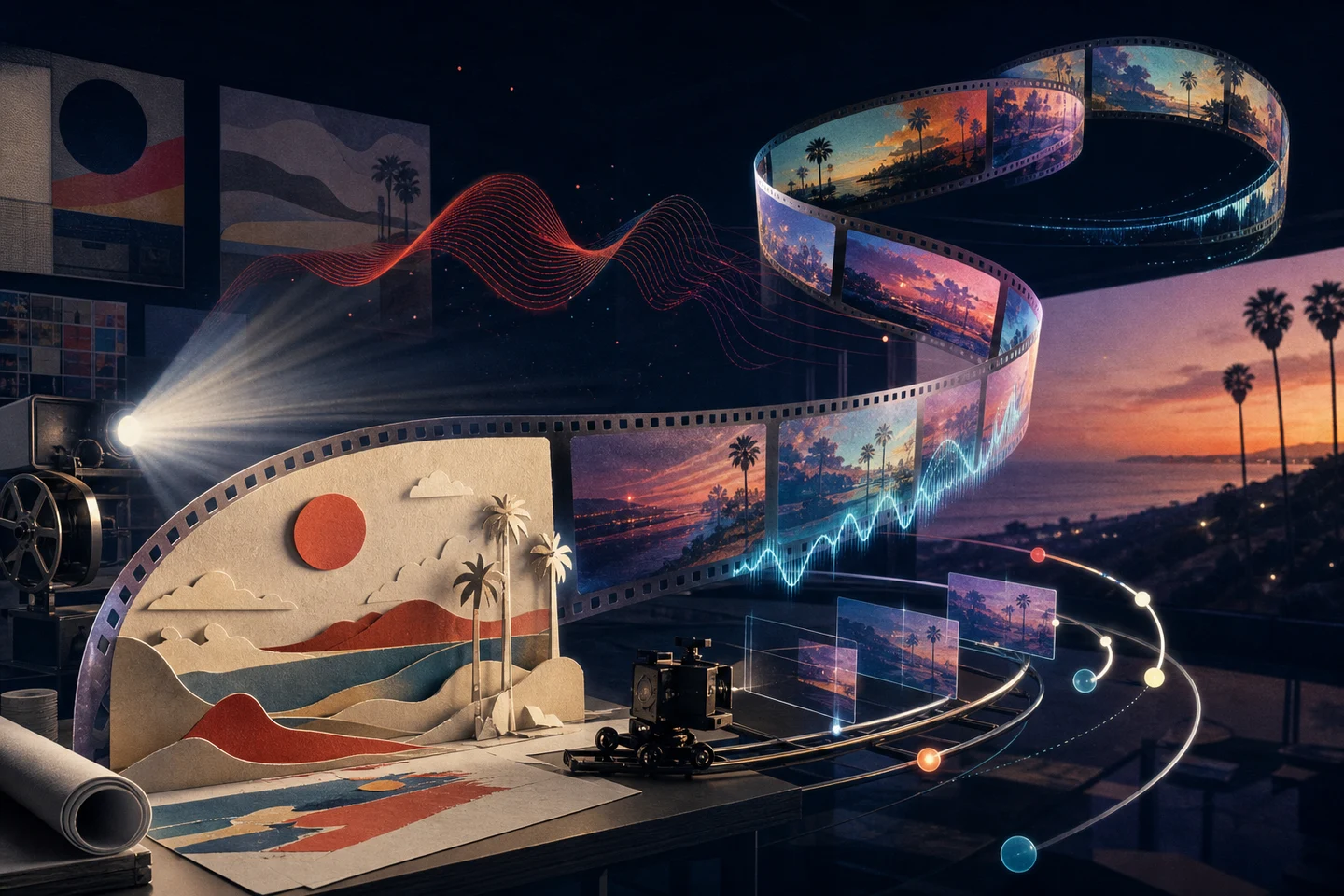
04 / Moving-image systems
Moving-image systems
Video models are turning into multimodal editing systems: references, audio, continuity and revision matter more than a single spectacular clip.
01 Available
ByteDance · Dreamina
Seedance 2.5
Thirty-second continuous generation, up to fifty references and targeted editing in one system.
- Release
- 2026-07-31
- Access
- Dreamina; BytePlus rollout
- License
- Hosted product
Why it matters
Seedance is pushing the medium away from one-shot clips and toward an edit loop. Longer continuity and many references matter because they reduce the stitching and reroll tax.
Implementation read
Hosted multimodal workflow. Availability, feature caps and API access can vary by product and region; resolve current account/API terms before automating.
Facts + sources +
- Up to 30-second continuous clips
- Up to 50 multimodal references
- Targeted video editing
textimagevideoaudio
Watch next: How much of the advertised 30-second / 50-reference envelope is consistently available outside first-party creative tools.
02 Available
Kuaishou
Kling AI 3.0
A unified generation-and-editing system with native multilingual audio and multi-shot control.
- Release
- 2026-02-05
- Access
- Kling AI product and partner surfaces
- License
- Hosted product
Why it matters
Kling 3.0 competes on direction, not only rendering: references, shots, sound and edits live in the same workflow, with clips up to fifteen seconds.
Implementation read
Hosted product; 3.0 family includes Video, Video Omni, Image and Image Omni. Confirm the exact variant behind any third-party endpoint.
Facts + sources +
- Up to 15-second clips
- Native multilingual audio
- Text/image/audio/video workflow
textimagevideoaudio
Watch next: Native 4K availability, identity consistency and whether Omni features become predictable API primitives.
03 Available
Google DeepMind
Veo 3.1
A mature production path where audio, reference “ingredients,” vertical output and 4K upscaling are first-class controls.
- Release
- Updated 2026-01-13
- Access
- Gemini, Flow and Google Cloud
- License
- Hosted product
Why it matters
Veo’s advantage is the surrounding filmmaking surface: consistent ingredients, sound and delivery formats are turning generation into a repeatable production tool.
Implementation read
Hosted APIs and product surfaces differ. Current published material describes six-second generations with 1080p/4K output paths and native audio.
Facts + sources +
- Native audio
- Reference ingredient controls
- 1080p and 4K output paths
textimagevideoaudio
Watch next: Longer native duration, stable character continuity and which Flow controls reach the API.
05 / Machine entrance
Same desk.
Clean packet.
The companion endpoint mirrors every card with stable IDs, access state, license language, source URLs and a short agent read. CORS is open. Cache is one hour.
GET · JSON
$ curl https://pointcast.xyz/next-models.json

{
  "researchAsOf": "2026-08-31",
  "modelCount": 9,
  "models": [
    {
      "id": "openai-astra",
      "releaseState": "upcoming",
      "sources": [...]
    }
  ]
}
06 / Desk method
Fast field, slow claims.
Primary sources first. Vendor announcements, technical reports, model cards and weight repositories anchor the factual layer. Vendor benchmark claims stay vendor claims.
Open ≠ one thing. The desk says “open weights” unless code, weights, training recipe and data justify a stronger claim. License names remain visible on every card.
No rumor laundering. Astra is not labeled GPT-6 here. Unpublished specs, leaked parameter counts and speculative dates do not enter the record.
Researched 2026-08-31. Model access, pricing and product availability can change faster than this page. Follow the linked primary source before making a production decision.