Almost nothing, made into an occasion
Why
LaCroix?
A cold can, a loud little crack, a flavor that arrives mostly as rumor: how sparkling water learned to hold color, identity, and a whole afternoon.
What I
keep noticing
The sound waits for your thumb.
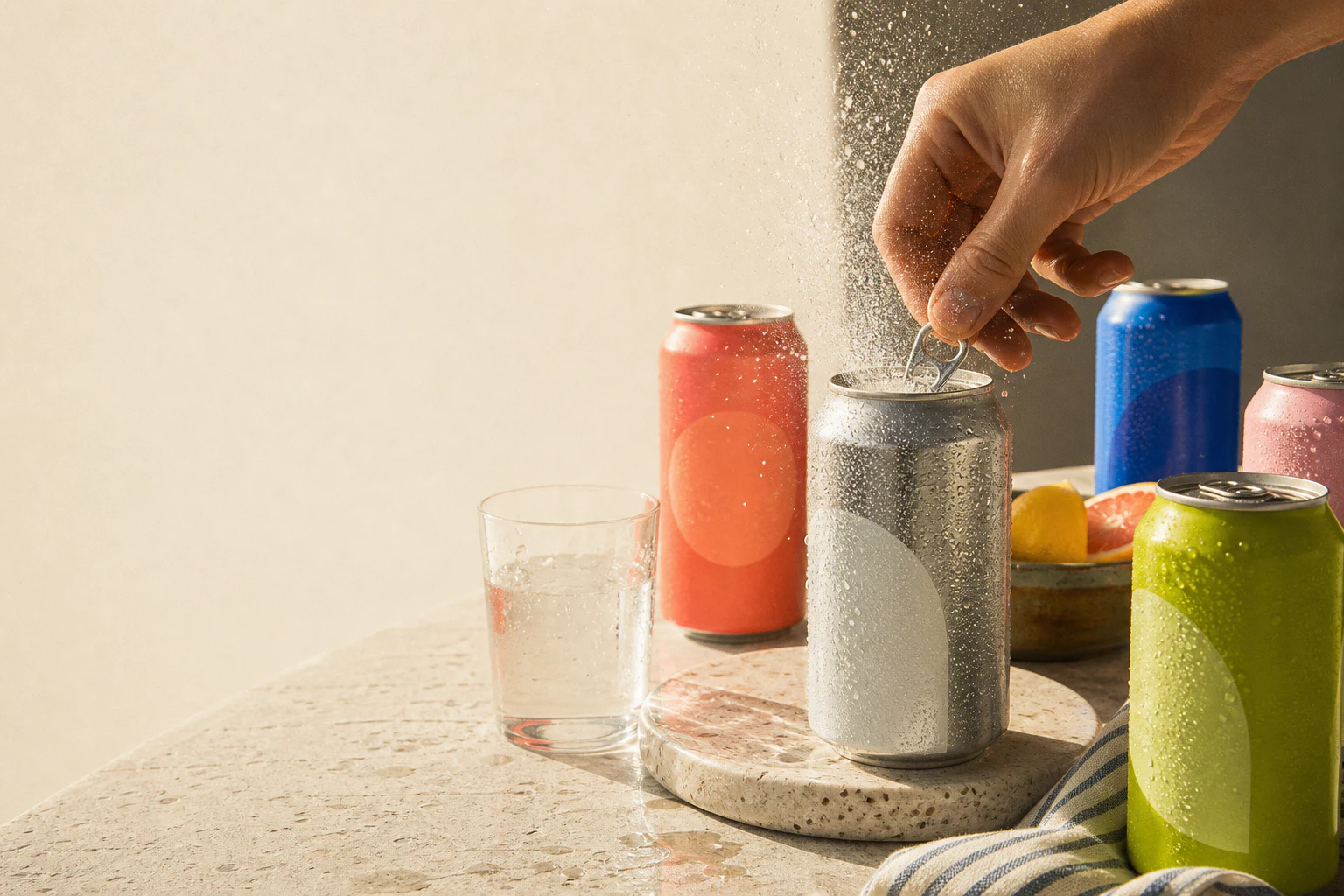
Plate 01 · The Cold Open. A tiny pressure release that tells the body: this moment has started.
PointCast Weekly
El Segundo · 27 July 2026 9 minThe ritual beverage
Water does not usually get an entrance.
The first taste is not the first thing. First comes the refrigerator light. Then the cold aluminum. Then the thumb under the tab and the sharp domestic thunder of a can opening in a quiet room.
Only after all that does the drink arrive: water, bubbles, aroma, a suggestion of fruit so light that two people can disagree about whether it is there. LaCroix is not exactly a flavor. It is a small sequence of events that makes water feel chosen.
That is why the can matters. The color matters. The implausibly specific name matters. The office refrigerator matters. This is a beverage whose most important ingredient may be permission: permission to have something without having very much.
LaCroix works because it turns almost nothing into an occasion.
Five signals, one ordinary can
The drink starts before the drink.
Temperature makes the border.
Cold says this came from somewhere, was kept for you, and is ready now. The ritual begins before flavor.
The package announces the present tense.
Opening a can is irreversible, audible, and social. A glass of tap water rarely gets an overture.
Carbonation gives water an edge.
Carbon dioxide is not just visual fizz. Research describes a trigeminal sting: a mild physical signal that reads as brightness.
The fruit is mostly a proposal.
Under U.S. labeling rules, natural flavor is used for flavoring rather than nutrition. The nose receives a clue; memory supplies the fruit.
The shelf turns restraint into abundance.
When the liquid stays nearly the same, the can, flavor name, and imagined occasion become the field of difference.
The tiny event
Water does not usually get an entrance.
Tap water is continuous. It waits in the building, available but largely invisible. A can is discrete. It has a front, a back, a temperature, a finite amount, and a moment when it stops being future inventory and becomes yours.
The crack is a switch. Pressure becomes sound; sound becomes attention. Carbonation adds its own physical punctuation. Sensory researchers have found that carbon dioxide can activate oral trigeminal pathways—the family of signals that includes sting and irritation. The bubbles do not merely look alive. They touch the mouth with a tiny bright edge.
This is useful drama. Coffee asks for equipment, heat, time, and skill. A cocktail asks for a reason. A soft drink may arrive with sugar, caffeine, nostalgia, or guilt attached. Sparkling water asks only to be cold. The threshold is low enough for 2:17 on a Tuesday and high enough to make 2:17 feel briefly distinct.
Reporting note · Carbonation physiology: Chemical Senses / NLM ↗
Weak signal, strong picture
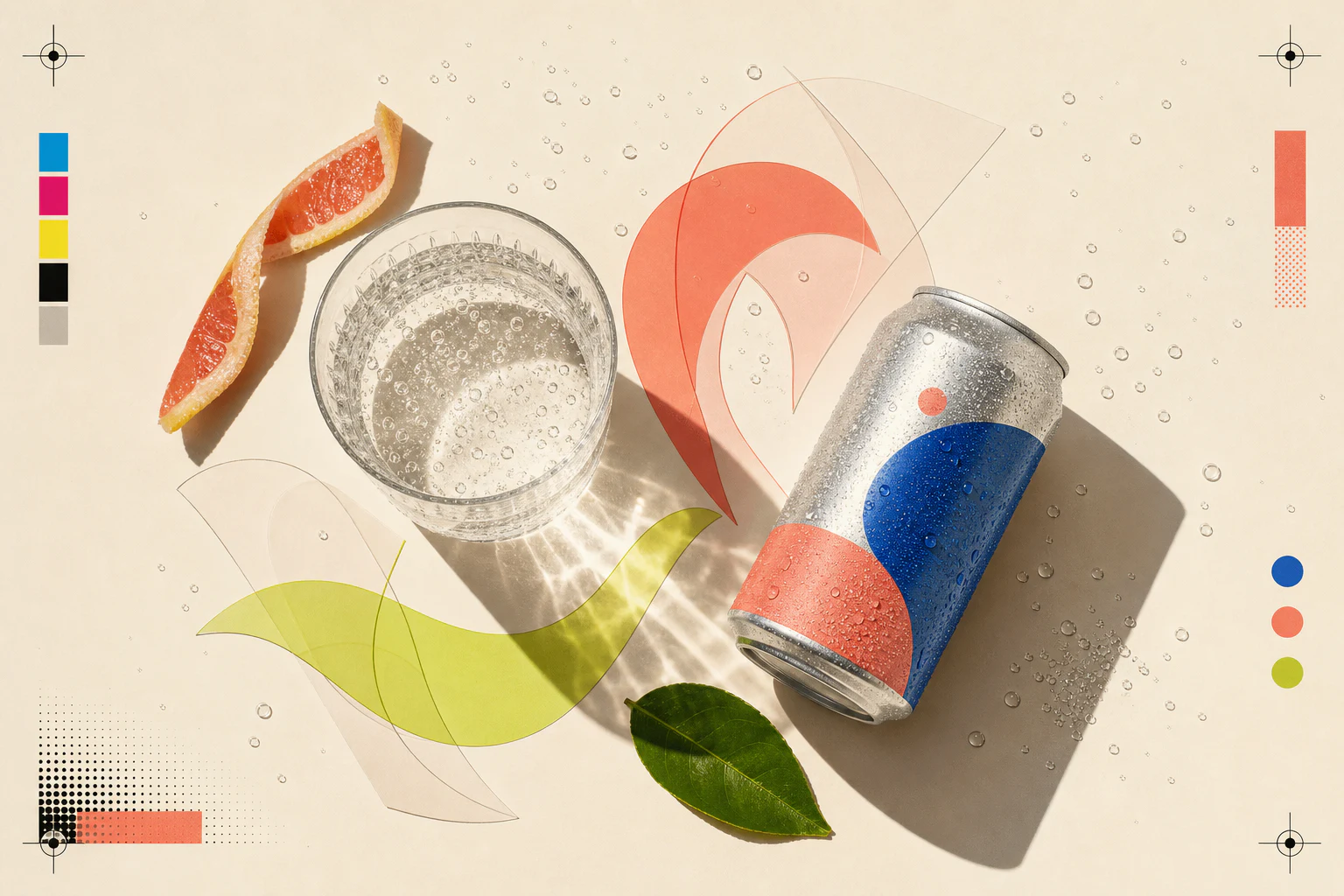
The flavor barely exists. Your attention makes it large.
LaCroix describes its water as naturally essenced and its current corporate materials emphasize zero calories, zero sweeteners, and zero sodium. Those are company and label claims, not a complete theory of pleasure. The interesting part is what happens around the small amount that remains.
Flavor begins as an aroma and becomes an act of interpretation. One drinker finds grapefruit. Another finds the memory of grapefruit candy. A third finds television static near a grapefruit. The disagreement is not a failure. It is participation.
Under federal rules, “natural flavor” names a source and a purpose: flavoring constituents derived from specified natural materials, used for flavor rather than nutrition. It does not promise a wedge of fruit living inside the can. The distance between the aromatic clue and the pictured fruit is where imagination works.
A loud flavor finishes the sentence for you. A weak flavor leaves a blank. LaCroix made the blank collectible.
Keep the categories clean
Claim, evidence, reading, limit.
Confirmed product claim
National Beverage describes LaCroix as naturally essenced sparkling water with zero calories, zero sweeteners, and zero sodium.
Sensory evidence
Published research describes carbon dioxide as activating oral trigeminal pathways, contributing a sting or bite beyond aroma alone.
Editorial reading
The crack, color, name, and social setting do much of the experiential work. That is our interpretation, not a product claim.
Useful limit
Flavored sparkling water may be acidic, and the environmental result depends on actual local recovery—not the can’s theoretical recyclability.
This is a design-and-ritual essay, not a nutrition recommendation or a laboratory analysis of one can. Label and company claims, sensory research, editorial interpretation, dental context, and recycling context are kept distinct. Product formulas and local recycling rules can change.
The can is the content
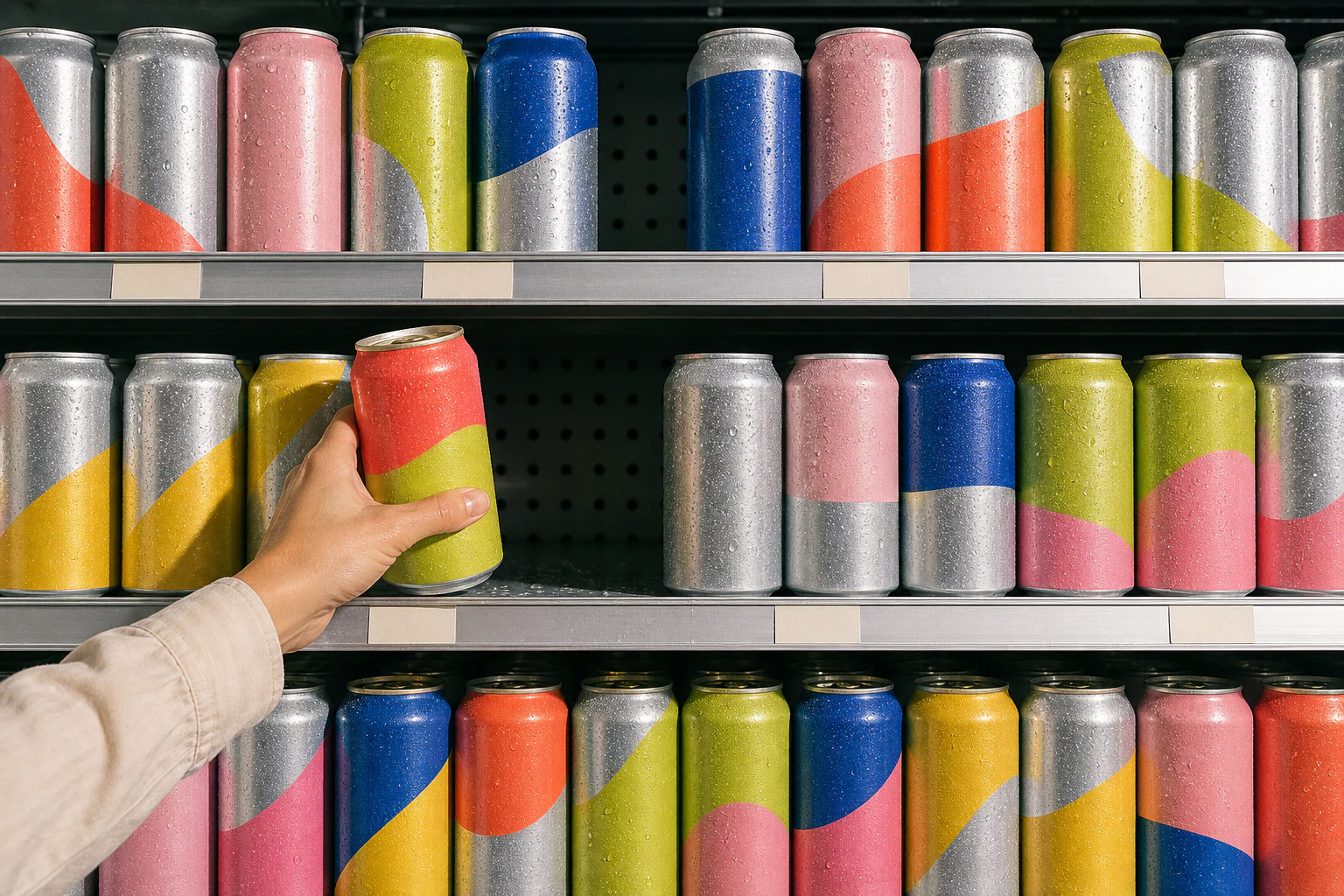
When the formula gets quiet, the surface has to speak.
On a refrigerated shelf, nearly identical liquids become a public palette. Color carries mood. Names carry fantasy. A person does not merely choose citrus; they choose whether today feels lime, tangerine, grapefruit, or something whose French-adjacent syllables sound better than its ingredient list could explain.
This is manufactured desire, but “manufactured” does not mean fake. All desire needs a scene. The can supplies one: cold metal, saturated color, a private favorite, a stack visible in the office refrigerator. The object lets restraint present itself as abundance.
The brand’s corporate parent calls attention to aroma, taste, and packaging as parts of the product’s appeal. That is a company description, and also a useful confession. The liquid is only one altitude of the experience. The shelf is another. The person carrying the can through a meeting is another still.
A can becomes a low-stakes flag. It says I am taking a break; I brought my own small pleasure; I have a preference; no, you may not understand why this particular one is the good one.
Small interactive instrument
Build an invisible flavor
Change the temperature, bubble, aroma, and setting. The result is not a recommendation; it is a small instrument for seeing how context manufactures taste.
Cool water with bright bubbles, lime-leaf static, opened after a walk.
COOL / BRIGHT / LIME LEAF / AFTER A WALKClip and keep
The refrigerator-door protocol
A field guide for getting more attention out of less beverage.
- Make it cold enough to feel like a decision.
- Choose by color before you choose by flavor.
- Open it somewhere quiet enough to hear the beginning.
- Take the first sip before reading the can.
- Name the flavor in your own words.
- Finish it, share it, or save it—but put the empty where your local system can actually recover it.
The joke about LaCroix is that it tastes like somebody whispered the name of a fruit in another room. The joke survives because it is accurate and affectionate. A whisper makes you lean in.
That lean is the product. The can does not overwhelm an ordinary afternoon. It gives the afternoon an edge, a color, and a beginning you can hear.
Almost nothing. But not nothing. An occasion.
Almost
nothing.
Source ledger
Eight places to keep reading.
Company claims are attributed. Scientific, regulatory, dental, and recycling context comes from the linked research and public agencies. The interpretation is PointCast’s.
- S01 National Beverage Corp. 2026 Form 10-K ↗
U.S. Securities and Exchange Commission · Current company description of LaCroix, zero-calorie and zero-sweetener claims, naturally essenced positioning, and retail distribution.
- S02 National Beverage brand portfolio ↗
National Beverage Corp. · Current corporate framing of LaCroix and the role assigned to aroma, taste, packaging, and flavor variety.
- S03 21 CFR § 101.22 — Foods; labeling of spices, flavorings, colorings and chemical preservatives ↗
Electronic Code of Federal Regulations · The federal definition and labeling purpose of natural flavor.
- S04 Carbonated Soft Drinks: What You Should Know ↗
U.S. Food and Drug Administration · General U.S. carbonated-beverage labeling and container context.
- S05 The Taste of Carbonation ↗
National Library of Medicine / Chemical Senses · Carbon dioxide, carbonic acid, oral trigeminal activation, and carbonation sting.
- S06 Dental Erosion ↗
American Dental Association · Dental-erosion context and practical boundary around acidic beverages.
- S07 Aluminum: Material-Specific Data ↗
U.S. Environmental Protection Agency · National aluminum-can recycling and landfill context.
- S08 How Do I Recycle Common Recyclables? ↗
U.S. Environmental Protection Agency · Local-program variability and practical recovery guidance.