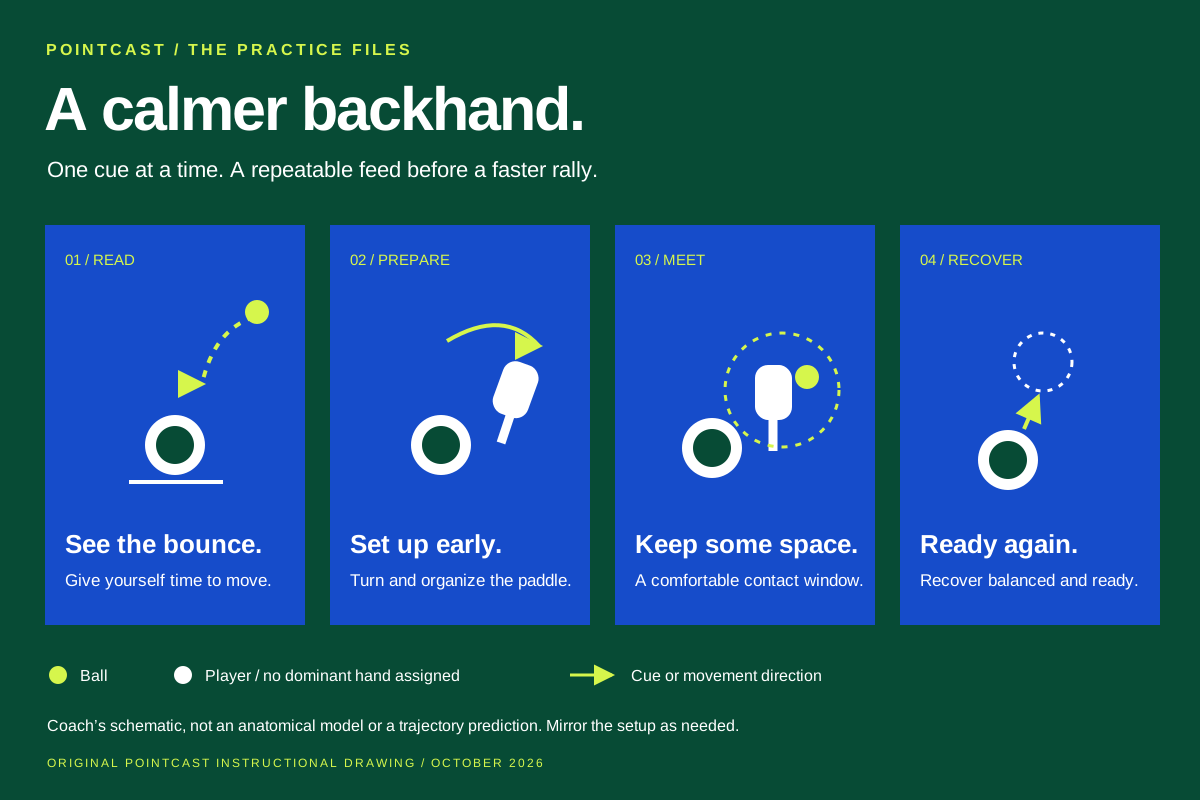
A cleaner backhand gives you a ball you can repeat and a position from which you can play again. Start with a modest goal: send a comfortable feed toward a large target, then recover before the next feed arrives. A spectacular winner tells you less than ten contacts you can describe. Were you crowded? Reaching? Balanced? Did the paddle face change just before contact?
Prepare early, keep the job small
Turn enough to bring the paddle to the backhand side, then use adjustment steps to create space. Picture a contact window in front of your body rather than beside your hip. If the ball crowds you, make room with your feet instead of inventing a last-second wrist flick. If it pulls you away, acknowledge the reach before choosing an ambitious target.
For a soft backhand drop, PrimeTime Pickleball's lesson emphasizes balance, a manageable preparation, and a smooth lifting path. Try that as a cue: prepare small, meet the ball in front, and keep the face steady through contact. A baseline drop needs a different amount of motion from a kitchen dink. Compact preparation does not mean every backhand has an identical swing. [2]
Watch what the ball does. Repeated high misses can prompt you to examine face angle and lift; repeated net misses can prompt you to examine clearance and contact. Change one variable for the next ten feeds. Those observations suggest a place to investigate; they do not diagnose the cause by themselves.
One hand or two: choose a useful option
The 2026 USA Pickleball rulebook permits one or both hands on the paddle. Neither option comes with a rating requirement. [1]
A second hand is worth exploring if it helps you guide the paddle consistently. Jordan Briones's two-handed lesson connects balance and spacing with a controlled upward path for a topspin dink or drop. That is a particular shot to practice, rather than a reason to replace every one-handed backhand. His lesson also keeps a one-handed option for some deep, difficult balls. [3]
Compare options with the same comfortable feed. Try ten one-handed contacts, then ten two-handed contacts if you want to explore that stroke. Record target hits and whether you recovered on time. Keep the result specific: “Two hands helped on these slow feeds” is useful. “Two hands fixed my backhand” skips the next test: movement, depth, or pace.
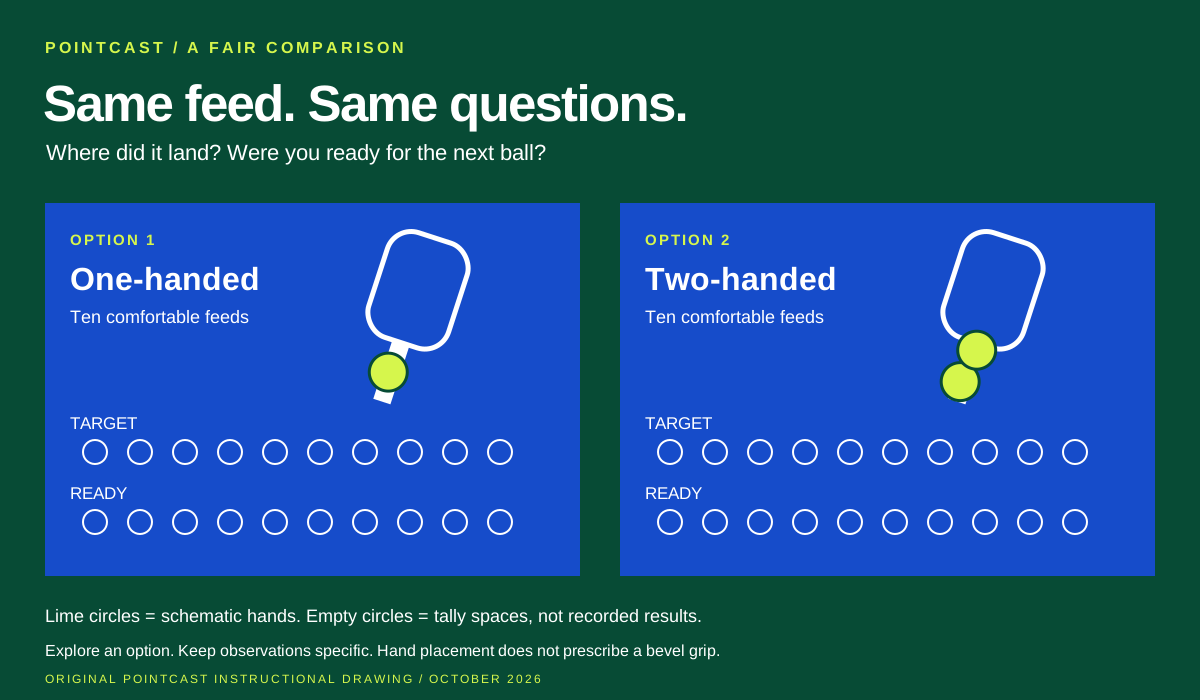
- 1 / One-handed option
- 2 / Two-handed option
- Ten unfilled circles / Tally spaces, not results
Under pressure, reduce the demand
A reset is a softer reply intended to make the opponent's next ball less attackable. When you are stretched or absorbing pace, a full swing may ask too much of the contact. PrimeTime's blocking lesson teaches using incoming speed, a small motion, a slightly open face, and a steady, relaxed grip. Begin with manageable feeds before adding speed. [4]
Take an early volley when you can control it. If a planned volley would require an awkward reach, allowing the bounce can be a better option; Briones discusses that adjustment. It is a decision to test, not an instruction to let every ball bounce. [5]
Keep the kitchen rule in the picture. After touching the non-volley zone, both feet must contact the surface completely outside it before a volley. Volley momentum into the zone remains a fault even after the ball is dead. See rules 11.A.2–11.A.3. [1]
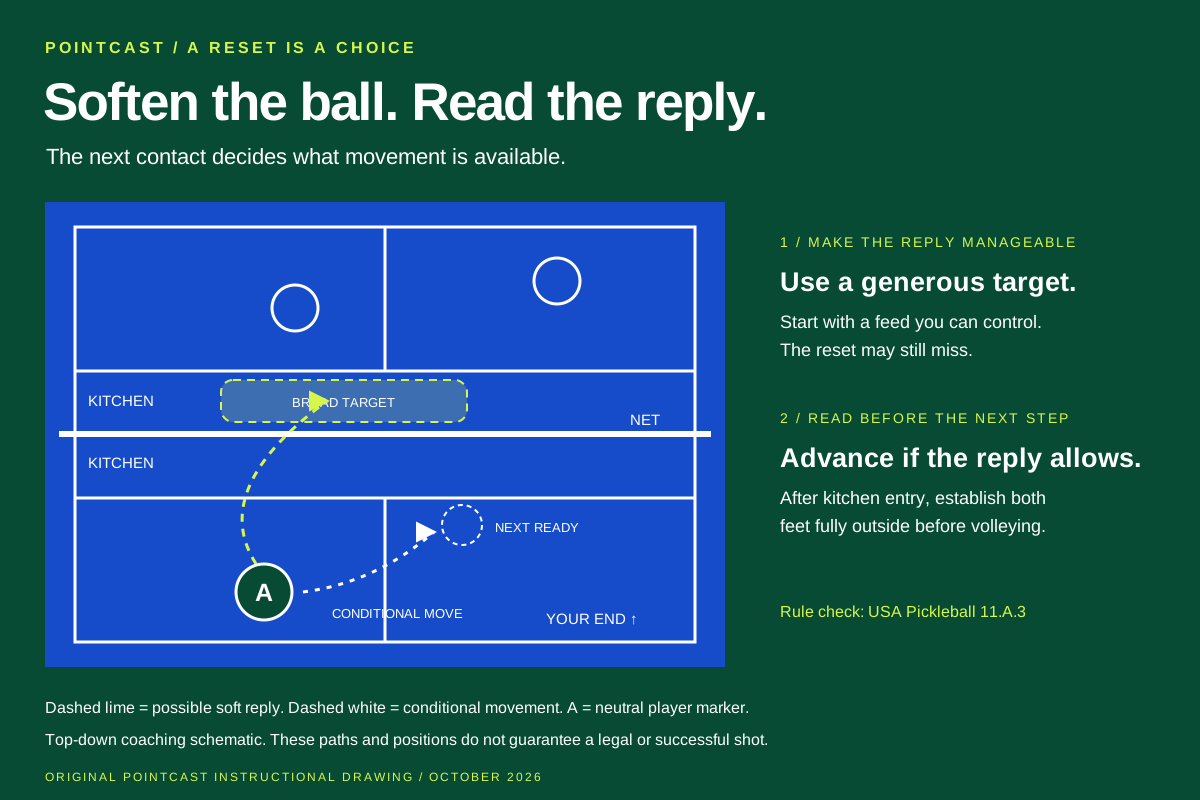
- A / Neutral player role
- Dashed lime / Possible soft reply
- Dashed white / Conditional movement
A three-round practice you can audit
Use a partner and the court lines as targets. The feeder lets your replies bounce so you can see their landing spots. Agree on a comfortable pace and repeat each round before making it harder.
- Find the contact. From near the kitchen line, receive ten easy bounced backhand feeds. Aim into the opposing kitchen with margin from its edges. Count target hits and contacts that felt crowded or stretched. Refeed an unsuitable ball rather than scoring it as a technique test.
- Add distance. Move back several steps and receive ten similar feeds. Aim for the same broad target with a soft drop. Count target hits, then note whether the next ready position arrived before the following feed. Change distance or tempo next time, rather than both together.
- Read the pressure. Receive ten alternating comfortable and faster feeds at a manageable level. Say “soft” or “firm” before contact to declare your intention. Count whether you chose deliberately, landed the soft replies in the target, and recovered. A firm reply is an option when you are balanced and have a clear target; it is not required.
Finish with one observation and one next experiment: “Four feeds crowded my contact; next round I will adjust sooner.” Repeat the same setup later to compare your own counts. The useful outcome is a clearer decision and a repeatable contact, not a promised timeline.
CHECKED 2026-10-03
Sources & coaching notes.
These original practice designs apply source-backed coaching cues to ordinary court sessions. Choose a manageable pace and adapt targets to your current control. Coaching choices are conditional; the official rulebook governs legal play.
- USA Pickleball: 2026 Official Rulebook
Current standing-play rules: hand options (12.B), opening bounces (10.A), doubles positions (5.B), and kitchen momentum and re-entry (11.A.2–11.A.3). Checked 2026-10-03.
- PrimeTime Pickleball: Backhand Third Shot Drop
Balance, manageable preparation, contact in front, and a smooth lifting path for a soft drop. This does not prescribe every backhand stroke. Checked 2026-10-03.
- Briones Pickleball: Two-Handed Backhand Lesson
A controlled topspin dink or drop option, with balance and spacing; a one-handed option remains useful in some situations. No improvement-time claim is adopted here. Checked 2026-10-03.
- PrimeTime Pickleball: Blocking Hard Shots
A small reset motion can use incoming pace. Start with manageable feeds; a reset is not available or successful on every ball. Checked 2026-10-03.
- Briones Pickleball: Choosing Where to Dink
Conditional bounce choices and the middle as one recovery option when pulled wide. Checked 2026-10-03.
Original PointCast editorial guidance and diagrams. Practice targets are suggested checkpoints; they do not award a rating or promise a result. 798 words · Read the article JSON.
YOUR NEXT SESSION
Make the cue a habit.
Choose your time, setup, and focus in the adaptive practice planner. Start with a manageable feed and change one thing at a time.
Plan a backhand session