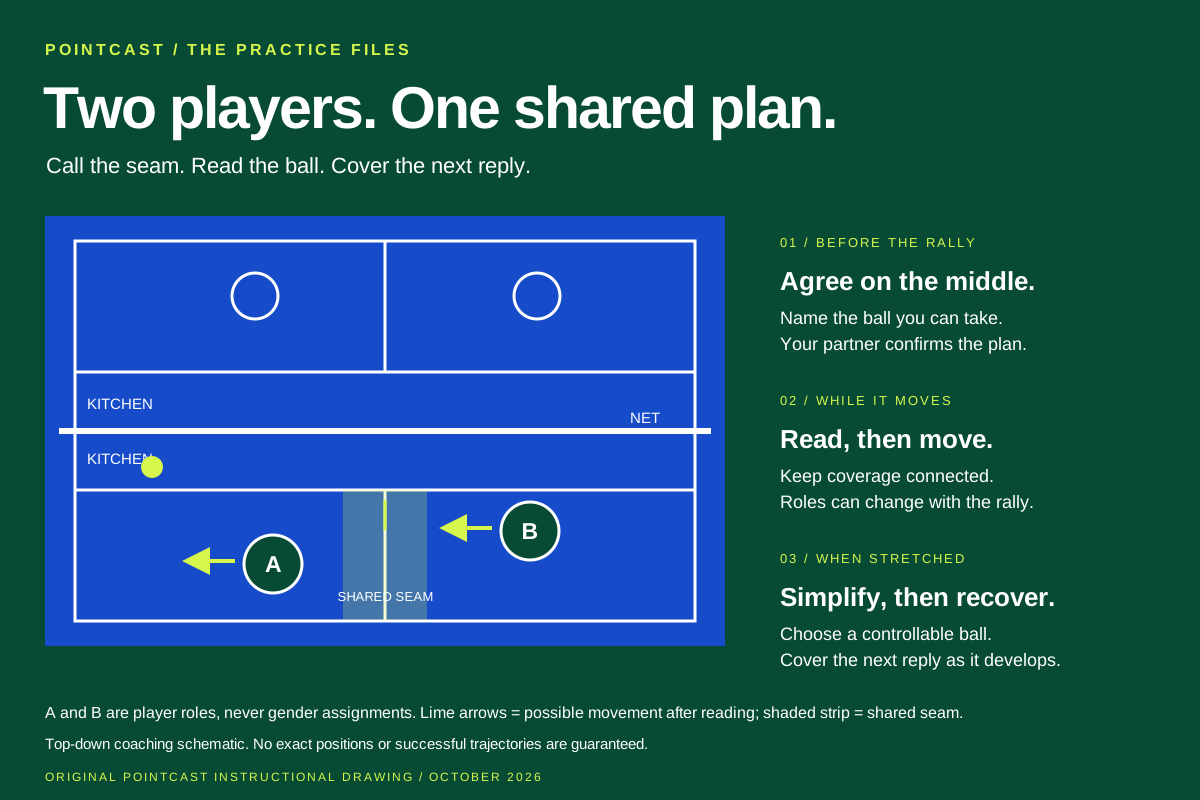
Mixed doubles works better when both players know what the partnership is trying to do. A useful plan reflects each player's strokes, movement, current position, and preferences. It gives both people a voice and can change when the rally changes. No player inherits a shot or a side because of gender. Before discussing winners, make the ordinary balls easier to share.
Make a small agreement before playing
Use the first half-minute to agree on “mine,” “yours,” and what “switch” means to you. Identify handedness, a starting plan for uncertain middle balls, and how you will handle a lob. Calls should arrive early enough to help. An agreement is a starting point; a partner with the cleanest available contact may still need to take a different ball.
Ask before giving technical advice between points. Tony Roig's partnership lesson encourages adjusting your own choices to the partner you actually have. Try a question that leaves room for an answer: “Would an earlier call help?” is more actionable than a verdict about somebody's backhand. Agree on one change together, then try it for a few rallies. [4]
Share the middle by reading the ball
“Forehand takes everything in the middle” is too blunt. Handedness, ball direction, spacing, and who is already in position matter. In Roig's middle-coverage lesson, a backhand can be the natural contact for the ball's path. Reaching across your partner for a forehand can also leave a hole behind you. [5]
Use right and left as court positions while facing the net, not permanent identities. Before a seam ball arrives, ask: who can meet it with less reaching, and what court will the other person cover afterward? A clear early call resolves the overlap. If both hesitate, replay the situation in practice instead of appointing a permanent owner for every middle ball.
Coordinate coverage without assuming you must stand at matching depths. Roig's positioning lesson describes reacting to the ball and the developing play. You may shift laterally toward a wide ball while maintaining useful spacing. One partner may be closer to the kitchen after a good drop while the hitter is still advancing. Read the opponent's contact before taking the next step; the same formation will not fit every reply. [6]
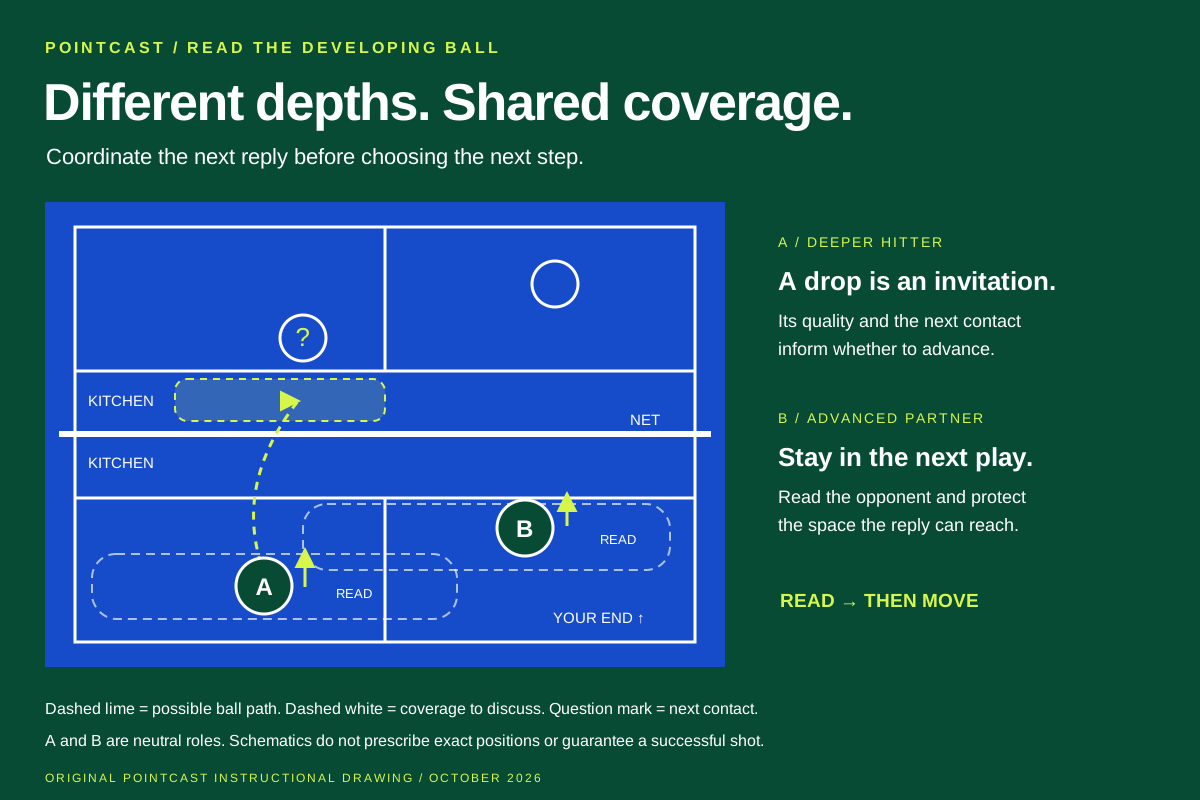
- A / Deeper hitter
- B / Advanced partner
- Dashed line / Possible ball path
- Outlined bands / Coverage to discuss
Attack an opportunity; reset a problem
Look for a combination: balance, a contact you can control, an available target, and a reasonable next position. A high ball alone does not guarantee a good attack. A low ball while reaching is a good reason to simplify. PrimeTime's strategy lesson separates attacking an advantage, creating pressure, and neutralizing trouble. [7]
If you are displaced, consider a soft reply toward a generous middle target and recover. Briones's dink-selection lesson offers the middle as one recovery option when pulled wide. A reset can also use the incoming pace with little swing, as shown in PrimeTime's blocking lesson. These are options to rehearse, not promises that every ball can be neutralized. [3] [2]
Judge the choice separately from the outcome. An opponent can miss after your risky swing; your sensible reset can miss the net. Record both the intention and what happened. That keeps a lucky point from becoming the whole tactical plan.
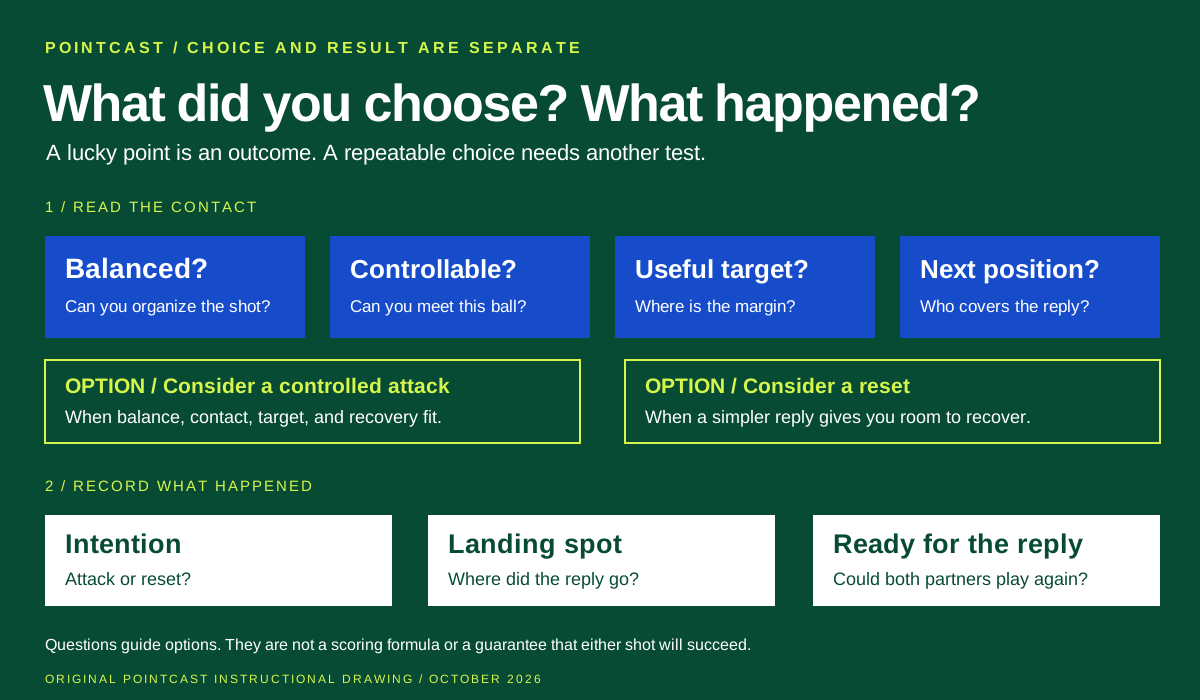
- Read the contact / Consider the available choice
- Record the result / Observe what happened next
Keep the opening legal
The serve and its return must each bounce before being returned. A preferred-side arrangement, including stacking, does not change the correct server or receiver. After those requirements, partners may position themselves on their own end subject to the other rules. Kitchen restrictions still apply to every volley. Check the current USA Pickleball rulebook, sections 5.B, 10.A, and 11.A. [1]
CHECKED 2026-10-03
Sources & coaching notes.
These original practice designs apply source-backed coaching cues to ordinary court sessions. Choose a manageable pace and adapt targets to your current control. Coaching choices are conditional; the official rulebook governs legal play.
- USA Pickleball: 2026 Official Rulebook
Current standing-play rules: hand options (12.B), opening bounces (10.A), doubles positions (5.B), and kitchen momentum and re-entry (11.A.2–11.A.3). Checked 2026-10-03.
- PrimeTime Pickleball: Blocking Hard Shots
A small reset motion can use incoming pace. Start with manageable feeds; a reset is not available or successful on every ball. Checked 2026-10-03.
- Briones Pickleball: Choosing Where to Dink
Conditional bounce choices and the middle as one recovery option when pulled wide. Checked 2026-10-03.
- Tony Roig: You Cannot Control Your Partner
Ask before offering technical advice and adjust your choices to the partnership you have. Checked 2026-10-03.
- Tony Roig: Forehand in the Middle
Ball direction, handedness, and available position qualify automatic forehand ownership of the middle. Checked 2026-10-03.
- Tony Roig: Move With Your Partner
React to the developing ball. Partners can coordinate while occupying different depths. Checked 2026-10-03.
- PrimeTime Pickleball: Three Strategies
Attack an advantage, create pressure, or neutralize trouble; no win probabilities or guaranteed outcomes are adopted here. Checked 2026-10-03.
Original PointCast editorial guidance and diagrams. Practice targets are suggested checkpoints; they do not award a rating or promise a result. 836 words · Read the article JSON.
YOUR NEXT SESSION
Make the cue a habit.
Choose your time, setup, and focus in the adaptive practice planner. Start with a manageable feed and change one thing at a time.
Plan a doubles session