PointCastPICKLEBALL

PointCast × RALLY / The pickleball connection

Leave it all
on the court.

Your next game starts here. Find a court, build a better rally, and bring your people.

EL SEGUNDO · SOUTH BAY · BEYONDSHOW UP. PLAY MORE.
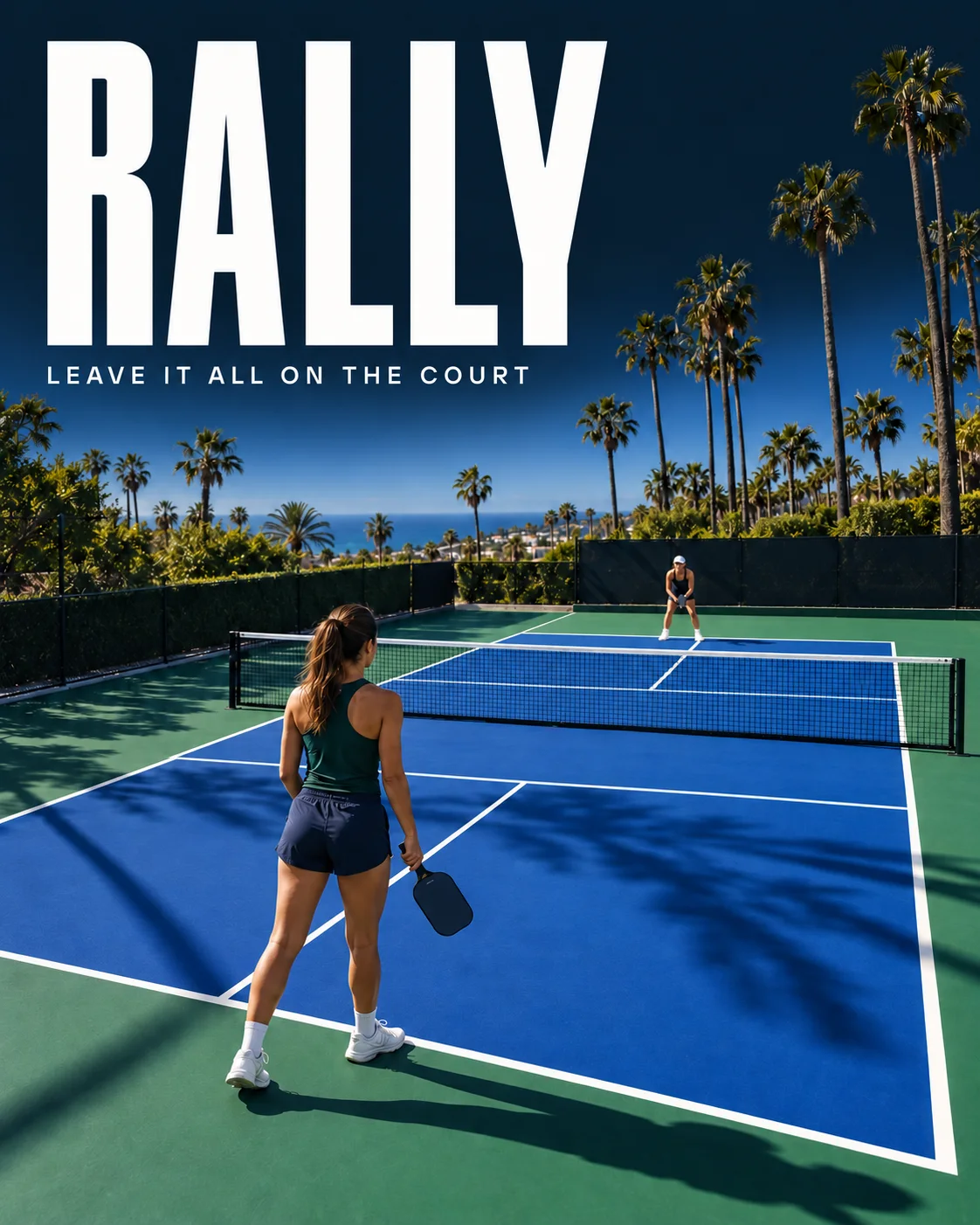
Leave it all on the court: RALLY pickleball campaign artwork
THE COURT IS THE COMMON GROUND.RALLY / CAMPAIGN STUDY
PLAYLEARNRALLYREPEATPLAY

01 / Build your game

A little better.
Every time.

You don’t need a perfect game to belong on court. Pick a starting point, practice with purpose, and move forward when the checkpoint feels repeatable.

Get into the game

Learn the rules, start a rally, and finish your first doubles game with confidence.

Start here if Choose this if serving, the kitchen, or the score still makes you pause.

01

1. Build one reliable serve

Pick a legal serve motion and a generous diagonal target. Repeat the same setup.

Try it Hit 10 serves from each side at a towel-sized target safely inside the service court. Start with a drop serve if the bounce makes timing easier.

Your checkpoint Can you land 8 of 10 legally from each side without rushing? Increase placement before pace.

02

2. Start every rally correctly

Return the serve after its bounce. Stay ready for the return bounce when your team serves.

Try it With a partner, play 10 serve–return–third-shot sequences. Say 'bounce' on the first two contacts, then continue cooperatively.

Your checkpoint Complete 10 starts with no early volley. Then aim the return deeper and recover your balance.

03

3. Know when to step in

A dink is a soft bounced shot near the net. Enter for the bounce; get fully out before a volley.

Try it Trade 10 soft dinks, including a short feed that invites you into the kitchen. Recover outside it, then receive one gentle volley feed and finish balanced.

Your checkpoint Can you explain why a bounced shot inside is legal and a volley with kitchen contact is a fault?

04

4. Call a doubles game

Agree on side-out scoring. Say all three numbers before each serve.

Try it Walk through 0–0–2, an opening side out, a point won by the next team, then first-server and second-server faults. Play a game with a partner checking each call.

Your checkpoint You can identify the serving team, correct side, and server number after both a point and a lost rally.

Build a dependable doubles game

Use depth, soft hands, and shared court coverage to earn a better next ball.

Start here if Choose this if you know the rules and can sustain a rally, but drops, resets, or partner positioning vary under pressure.

01

1. Give the forehand a shape

Turn early, meet the ball in front, and finish toward the target. Make clean placement repeatable.

Try it Ask a partner for 10 comfortable forehand feeds. Send five crosscourt and five through the middle, then alternate the targets on their call.

Your checkpoint At least 7 of 10 reach the called target area in court without changing your swing into a hard slap.

02

2. Drop, observe, then advance

Give the ball enough arc to land softly in the opposing kitchen. Move only as far as your shot earns.

Try it Start a few steps behind the kitchen line. Hit five drops, step back after a successful set, and work toward the baseline. Stop and prepare as your partner contacts the ball.

Your checkpoint From each distance, land 3 of 5 soft drops that your partner plays from below net height. A miss is useful feedback, not a reason to rush in.

03

3. Reset a difficult ball

A reset takes pace off an incoming ball and sends it softly toward the kitchen. Shorten the stroke.

Try it Stand in midcourt while a partner feeds controlled volleys. Reset five to the middle kitchen, then take one step forward after a good reset and stop for the next feed.

Your checkpoint Reset 3 of 5 feeds without a high attackable bounce. Repeat at the same pace before making the feed harder.

04

4. Own the right side together

Facing the net, call the seam before play and move with your partner. Court side is a role, not a permanent assignment.

Try it Begin with one player on the right. Opponents feed toward the right sideline and middle in turn. Call 'mine' or 'yours' early, recover together, then swap roles.

Your checkpoint Complete 10 feeds with no collision, silent middle ball, or two-player chase. For a left-handed player, agree coverage again rather than assuming the same forehand geometry.

Turn control into pressure

Train decisions under variation: when to attack, when to reset, and how to cover the next ball.

Start here if Choose this if your fundamentals hold in games and you want to test decisions, disguise, and doubles patterns under pressure.

01

1. Create a weaker next contact

Change dink placement while keeping an unattackable height. Read the reply instead of forcing a winner.

Try it Trade four neutral crosscourt dinks, then move the fifth toward a different kitchen target. Resume the rally and notice whether the opponent must reach or moves comfortably.

Your checkpoint Across 10 pattern changes, keep at least 7 in and recover before the next contact. Track pop-ups as well as outright misses.

02

2. Choose drop or drive on purpose

Use your contact height, balance, and opponents' positions to choose. Prepare for the fifth shot either way.

Try it A feeder alternates deep returns and shorter sits-up balls. Call 'drop' or 'drive' before your third contact, play the next two shots, and explain the choice afterward.

Your checkpoint Review 10 sequences: was the choice playable, and did you recover for the reply? Count the quality of the fifth shot, not just the third.

03

3. Attack a ball you can support

A speed-up changes a soft exchange into a faster one. Attack from balance and prepare for a counter.

Try it After three cooperative dinks, the feeder varies a low ball and a higher ball. Reset the low ball; on a suitable higher contact, speed up at controlled pace and play the reply.

Your checkpoint Make 8 of 10 sensible decisions without a kitchen fault. A kept-in reset earns as much credit as a controlled attack.

04

4. Cover the counter as a pair

Before the ball speeds up, agree who covers the seam and who protects the line. Recover after every contact.

Try it In four-player practice, start at the kitchen line. The right-side player changes one ball's pace, the partner covers the agreed middle, and both play two more shots. Swap right-side roles after five starts.

Your checkpoint Across 10 starts, both players are ready for the next shot and can describe the same coverage plan. Add randomness only when the pair stays coordinated.

Practice checkmarks stay in this browser when storage is available.

Before the first serve.

Start behind the baseline

At serve contact, keep at least one foot on the ground behind the baseline. Neither foot may touch the baseline, court, or ground outside the extended sideline and centerline.

Volley serve or drop serve

Volley serve: hit before a bounce, swinging upward; contact at or below waist level with the paddle head no higher than the wrist. Drop serve: release from a natural, unaided height without propelling the ball, let it bounce, then hit. The three volley-serve motion restrictions do not apply to the drop serve. Keep the release visible and do not add spin on release.

Diagonal, beyond the kitchen

Serve into the opposite diagonal service court. Its kitchen line is out on a serve; the other service-court lines are in. A net-touching serve that lands legally remains in play.

One bounce on each side first

Let the serve bounce before returning it. The serving team must then let that return bounce. After these two bounces, volleys are allowed outside the kitchen.

The kitchen is for bounced balls

You may enter the kitchen to play a bounced ball. Before volleying again, place both feet fully outside it. During a volley, you, your gear, and anything touching you must avoid the kitchen and its lines. Momentum into it, or something touching it, is a fault even after the rally ends.

Call three numbers in doubles

Only the serving team scores. Call serving score, receiving score, then server 1 or 2. Begin 0–0–2: the opening team gets one server. Later, both partners serve before side out. Usually play to 11, win by two. Confirm the format; rally scoring works differently.

Original RALLY practice prompts. Rules are checked against USA Pickleball's official 2026 sources; drills and success targets are practice suggestions, not official skill tests. Pick a path by what you can do consistently. These paths do not award or endorse a rating. Rules checked 2026-10-02.

Keep the original links close.

The existing guide and score tool, plus PointCast’s original editorial notes. The practice prompts above are newly written; archive notes retain their original context.

02 / Make the next half hour count

Less scrolling.
More reps.

A warm-up, one clear focus, and a little play. Choose the time you have. Every plan is ready to take to the court.

15 minutes · find your touch

A useful short session before a game: clean starts, quiet dinks, clear scoring.

  1. 2min

    Cooperative start

    Trade easy bounced shots near the net. Choose one generous landing target and build a steady rhythm.

  2. 5min

    Serve, return, recover

    Alternate five serve–return–third-shot starts per player. Observe both opening bounces and stop ready for the next contact.

    Open the drill lab
  3. 5min

    Two dink targets

    Run a shortened four-target drill: two minutes on each target pair, then one minute trying a 10-ball rally.

    Open the drill lab
  4. 3min

    Score rehearsal

    Walk through an opening 0–0–2 side out, then both servers on the other team. Each player calls the next score and points to the correct server. Finish by naming one shot to take into the next game.

30 minutes · earn the kitchen

Forehand placement, drops, and resets that carry into doubles.

  1. 3min

    Touch and rhythm

    Start with easy dinks and comfortable groundstrokes. Agree on today's target and pace.

  2. 6min

    Forehand targets

    Run crosscourt-to-middle forehands, three minutes in each role. Keep a count of called targets reached.

    Open the drill lab
  3. 8min

    Drop ladder

    Work away from the kitchen line toward the baseline. Move back after a successful set; trade roles halfway.

    Open the drill lab
  4. 8min

    Reset and advance

    Begin in midcourt. Advance one step after a soft reset and prepare for the next feed; hold when the ball sits up.

    Open the drill lab
  5. 5min

    Apply and review

    Play unscored full-court practice rallies beginning with a diagonal serve, the return bounce, and a chosen drop or drive. Switch ends halfway. Name one repeatable cue and one thing to revisit.

45 minutes · doubles decisions

Prepare together, protect the seam, and support every attack with a next-shot plan.

  1. 5min

    Pair warm-up

    Begin with cooperative dinks and controlled groundstrokes. Agree who covers the middle with today's handedness and court sides.

  2. 8min

    Four-player opening patterns

    Run serve–return–third-shot starts with all four players, then play one more ball. Rotate the server every two minutes and count balanced next contacts.

    Open the drill lab
  3. 8min

    Dink placement

    Use two crosscourt pairs for the four-target drill. Change targets together every two minutes; note pop-ups as well as misses.

    Open the drill lab
  4. 8min

    Right side and seam

    Mix right-sideline and middle feeds. Swap court-side roles and then swap the receiving pair halfway.

    Open the drill lab
  5. 10min

    Controlled attack decisions

    Extend attack-or-reset practice to 10 minutes. Train five starts per decision-maker, then let all four players choose. Credit a sound reset as well as a sound attack.

    Open the drill lab
  6. 6min

    Play, then name the pattern

    Play standard doubles with side-out scoring for five minutes. Use the final minute to name one successful coverage pattern and one decision each pair will train next.

The drill lab.

Simple setups. Clear targets. Open a drill and get going.

01Serve to a generous targetbeginner · 6 min · 1–2

Set up Use a court, 5–10 balls, and a flat target marker well inside each diagonal service court. Keep markers away from anyone's footing.

  1. Choose a volley serve or drop serve and check the corresponding rules above.
  2. Hit 10 from the right, then 10 from the left; collect balls between sets.
  3. Count legal serves separately from serves that reach the target. Repeat with the same routine.

Build it After 8 of 10 legal serves from each side, make the target smaller or deeper. Change one variable at a time.

Success target 8 of 10 legal serves from each side; 5 of 10 in the chosen target area.

02Return deep, arrive readybeginner · 6 min · 2

Set up One player serves; the other receives behind the baseline. Choose a large return target several feet inside the opposite baseline.

  1. Let the serve bounce, return into the deep target, and begin moving toward the kitchen line.
  2. The server lets the return bounce before hitting a controlled third shot. The receiver stops and gets ready as that player contacts the ball.
  3. Play one more shot, reset, and repeat five times before swapping roles.

Build it Vary the serve's placement. If the return is weak, practice stopping earlier and handling the next shot before advancing again.

Success target 7 of 10 returns in court, with no two-bounce-rule violation and a balanced next contact.

03Four-target dink controlbeginner · 8 min · 2

Set up Stand diagonally opposite near the kitchen lines. Choose two generous landing areas in each kitchen; point to them instead of placing objects underfoot.

  1. Spend two minutes on one paired target, letting the ball bounce and keeping the pace cooperative.
  2. Change the target pair for two minutes, then switch court halves and repeat both pairs.
  3. Count the longest rally and note balls that land in the target but sit high enough to attack.

Build it Call the next target before contact, or change placement after four neutral dinks. Keep control before adding pressure.

Success target One rally of 10 controlled dinks from each court half, with at least 6 reaching the chosen areas.

04Forehand: crosscourt to middleintermediate · 6 min · 2

Set up Hitter near the baseline; feeder across the net supplies comfortable bounced forehands. Agree on crosscourt and middle target areas.

  1. Turn before the bounce and contact in front. Send five forehands crosscourt at a pace the feeder can handle.
  2. Send five toward the middle, then let the feeder call the target before the bounce for another 10.
  3. Swap roles after three minutes. Count placement, balance, and readiness for the next ball.

Build it Vary feed depth, then play the reply. For a right-side hitter, add recovery from the forehand sideline toward the agreed seam.

Success target 7 of 10 called targets reached in court while finishing balanced.

05The drop ladderintermediate · 8 min · 2

Set up Feeder at the kitchen line; hitter starts a few steps behind their own kitchen line. Use the middle of the opposing kitchen as the target.

  1. On five comfortable bounced feeds, lift the ball softly into the target kitchen.
  2. After 3 of 5 successful drops, move the starting position two steps farther from the net; work toward the baseline.
  3. After a good drop, move forward and stop for the feeder's next contact. Swap roles halfway.

Build it Add a deeper feed or forehand/backhand variation. Return to the previous distance if touch disappears.

Success target 3 of 5 drops land in the kitchen and require the feeder to contact below net height at two different starting distances.

06Reset your way forwardintermediate · 8 min · 2

Set up Feeder at the kitchen line; hitter in midcourt. Feed at controlled pace with enough spacing to reset between balls.

  1. Send five feeds toward the hitter's feet or comfortable reach. The hitter uses a short stroke to soften the reply into the kitchen.
  2. After a low reset, take one step forward; stop and prepare as the feeder contacts the next ball.
  3. If the reset sits up, hold position and handle the next feed. Swap roles after four minutes.

Build it Vary direction before increasing pace. Add a partner moving beside the hitter once individual control is consistent.

Success target 3 of 5 resets land softly in the kitchen; complete one three-ball forward sequence without a rushed contact.

07Right side + shared seamintermediate · 8 min · 3–4

Set up A doubles pair near the kitchen line faces one or two cooperative feeders. Right and left mean the player's view facing the net. Agree who takes the seam, accounting for handedness.

  1. Feed five balls toward the right sideline. The right-side player handles the ball while the partner shifts to protect the middle.
  2. Feed five middle balls. Use an early 'mine' or 'yours' call and keep the other player available for the next shot.
  3. Mix the two locations for 10 feeds, then swap court-side roles. With four players, trade feeding and receiving roles halfway.

Build it Play two follow-up shots after each feed, then add a controlled pace change from the right-side player and cover its counter.

Success target 10 mixed feeds with one clear hitter per ball, no collision, and both players prepared for the reply.

08Attack or reset?advanced · 8 min · 2–4

Set up Players at the kitchen lines. Start cooperatively on one court half with two players, or as doubles with four. Agree to controlled pace and the same decision goal.

  1. Begin each sequence with three cooperative dinks. The feeder then varies a low ball and a ball that allows a higher, balanced contact.
  2. Keep the low ball soft. On a suitable higher ball, choose a controlled speed-up and prepare for the counter; choosing another dink is allowed.
  3. Play two more shots, then discuss the decision. Swap the decision-making role after five sequences.

Build it Remove the predictable fourth-feed timing, then use normal points. Score decision quality separately from winning the rally.

Success target 8 of 10 choices suit the contact height and balance, with recovery for the reply and no kitchen fault.

03 / Find your place

Meet you
at the court.

Start in El Segundo and the South Bay, then head up the coast. These are sourced venue references: check the current city schedule and access requirements before you go.

11 sourced court references · checked 2026-10-02

Court details were checked against city, city-operated recreation, venue-operator, and USA Pickleball sources on October 2, 2026. This directory describes published access policies; it does not show live availability. Follow current venue schedules and posted signs before playing.

01El SegundoPublic

Recreation Park Courts

Outdoor sports complex. The current city booking portal refers to pickleball Courts 1–8; an older city overview says four courts.

401 Sheldon Street, El Segundo, CA 90245

Access
Free walk-on play when unreserved. Paid reservations and city programs take priority.
Before you go
The city-operated portal publishes 8 AM–10 PM. Check its current calendar for reserved courts and programs.
Local rules & access notes
  • Private paid instruction and unapproved organized activities are prohibited.
  • Water only on the courts; no pets, glass, or wheeled vehicles.
  • Court-count descriptions differ between official sources; confirm the current setup with the Checkout Building at 310-524-2700.
Directions Checked 2026-10-02
02Manhattan BeachPublic

Manhattan Beach Middle School Courts

Five open-play courts and one beginner court.

1501 N. Redondo Avenue, Manhattan Beach, CA 90266

Access
Free public play on weekends and MBUSD breaks and holidays.
Before you go
Published public window: 8 AM–dusk on weekends and MBUSD breaks and holidays.
Local rules & access notes
  • Follow the challenge-court rules posted at the venue.
  • The city does not publish ordinary weekday-after-school public access on this page. Gate access is not guaranteed.
Directions Checked 2026-10-02
03Manhattan BeachPublicConfirm details

Manhattan Heights Park Courts

Drop-in setup expands to seven courts except Wednesday mornings, when three are listed.

1600 Manhattan Beach Boulevard, Manhattan Beach, CA 90266

Access
Paid reservations or scheduled drop-in. Hourly rates: $12 residents / $16 nonresidents. Daily drop-in: $3 / $4.
Before you go
Published drop-in: weekday mornings, Monday/Friday evenings, and Saturday evenings; verify the current session.
Local rules & access notes
  • Reserve online; maximum two one-hour reservations per day.
  • The page gives conflicting closing hours. Check the city's booking calendar.
Directions Checked 2026-10-02
04HawthornePublic

Betty Ainsworth Sports Center Courts

Four hybrid courts; the city provides nets and equipment.

3851 W. El Segundo Boulevard, Hawthorne, CA 90250

Access
Free, first come, first served; city programs have priority.
Before you go
City regulations publish 9 AM–9 PM; check posted program use.
Local rules & access notes
  • Use posted rotation rules when players wait.
  • Only city programs may provide instruction.
  • Adults 18+ receive court preference after 6 PM.
Directions Checked 2026-10-02
05HawthornePublic

Holly Glen Park Courts

Four hybrid pickleball courts; bring your own net and equipment.

5255 W. 137th Street, Hawthorne, CA 90250

Access
Free, first come, first served; city programs have priority.
Before you go
City regulations publish 9 AM–9 PM; check posted program use.
Local rules & access notes
  • Use posted rotation rules when players wait.
  • Only city programs may provide instruction.
  • Adults 18+ receive court preference after 6 PM.
Directions Checked 2026-10-02
06HawthornePublic

Ramona Park Courts

Two hybrid courts; bring your own net and equipment.

4662 W. 136th Street, Hawthorne, CA 90250

Access
Free, first come, first served; city programs have priority.
Before you go
City regulations publish 9 AM–9 PM; check posted program use.
Local rules & access notes
  • Use posted rotation rules when players wait.
  • Only city programs may provide instruction.
  • Adults 18+ receive court preference after 6 PM.
Directions Checked 2026-10-02
07TorrancePublic

Dee Hardison Sports Center

Indoor adult drop-in at Wilson Park's sports center.

2400 Jefferson Street, Torrance, CA 90501

Access
Online registration is required. Published fee: $5 per person; ages 18+; capacity 30.
Before you go
The city lists Monday and Wednesday, 10 AM–2 PM. Verify the selected session on Torrance Rec.
Local rules & access notes
  • Spectators are not permitted.
  • Registration and program capacity determine access; this page does not confirm a place is available.
Directions Checked 2026-10-02
08Santa MonicaPublicConfirm details

Memorial Park Pickleball Courts

Sixteen pickleball courts share four tennis courts.

1401 Olympic Boulevard, Santa Monica, CA

Access
First come, first served outside city programs and approved permits. Organized drop-in uses registration and a paddle queue.
Before you go
Organized sessions are published for weekday evenings and weekends. The page has inconsistent weekend end times; check the current registration listing.
Local rules & access notes
  • No private instruction.
  • When players wait, use the paddle queue and do not drill.
  • Follow city staff and posted rotation rules.
  • Registration windows differ for residents and nonresidents. Walk-in registration is accepted only if space remains.
Directions Checked 2026-10-02
09Hermosa BeachPublicConfirm details

Kelly Courts

The current facility page lists four pickleball courts beside Clark Field.

861 Valley Drive, Hermosa Beach, CA 90254

Access
Confirm with Parks and Recreation at 310-318-0280. The linked policy permits free unreserved walk-on play and limits reservations to resident members.
Before you go
Current hours and the number of usable courts need confirmation. No availability is implied.
Local rules & access notes
  • The linked policy restricts equipment and requires city approval for instruction; check the current posted policy.
  • The facility page lists 9 AM–7 PM daily. Its linked PDF still gives a restricted Tuesday–Saturday schedule and says Courts 3 and 4 are closed. These official sources conflict.
Directions Checked 2026-10-02
10El SegundoCommercial · paidConfirm details

California Smash

Nine indoor padded courts at a privately operated pickleball and social club.

815 N. Nash Street, El Segundo, CA 90245

Access
Open to the public without membership. Paid hourly court bookings use CourtReserve; classes and scheduled open play are also listed.
Before you go
Use the operator's current booking calendar. A listed facility or program does not imply an available court.
Local rules & access notes
  • Prices vary by court type and selected time. The booking page and footer give different weekday and Sunday closing hours; confirm the selected session with the operator at 310-295-4048.
Directions Checked 2026-10-02
11El SegundoPrivate · membersConfirm details

Love.Life Pickleball

Three indoor courts in the Love.Life longevity club; lessons, clinics, and an observation lounge are listed.

740 S. Pacific Coast Highway, El Segundo, CA 90245

Access
Membership-based club access. The operator says pickleball is included in all memberships for the first year; confirm current terms before planning a visit.
Before you go
Published club hours are not a pickleball court-availability calendar. Confirm court access directly with the operator.
Local rules & access notes
  • Guest access, court booking requirements, lesson fees, and access after the first year need confirmation with the club at 310-424-7011.
Directions Checked 2026-10-02

04 / A little court culture

Good game.
Great company.

Palms overhead. A ball in the air. One more game before the light goes. RALLY’s visual world is built around the people who make a court feel like home.

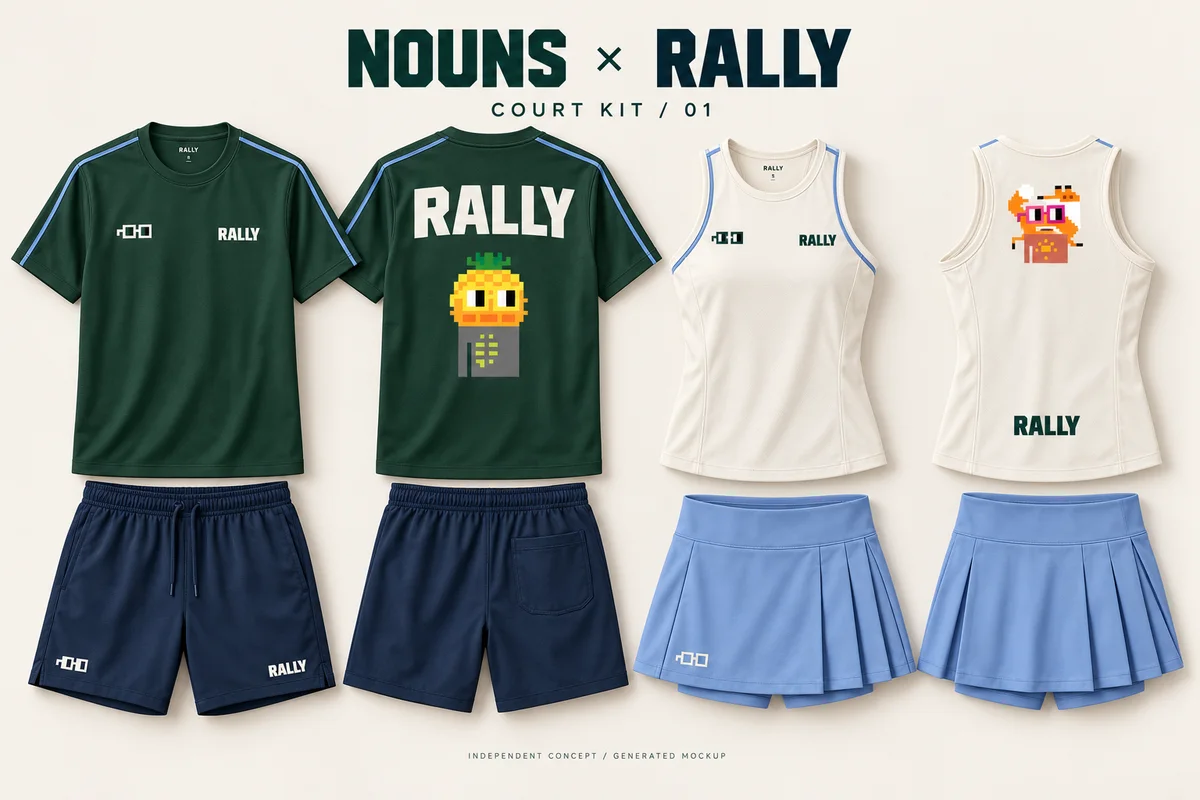
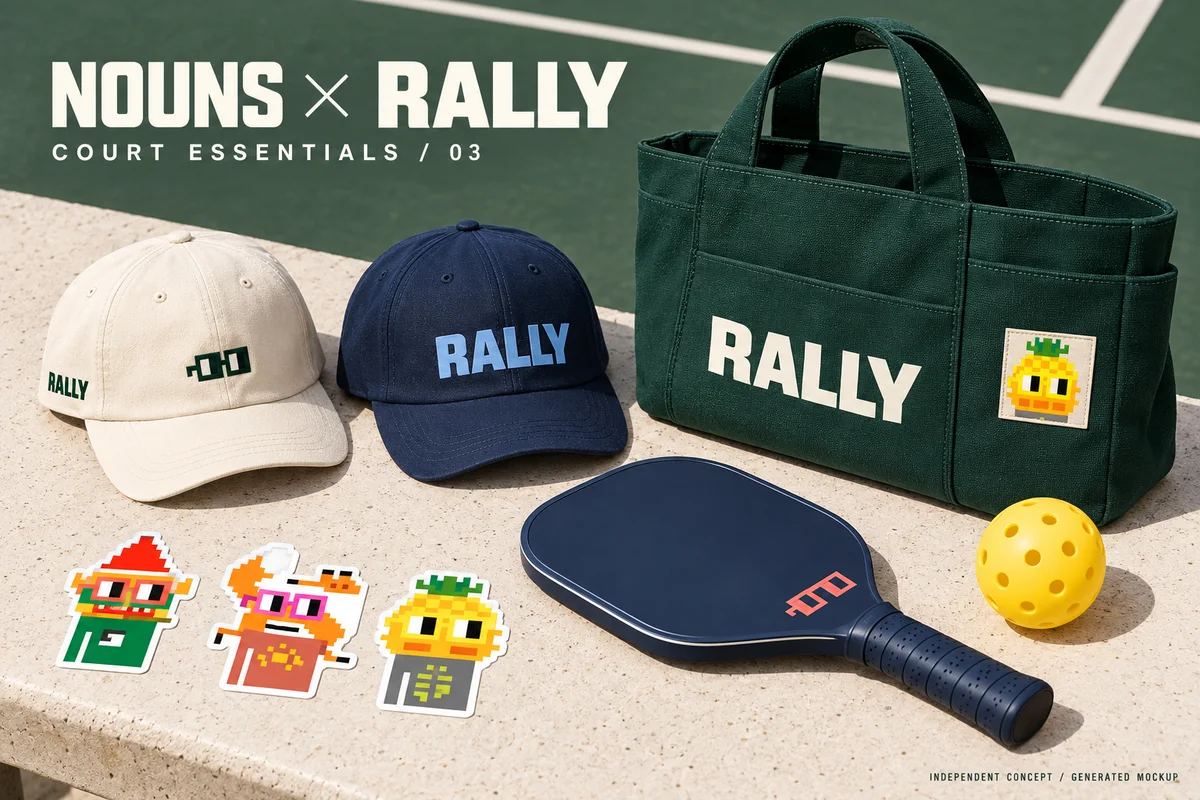
Independent generated campaign and courtwear concepts. Any depicted locations or teams are fictional; no Nouns endorsement, product availability, or checkout is implied.

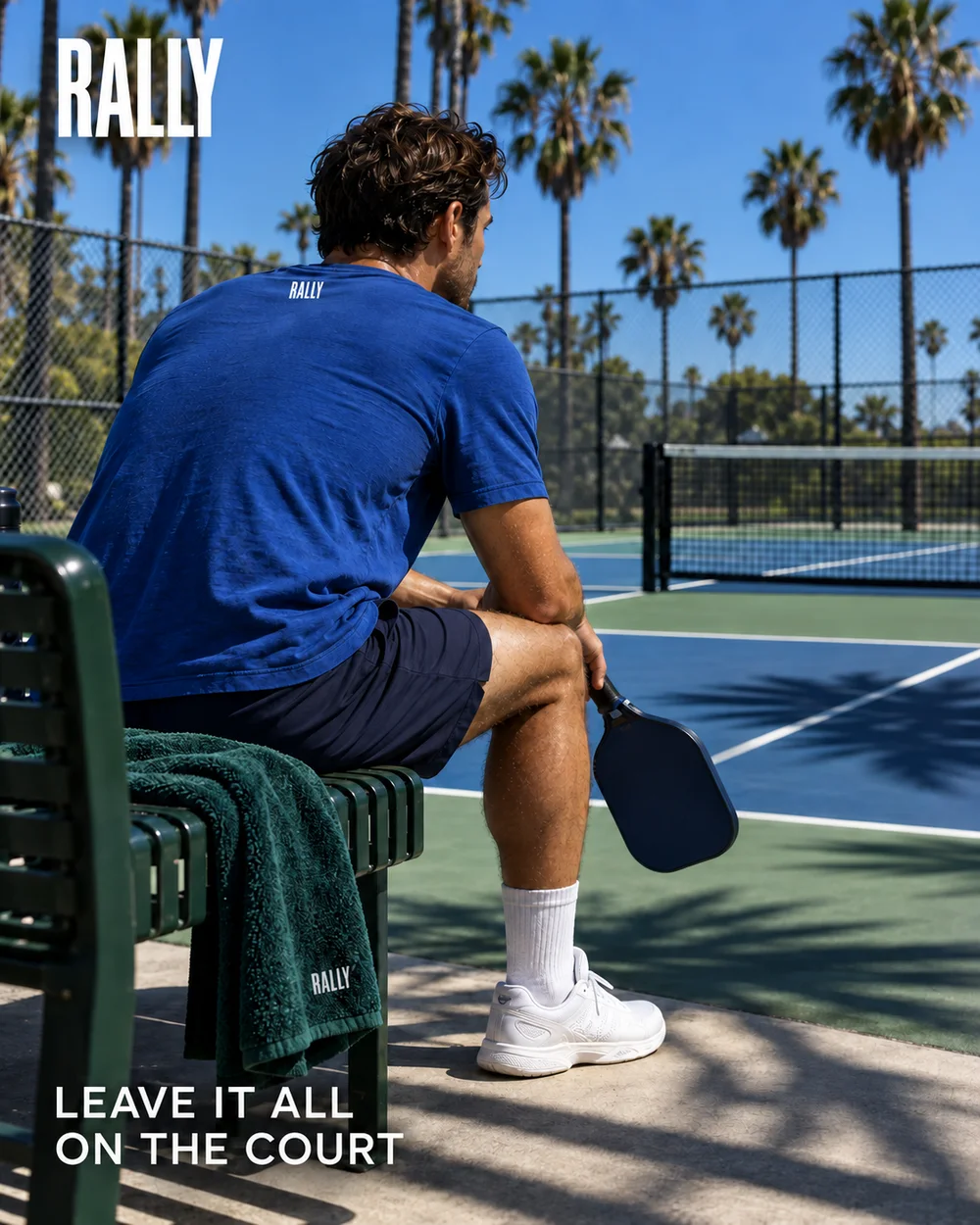
RALLY courtside campaign concept
01 / COURTSIDEStay for one more.
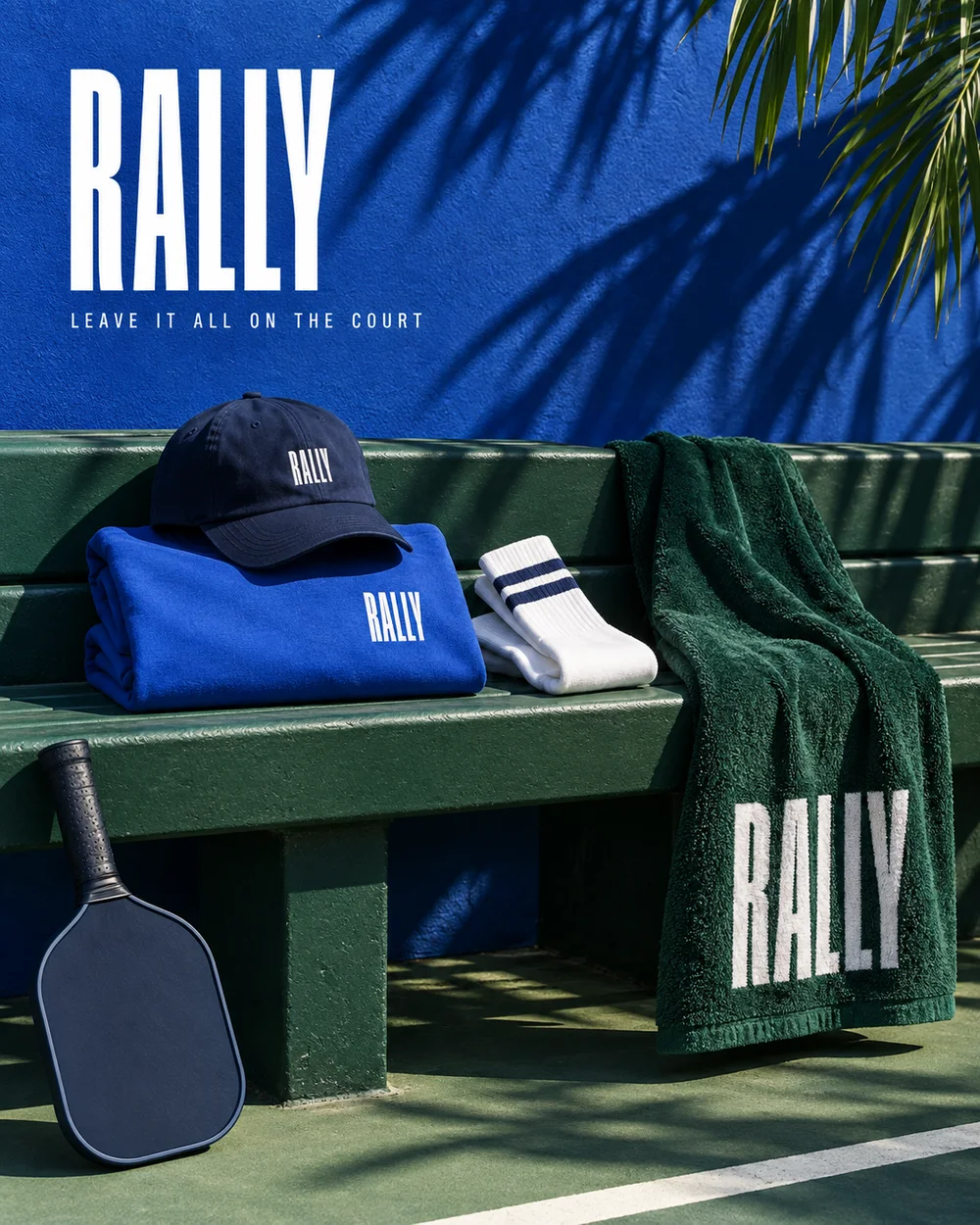
RALLY pickleball essentials campaign concept
02 / THE ESSENTIALSBring your game.
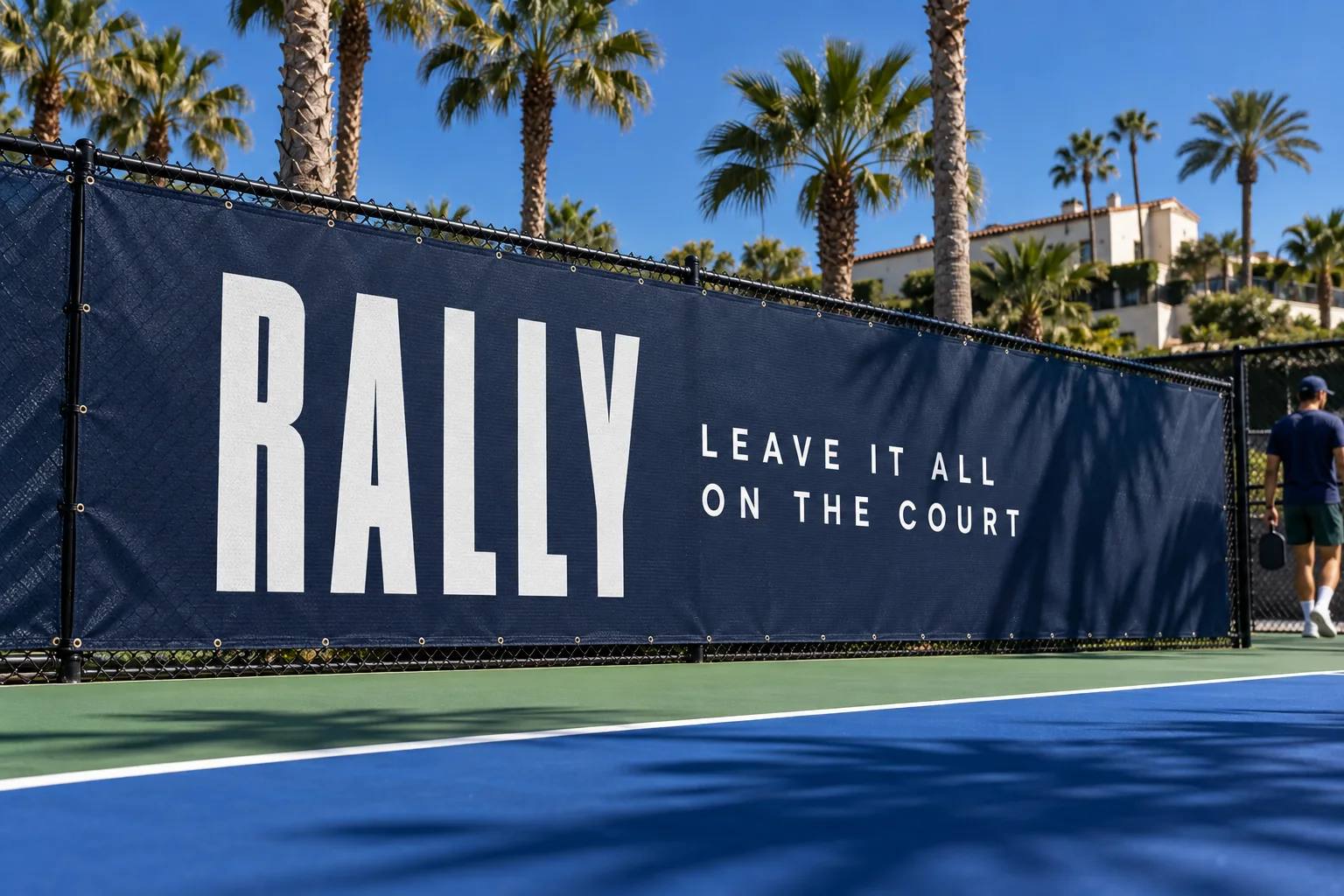
RALLY courtside banner campaign concept
03 / COURTSIDE BANNERThe common ground.

Nouns × RALLY.
A crew with character.

Explore the complete independent courtwear study: the court kit, club layer, essentials, and campaign. Exact Nouns vector artwork and the original specification are preserved below.

The court kit: independent Nouns × RALLY concept
The court kit / CONCEPT
The club layer: independent Nouns × RALLY concept
The club layer / CONCEPT
Court essentials: independent Nouns × RALLY concept
Court essentials / CONCEPT
The campaign: independent Nouns × RALLY concept
The campaign / CONCEPT

05 / The kit, already in play

Everything
comes together.

RALLY brings the crew tools. PointCast brings the research and local context. Keep the useful things close, from your first session to your next paddle.

Start with feel.

Use a comfortable grip and a paddle you can control through a full session. Borrow or demo a few shapes before choosing; the most expensive paddle is not a practice plan.

Compare the evidence.

Separate measured results from maker claims. Compare shape, weight, dimensions, construction, and dated source notes in the register.

Check your event.

Equipment approval depends on the event’s governing rules. Confirm the exact model on the current official list, then keep an eye on wear and damage.

Across at PointCast.

Open the sister home

The paddle register

Browse the equipment research, source notes, and individual paddle files.

Compare paddles

Put build, shape, and published measurements side by side.

The paddle oracle

A free match-count preview; paid sourced answers are labeled on the destination.

Rules & legal tracker

Read the existing equipment standards and legal research archive.

Paddle Takes

The firsthand-review method and empty review archive. No reviews are published yet.

Pros & their paddles

A sourced model and signing reference, with its own checked dates.

Register changes

Source-linked additions, corrections, and equipment history.

Paddle exchange

A browser-only trade, loan, and try profile concept; no shared stock is implied.

The court bag desk

Sourced bag specifications and comparisons, with no hands-on claim.

A seat between games

The existing researched compact-seat reference for court breaks.

The court shortcut

The existing short link to the Field Reports court spot.

Field Reports

Explore the local reporting experience and its existing court context.

The pickleball board

The original PointCast board stays in place: sessions, context, and links.

Noun Court Doubles

Play the existing CPU or pass-and-play game, with practice drills.

Third Shot

Phone-native strategic doubles with coach callouts, drills, and a Shot Report.

Pickle Park

The existing TV court game with phone paddles and customized Buddies.

Rally, the game

PointCast’s distinct musical TV-and-phone game for one to four players.

Watch a room

Join the existing spectator experience with a four-letter room code.

See you
out there.

Find your next court

PLAY GENEROUSLY. LEAVE THE COURT BETTER.

RALLY

Pickleball, all in.
El Segundo · South Bay · wherever the game takes you.

Visit RALLY Back to the top ↑