Global Barter / Oceania & the Pacific / G065
Oceania & the Pacific · Te Waipounamu, Aotearoa NZ · G065
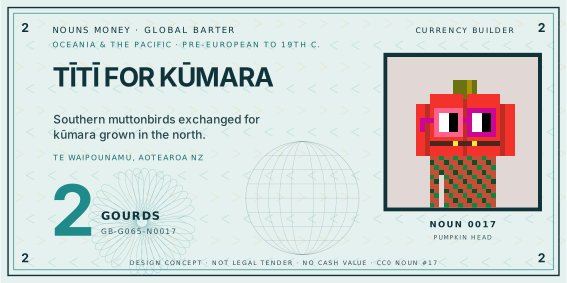
Tītī for Kūmara
Southern muttonbirds exchanged for kūmara grown in the north.
Security Edition v2
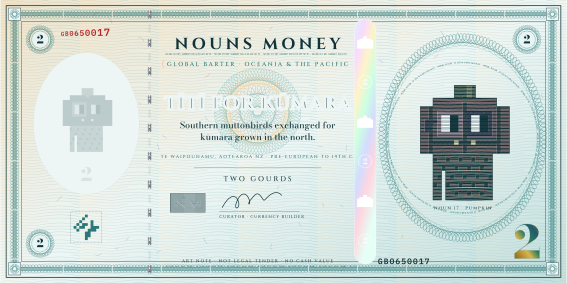
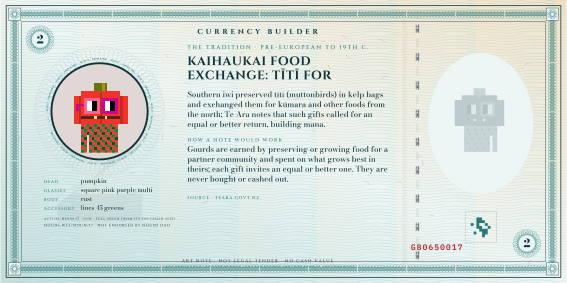
The same note set like a banknote: full engraved portrait of Noun #17, guilloche, watermark, thread, foil stripe and microtext, all printed art. What's on it
The tradition · pre-European to 19th c.
Kaihaukai food exchange: tītī for kūmara
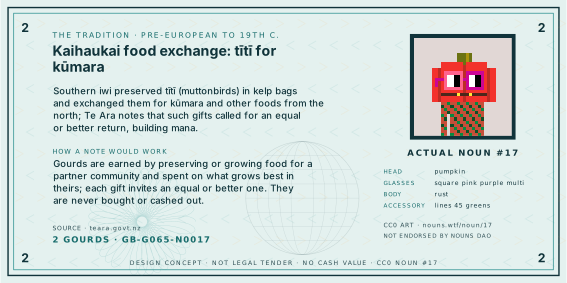
Southern iwi preserved tītī (muttonbirds) in kelp bags and exchanged them for kūmara and other foods from the north; Te Ara notes that such gifts called for an equal or better return, building mana.
Source: Te mahi kai – food production economics (Te Ara: The Encyclopedia of New Zealand) ↗
How a note would work
Gourds are earned by preserving or growing food for a partner community and spent on what grows best in theirs; each gift invites an equal or better one. They are never bought or cashed out.
Design concept inspired by this tradition, not issued by or for the people who keep it. Not legal tender, not for sale, no cash value, no redemption and no investment rights.
- PlaceTe Waipounamu, Aotearoa NZ
- Erapre-European to 19th c.
- RegionOceania & the Pacific
- UnitGourd · Gourds
- Face value2 Gourds
- SerialGB-G065-N0017
- NounActual Noun #17 ↗
- Why this NounHue, the gourds that travelled south in these exchanges, are cousins of the pumpkin.
- Headpumpkin
- Glassessquare pink purple multi
- Bodyrust
- Accessorylines 45 greens
- Seedbg 1 · body 25 · acc 64 · head 166 · glasses 14