1911
A textile beginning.
FILA begins in Biella, Italy. The founding geography matters: the brand starts with cloth, decades before the global sportswear name.
Misto Holdings — company history ↗An Italian beginning.
A line the world learned to read.
AN INDEPENDENT EDITORIAL EXHIBITION
FILA is a useful study in how a sports brand becomes a cultural language: textile knowledge, a recognizable court silhouette, memorable athletes, regional businesses and periodic fashion reinterpretations.
This exhibition follows those layers, then asks what an independently imagined 2027 line could carry forward. The historical photographs are licensed documentary images. The artworks and future garments are clearly labeled original AI-generated interpretations.
ROOM 01 / THE LINE
Pierluigi Rolando’s White Line made color part of tennis dress. The museum dates its launch to 1974; its BB1 pinstripe prototype to 1975. The collar, stripe and boundary between colors give the body a graphic rhythm.
Borg’s five consecutive Wimbledon singles titles, 1976–1980, made that athletic era unforgettable. Here, he is photographed in Rotterdam in 1978.
Read the museum’s White Line account ↗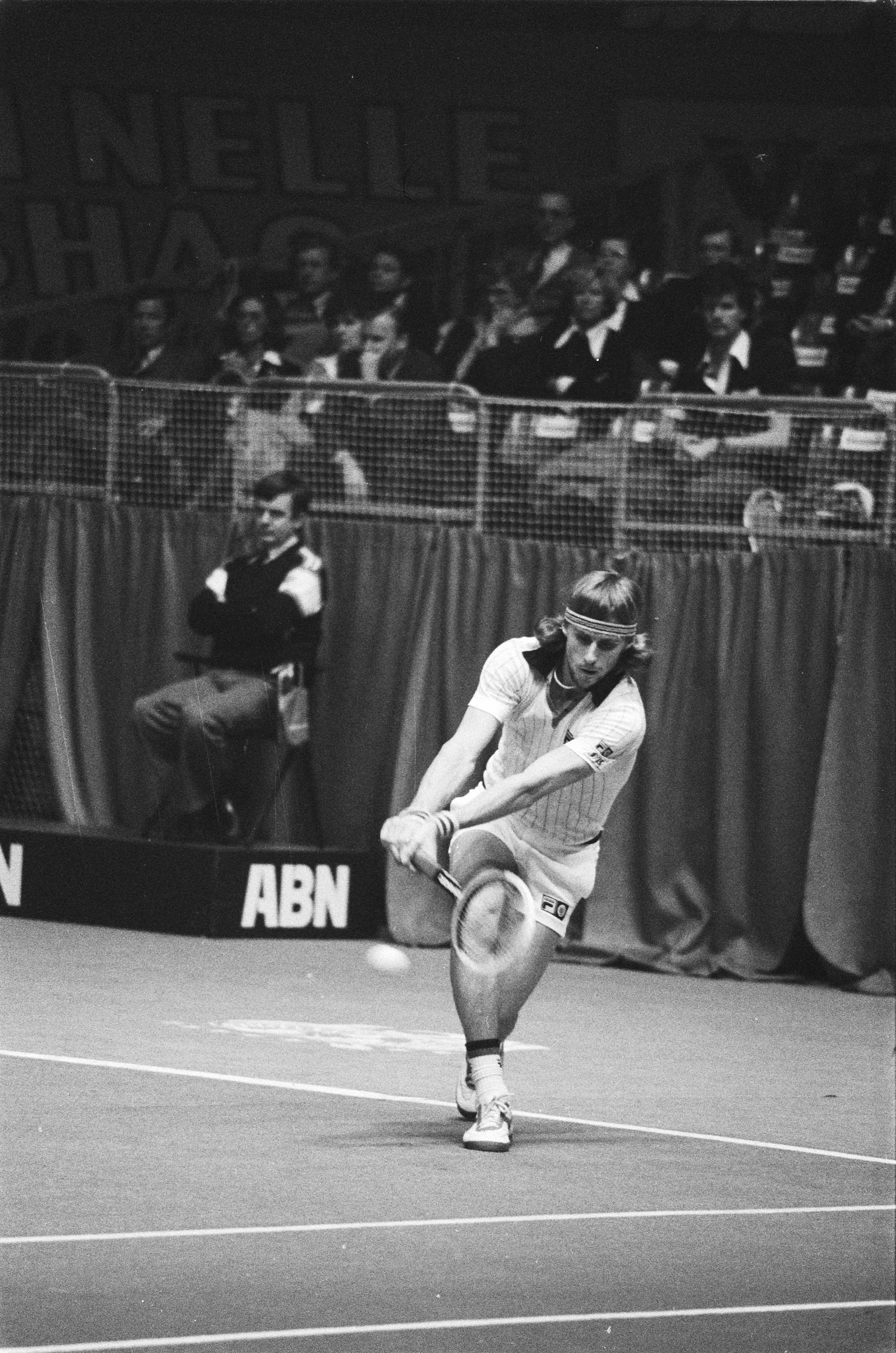
1911
FILA begins in Biella, Italy. The founding geography matters: the brand starts with cloth, decades before the global sportswear name.
Misto Holdings — company history ↗1973 → 1975
Misto dates the first sportswear collection and F-BOX to 1973. The museum dates Pierluigi Rolando’s White Line to 1974 and the BB1 pinstripe prototype to 1975. These are related milestones, with distinct dates.
Fondazione FILA Museum — The myth of White Line ↗1975 BB1 record ↗1976 → 1980
Borg wins five consecutive Wimbledon singles titles. Pinstripes, a compact collar, short shorts and clean color boundaries become a durable visual language. The photographs here are Rotterdam, not Wimbledon.
International Tennis Hall of Fame — Björn Borg ↗Late 1980s / 1990s
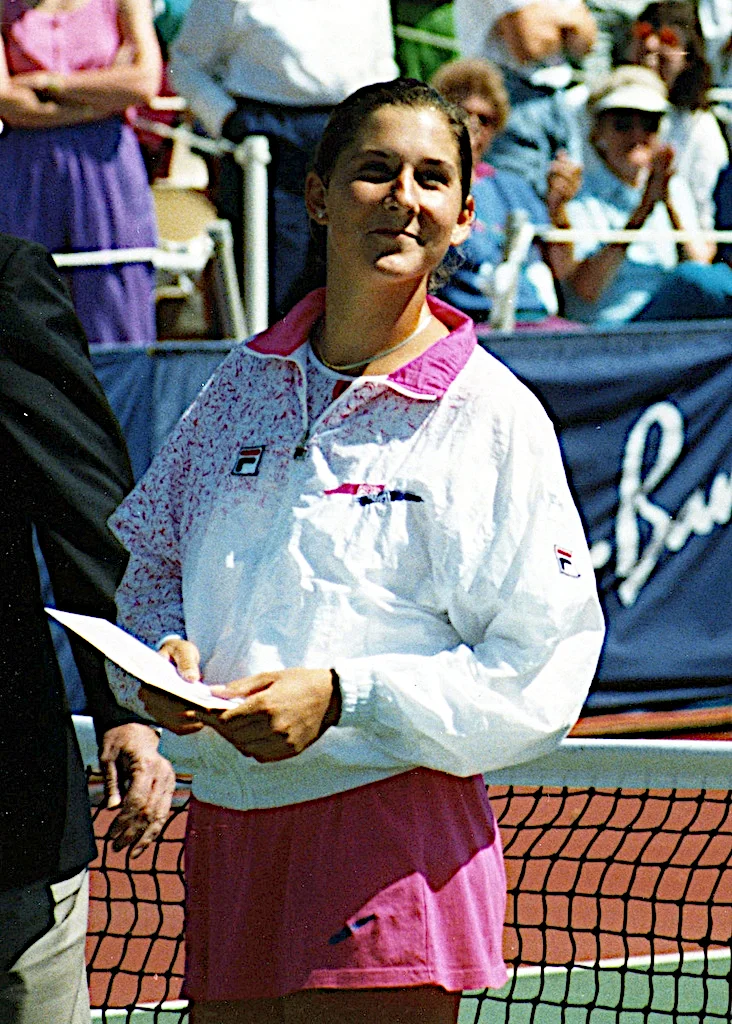
The museum’s White Line account carries the story into Monica Seles’s geometric, brightly colored tennis apparel. Performance clothing gains another register: expressive surface, athletic movement.
Fondazione FILA Museum — The myth of White Line ↗1991 / 2005 / 2007
FILA Korea is established in 1991; a management buyout follows in 2005. In 2007 the Korean business acquires global FILA trademark rights. Italian heritage and contemporary corporate ownership are different parts of the story.
Misto Holdings — company history ↗2009
ANTA acquires FILA’s business in the PRC in late 2009 and develops its premium positioning there. That regional business is not the same as ownership of the global brand.
ANTA Sports — FILA brand ↗2018
The Disruptor 2 wins the 2018 FNAA Shoe of the Year award, recorded in the company’s history. A chunky footwear silhouette gives the brand another route into fashion culture; this is one revival moment, not its entire streetwear history.
Misto Holdings — company history ↗2024 → 2026
The July 2024 Bellissimo / CASA FILA launch foregrounds Italian roots and club sport. The holding company becomes Misto Holdings in 2025. On 30 September 2026, FILA announces WHITE OPEN SEOUL for 10–11 October: upcoming as of this study’s 2 October research date.
FILA — Bellissimo and CASA FILA launch, July 2024 ↗2025 corporate record ↗2026 event announcement ↗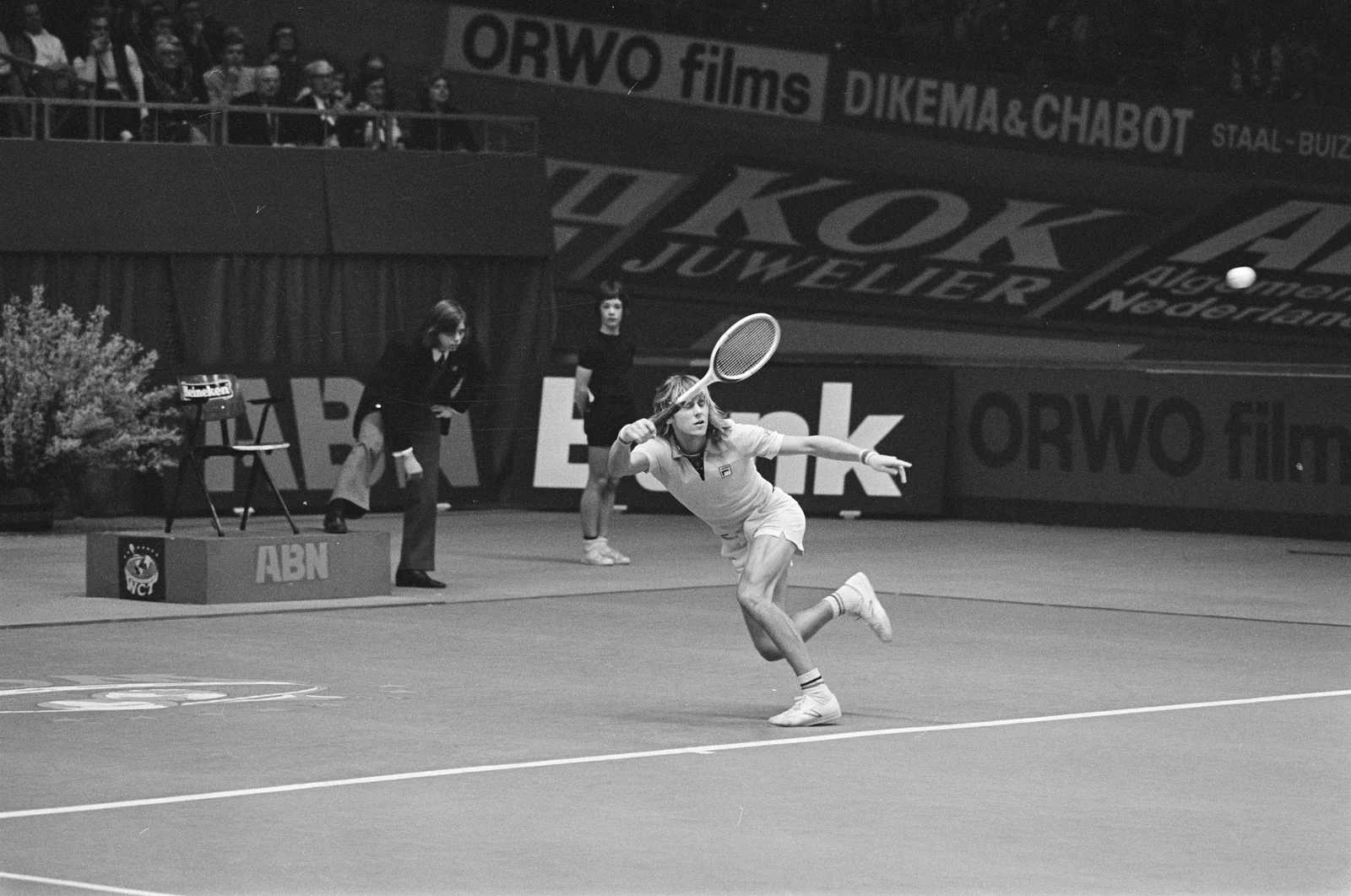
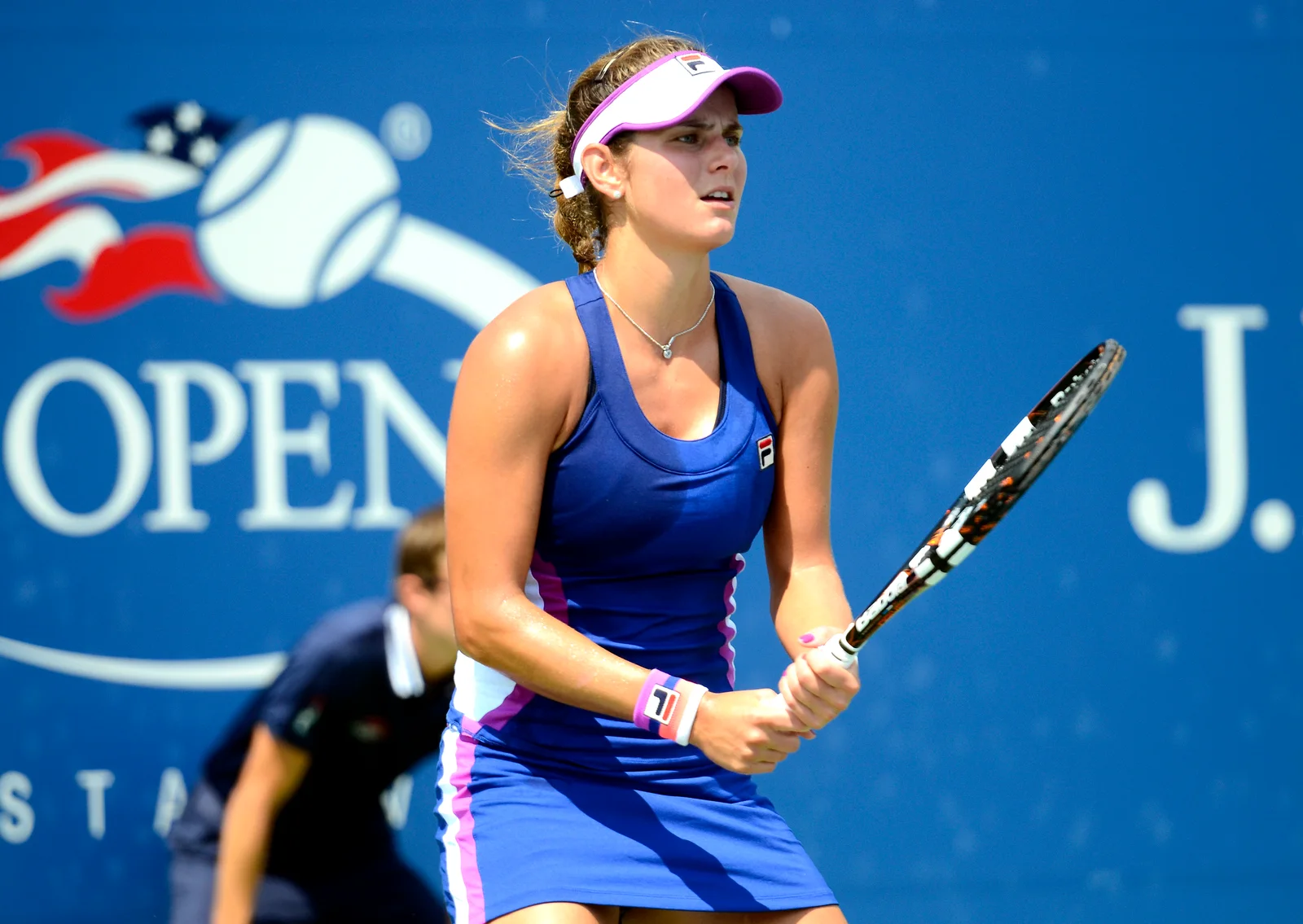
EDITORIAL READING
A pinstripe can become a signal. A bright panel can become an era. The recognizability comes from the relationship between shape, color and the moving person.
These photographs document dated FILA apparel appearances. They do not imply a present-day endorsement.
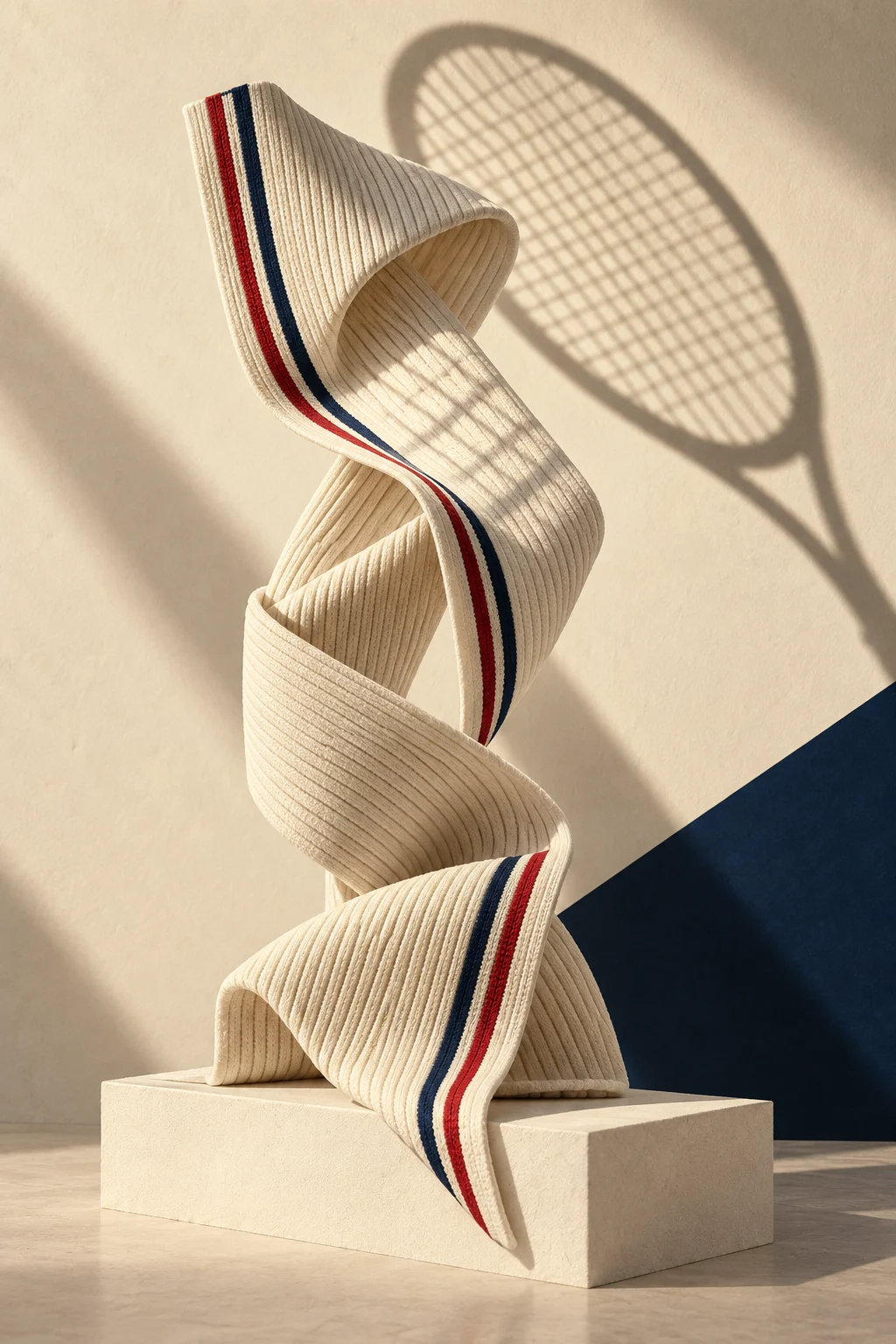
A BRIDGE TO 2027
Our proposed line carries the collar, the graphic boundary and the ease of sport into three settings: the court, the club, the coast. It stretches the silhouette while keeping the visual grammar legible.
Open the focused lookbook ↗ROOM 04 / AN INDEPENDENT FUTURE
Twelve looks. Three environments.
One line running through them.
Independent 2027 design study. AI-generated concept imagery; not an official FILA collection or product inventory.
These are visual proposals: fabrics, fit and function need physical development. The generated models are fictional.
The line remembers the court. Pinstripes, knit borders and compact sport shapes, with more room to live in.
The warm-up becomes the evening uniform. Looser volume, one decisive diagonal, a generous pocket.
The horizon quiets everything. Coastal color, modular seams, longer lines and understated surfaces.
Scroll through twelve looks; each includes material and reference notes.12 looks
No looks in this combination. Reset or choose another garment.
LOOK 01 / COURT
Pinstripe zip polo · pleated short
1975 BB1 → a quieter pinstripe rhythm, with the logo removed from the concept garment.
Fondazione FILA Museum — Time Machine, 1975 ↗Detail study: Navy pinstripe, compact collar, clean waistband.
Original AI-generated concept / 2026
Front and back are imagined views. Detail is a crop of the front render.
LOOK 02 / COURT
Bordered cable-knit vest · wide cropped trouser
Tennis knit borders → premium understatement. The cable structure is our added material choice.
Fondazione FILA Museum — The myth of White Line ↗Detail study: Red/navy V border and a repeated cable structure.
Original AI-generated concept / 2026
Front and back are imagined views. Detail is a crop of the front render.
LOOK 03 / COURT
Yoke track jacket · matching sport short
Sport color blocking → one continuous horizontal band. We use a modular system rather than a historic replica.
Fondazione FILA Museum — The myth of White Line ↗Detail study: Red shoulder yoke meets a single cream edge.
Original AI-generated concept / 2026
Front and back are imagined views. Detail is a crop of the front render.
LOOK 04 / COURT
Border-hem tennis tunic · navy legging
White Line’s legible color boundaries → a longer, layered everyday tennis silhouette.
Fondazione FILA Museum — The myth of White Line ↗Detail study: Twin red/navy hem bands and dark side panels.
Original AI-generated concept / 2026
Front and back are imagined views. Detail is a crop of the front render.
LOOK 05 / CLUB
Brick zip shirt · navy pleated short
User-directed 1980s Los Angeles clubwear mood → warm brick and relaxed evening volume. This is a mood study, not a documented FILA collaboration.
Supreme — About ↗Detail study: A small collar, patch pocket, low-shine zip.
Original AI-generated concept / 2026
Front and back are imagined views. Detail is a crop of the front render.
LOOK 06 / CLUB
Diagonal windbreaker · straight ivory trouser
Tennis color + user-directed LA clubwear → a diagonal. Wright’s low horizontal forms inform the overall balance, an editorial inference.
Frank Lloyd Wright Foundation — Taliesin West ↗Detail study: Cream and brick diagonal across a navy shell.
Original AI-generated concept / 2026
Front and back are imagined views. Detail is a crop of the front render.
LOOK 07 / CLUB
Sleeveless cream hoodie · curved-seam track trouser
1990s-to-now streetwear proportion → volume around the body. Supreme is a research reference, with no affiliation or copied graphics.
Supreme — Fall/Winter 2026 lookbook ↗Detail study: A red collar glimpse and a narrow curved leg seam.
Original AI-generated concept / 2026
Front and back are imagined views. Detail is a crop of the front render.
LOOK 08 / CLUB
Brick rugby pullover · navy pleated skirt
Athletic stripes → bolder club scale. A user-directed mood translated into an original outfit.
Fondazione FILA Museum — The myth of White Line ↗Detail study: Two cream bands frame one navy band.
Original AI-generated concept / 2026
Front and back are imagined views. Detail is a crop of the front render.
LOOK 09 / COAST
Seafoam rib zip polo · tailored ivory short
Tennis collar → SoCal ocean color. The Eames House’s coastal setting informs the palette, an independent design reading.
Eames Foundation — Eames House history ↗Detail study: Deep-teal collar and sleeve edge against a soft seafoam field.
Original AI-generated concept / 2026
Front and back are imagined views. Detail is a crop of the front render.
LOOK 10 / COAST
Teal panel jacket · seafoam cropped trouser
1949 Eames modularity → rectangular panel boundaries. The garment is an interpretation of construction logic.
Eames Foundation — Eames House history ↗Detail study: An ivory rectangular frame continues across the back.
Original AI-generated concept / 2026
Front and back are imagined views. Detail is a crop of the front render.
LOOK 11 / COAST
Ivory panel tank · deep-teal wide trouser
A sport tank → midcentury rectangular geometry → coastal tailoring. Quiet surface carries the proportion.
Eames Foundation — Eames House history ↗Detail study: Teal shoulder bars; a deep front pleat.
Original AI-generated concept / 2026
Front and back are imagined views. Detail is a crop of the front render.
LOOK 12 / COAST
Teal zip dress · seafoam hem panel
Tennis ease → Wright’s low, calm spatial rhythm → a long coastal silhouette. This is our own synthesis.
Frank Lloyd Wright Foundation — Taliesin West ↗Detail study: One seafoam rectangle finishes the deep-teal column.
Original AI-generated concept / 2026
Front and back are imagined views. Detail is a crop of the front render.
DESIGN GENEALOGY / OUR INTERPRETATION
Wright’s low spatial rhythm and the Eames House’s modular construction become calm proportions and rectangular seam boundaries. These are design inferences, not claims of a historical FILA relationship.
Eames House history ↗Taliesin West ↗The sourced FILA core: collar, stripe, knit edge and disciplined color. The Court capsule starts here and changes fit, layering and everyday use.
White Line ↗Los Angeles clubwear is a user-directed mood reference; we have not established a specific FILA lineage for it. Supreme’s documented skate origins and contemporary loose fit inform room around the body. Club carries that attitude into brick and navy.
Supreme’s origins ↗2026 proportion reference ↗Seafoam, deep teal and ivory translate ocean and palm-shade color into restrained panels. Premium understatement comes from fewer surface gestures. The user’s interest in Nouns playfulness informs the collection’s small names and serial rhythm.
User-directed references + PointCast interpretation. No outside design copied.
TRANSFERABLE LESSONS / RALLY
Observe how people warm up, reach, wait and leave. Develop RALLY’s own fit and material system around those moments.
Repeat a small original vocabulary of proportion, seam and color. Recognition should survive a small image and an unbranded sample.
Use local light, climate and community rituals to generate design choices. Test them with the people who will wear the clothes.
These are editorial lessons, not an invitation to copy FILA marks, garments, athlete imagery or someone else’s graphics.
Company and museum sources establish brand chronology; athlete records establish results. Outside design references inform our independent concept. Current context is dated, and the October 2026 event is described as upcoming.
1911 origins; 1973 sportswear; Korea and global trademark acquisitions; 2018 Disruptor award; 2025 company name.
Published 22 August 2024. Pierluigi Rolando, 1974 White Line, tennis color and athlete-era design.
The BB1 pinstripe prototype and its 1975 date.
Biella archive and its sport/design chronology.
Five consecutive Wimbledon singles titles, 1976–1980.
Nine major singles titles and athlete biography.
FILA business acquisition in the PRC in late 2009 and premium positioning in that market.
Official release published 11 July 2024; campaign launch 10 July. Italian heritage, club sport, style and performance.
30 September 2026 announcement of a fourth annual event scheduled for 10–11 October 2026. Future at the research date.
1949 Pacific Palisades house and studio; modular, off-the-shelf construction in a coastal setting.
1937 desert campus: low forms, masonry, canvas and light. A spatial reference for this concept, not a FILA collaboration.
New York skate and counterculture origins, April 1994. A user-directed streetwear reference, not a FILA affiliation.
Contemporary loose proportions. Used as a proportion reference, with no copied artwork or logos.
ABN-tennistoernooi in Rotterdam Bjorn Borg in actie, Bestanddeelnr 929-6573 — Koen Suyk / Anefo, Nationaal Archief. CC0 1.0 Universal. Source file ↗
Resized and converted to WebP for this exhibition; responsive display may crop the frame.
ABN-wereldtennistoernooi in Rotterdam Bjorn Borg in actie, Bestanddeelnr 927-7840 — Rob Bogaerts / Anefo, Nationaal Archief. CC0 1.0 Universal. Source file ↗
Resized and converted to WebP for this exhibition; responsive display may crop the frame.
img019 — C Thomas (MadMarlin). CC BY 2.0 Generic. Source file ↗ · Original photographer’s page ↗
Resized and converted to WebP for this exhibition; responsive display may crop the frame. The Commons version includes prior color/contrast adjustments. The photographer’s event-year estimate is uncertain, so we use “circa 1991”.
2014 US Open (Tennis) - Tournament - Julia Goerges — Steven Pisano. CC BY 2.0 Generic. Source file ↗ · Original photographer’s page ↗
Resized and converted to WebP for this exhibition; responsive display may crop the frame.
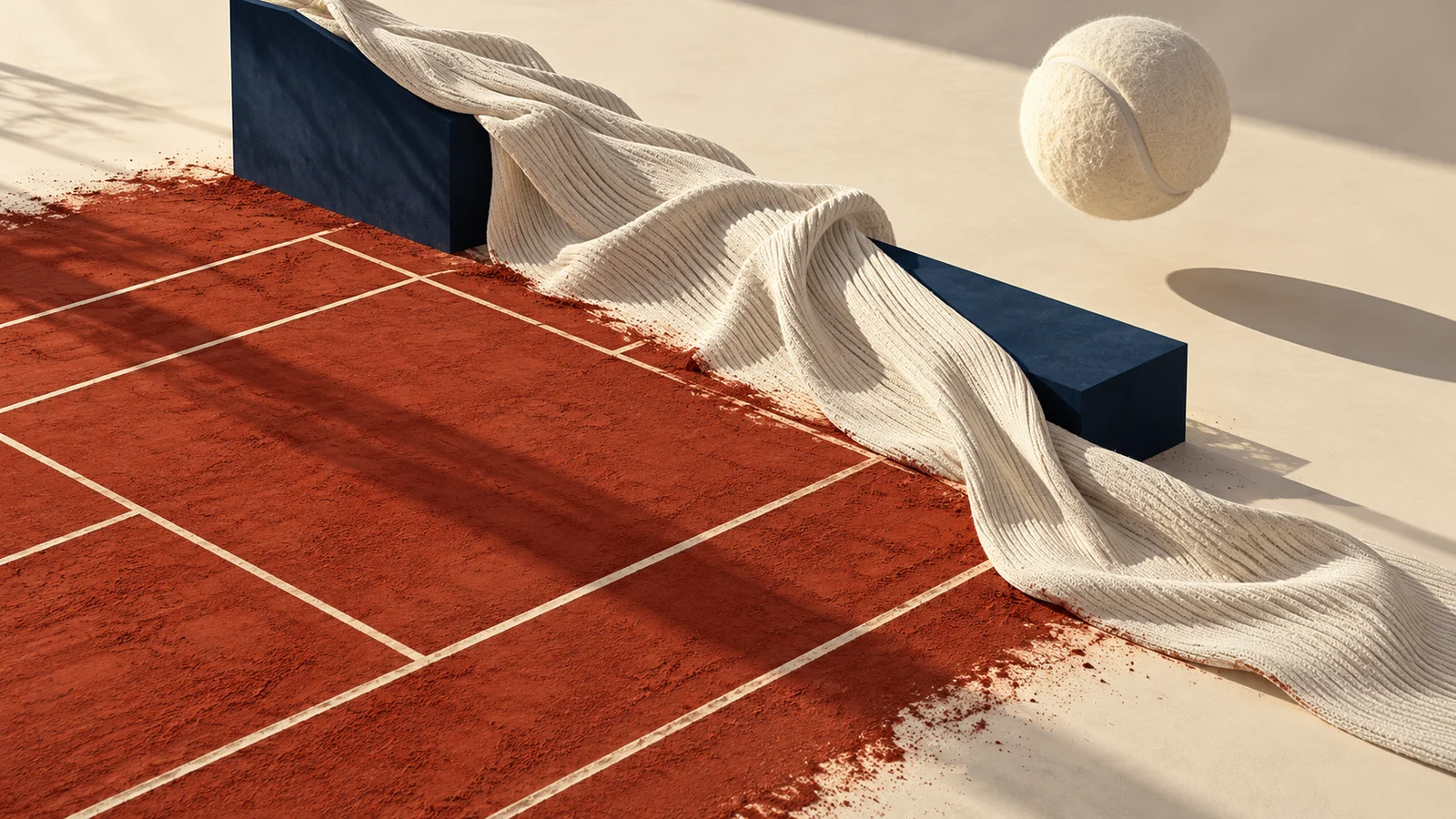
Court / Material Study, Knit / Sculpture Study, and all twelve concept outfits were generated for PointCast with built-in imagegen on 2 October 2026. No historical reference photographs were used as generation inputs. The outfits are independent imagined designs, not official FILA releases, endorsements, available inventory or physical samples.
Front/back views are generated interpretations. The Detail view crops the front rendering; it cannot verify a textile’s actual hand, construction or performance. All material and function notes are development proposals.
Read the structured study and credits ↗Research and generation provenance in the repository ↗


_-_Tournament_-_Julia_Goerges_(15089373105).jpg)
