Global Barter / Africa & the Middle East / G009
Africa & the Middle East · Haut-Katanga, DR Congo · G009
Copper Cross
Cast copper crosses that travelled as a store of value.
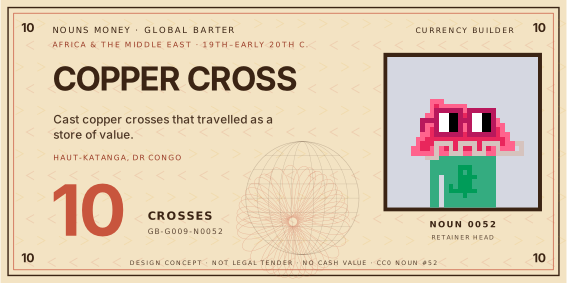
Security Edition v2
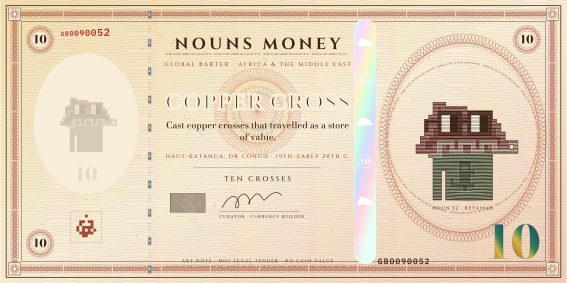
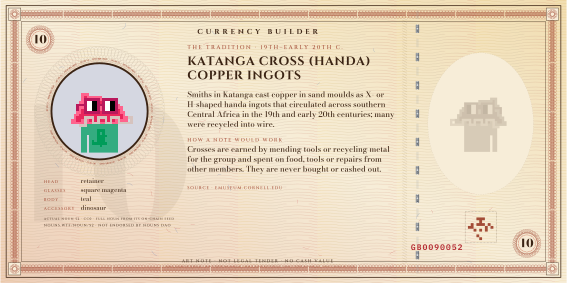
The same note set like a banknote: full engraved portrait of Noun #52, guilloche, watermark, thread, foil stripe and microtext, all printed art. What's on it
The tradition · 19th–early 20th c.
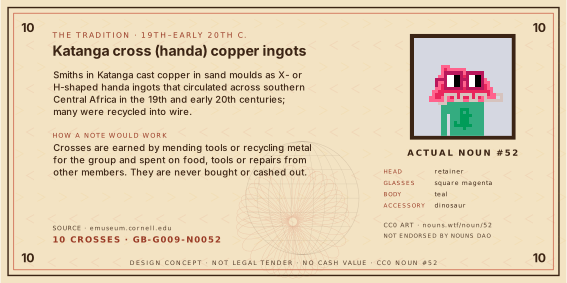
Katanga cross (handa) copper ingots
Smiths in Katanga cast copper in sand moulds as X- or H-shaped handa ingots that circulated across southern Central Africa in the 19th and early 20th centuries; many were recycled into wire.
Source: Currency (handas) 'Katanga Cross' (Herbert F. Johnson Museum of Art, Cornell University) ↗
How a note would work
Crosses are earned by mending tools or recycling metal for the group and spent on food, tools or repairs from other members. They are never bought or cashed out.
Design concept inspired by this tradition, not issued by or for the people who keep it. Not legal tender, not for sale, no cash value, no redemption and no investment rights.
- PlaceHaut-Katanga, DR Congo
- Era19th–early 20th c.
- RegionAfrica & the Middle East
- UnitCross · Crosses
- Face value10 Crosses
- SerialGB-G009-N0052
- NounActual Noun #52 ↗
- Why this NounMany crosses ended up drawn into copper wire, and a retainer is mostly neatly bent wire.
- Headretainer
- Glassessquare magenta
- Bodyteal
- Accessorydinosaur
- Seedbg 0 · body 28 · acc 45 · head 173 · glasses 12