Global Barter / Europe / G032
Europe · Vardø, Norway–White Sea, Russia · G032
Pomor Cod
Russian rye flour for Norwegian cod along the Arctic coast.
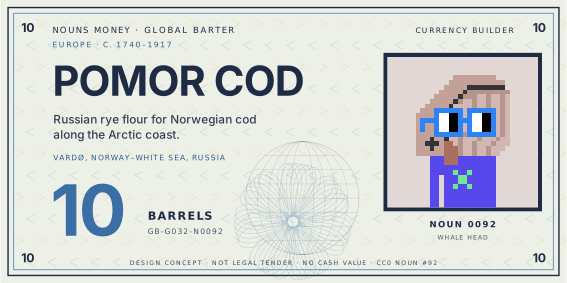
Security Edition v2
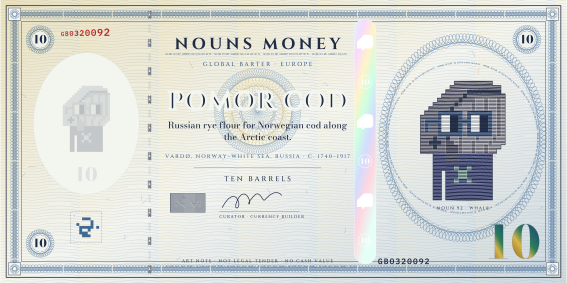
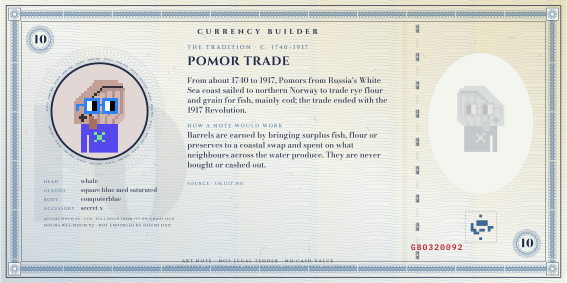
The same note set like a banknote: full engraved portrait of Noun #92, guilloche, watermark, thread, foil stripe and microtext, all printed art. What's on it
The tradition · c. 1740–1917
Pomor trade
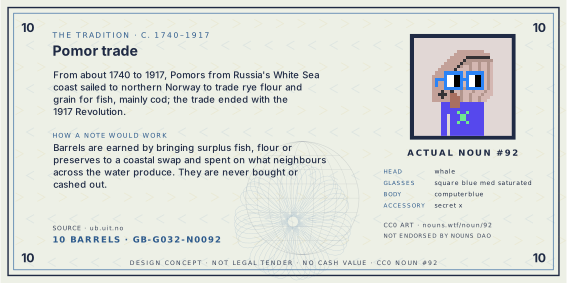
From about 1740 to 1917, Pomors from Russia's White Sea coast sailed to northern Norway to trade rye flour and grain for fish, mainly cod; the trade ended with the 1917 Revolution.
Source: Pomor trade (Northern Lights, UiT The Arctic University of Norway Library) ↗
How a note would work
Barrels are earned by bringing surplus fish, flour or preserves to a coastal swap and spent on what neighbours across the water produce. They are never bought or cashed out.
Design concept inspired by this tradition, not issued by or for the people who keep it. Not legal tender, not for sale, no cash value, no redemption and no investment rights.
- PlaceVardø, Norway–White Sea, Russia
- Erac. 1740–1917
- RegionEurope
- UnitBarrel · Barrels
- Face value10 Barrels
- SerialGB-G032-N0092
- NounActual Noun #92 ↗
- Why this NounWhales feed in the same cold, fish-rich Arctic waters the Pomor ships crossed.
- Headwhale
- Glassessquare blue med saturated
- Bodycomputerblue
- Accessorysecret x
- Seedbg 1 · body 5 · acc 80 · head 230 · glasses 4