Earned by noticing
One note per person who logs that week's sign in the town almanac: a count, a photo, a time and a place. Zero meteors still counts.
Nouns Money · Almanac collection
Fifty-two currencies, one for each week of the South Bay year: whales both ways, king tides, grunion nights, the El Segundo blue, eight meteor showers and the earliest sunset. Every note carries a different actual Noun.
Design concepts for a community almanac. Not legal tender, not for sale, no cash value, no redemption and no financial rights. Nouns art is CC0; no Nouns DAO endorsement is implied.
January to March: winter swell, whales in both directions, the first green and the spring equinox.
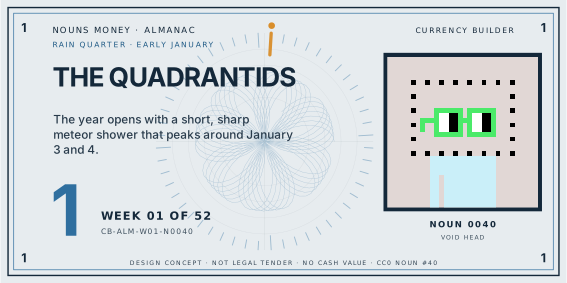
Week 1 · Noun #40 · void
Early January
The year opens with a short, sharp meteor shower that peaks around January 3 and 4.
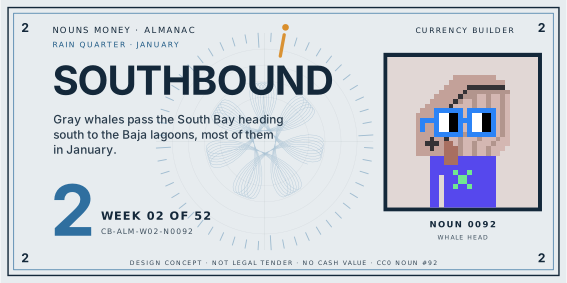
Week 2 · Noun #92 · whale
January
Gray whales pass the South Bay heading south to the Baja lagoons, most of them in January.
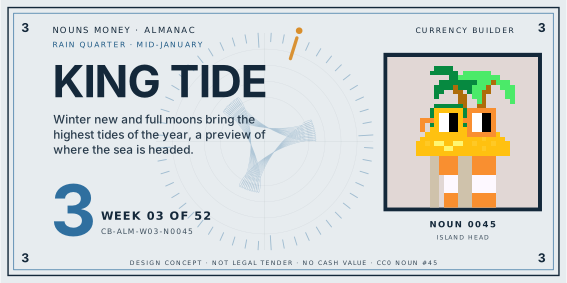
Week 3 · Noun #45 · island
Mid-January
Winter new and full moons bring the highest tides of the year, a preview of where the sea is headed.
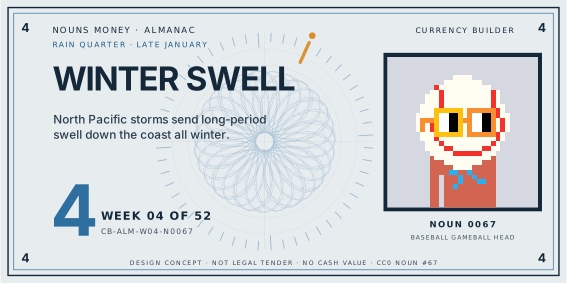
Week 4 · Noun #67 · baseball gameball
Late January
North Pacific storms send long-period swell down the coast all winter.
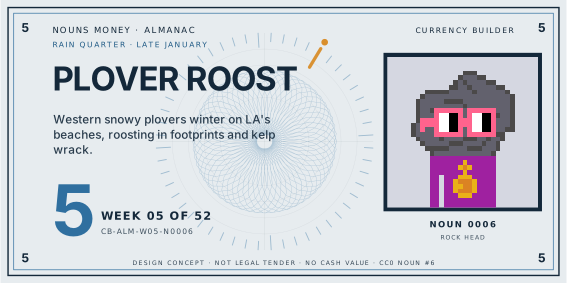
Week 5 · Noun #6 · rock
Late January
Western snowy plovers winter on LA's beaches, roosting in footprints and kelp wrack.
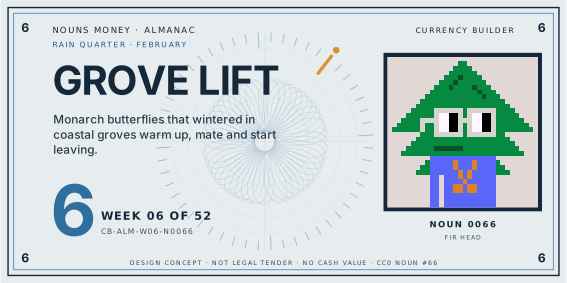
Week 6 · Noun #66 · fir
February
Monarch butterflies that wintered in coastal groves warm up, mate and start leaving.
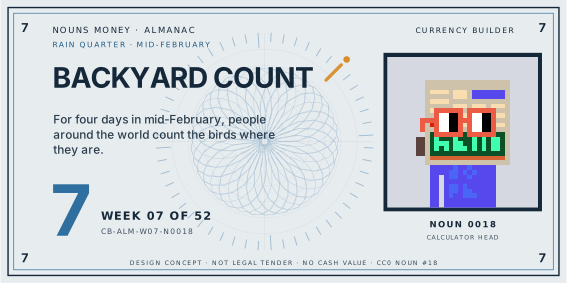
Week 7 · Noun #18 · calculator
Mid-February
For four days in mid-February, people around the world count the birds where they are.
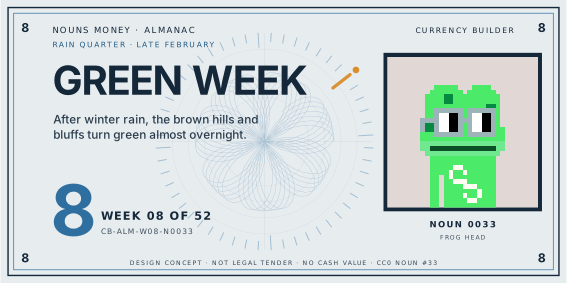
Week 8 · Noun #33 · frog
Late February
After winter rain, the brown hills and bluffs turn green almost overnight.
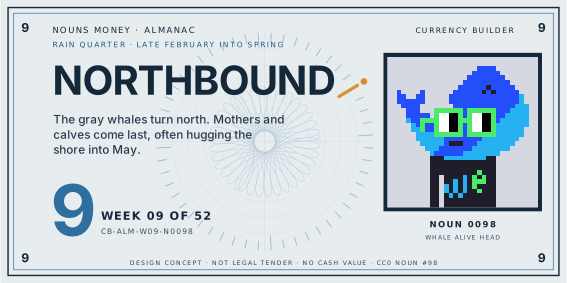
Week 9 · Noun #98 · whale alive
Late February into spring
The gray whales turn north. Mothers and calves come last, often hugging the shore into May.
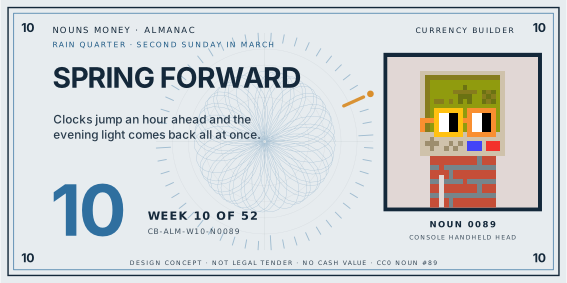
Week 10 · Noun #89 · console handheld
Second Sunday in March
Clocks jump an hour ahead and the evening light comes back all at once.
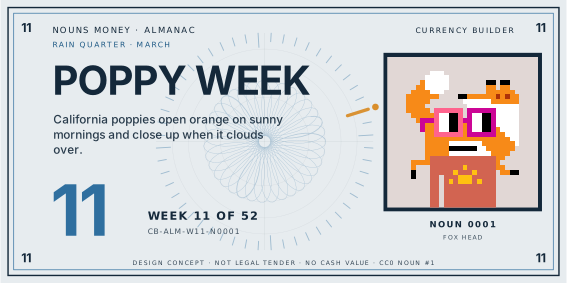
Week 11 · Noun #1 · fox
March
California poppies open orange on sunny mornings and close up when it clouds over.
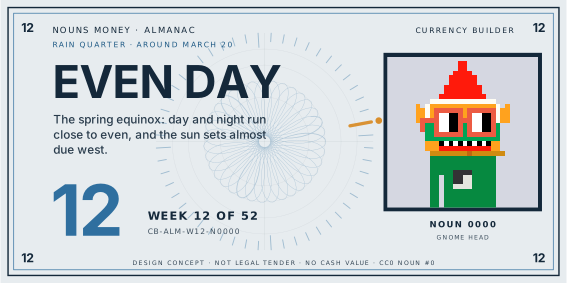
Week 12 · Noun #0 · gnome
Around March 20
The spring equinox: day and night run close to even, and the sun sets almost due west.
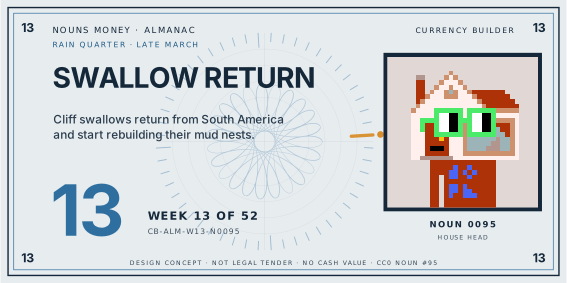
Week 13 · Noun #95 · house
Late March
Cliff swallows return from South America and start rebuilding their mud nests.
April to June: grunion and terns, May Gray, jacarandas, the blue butterfly and the long day.
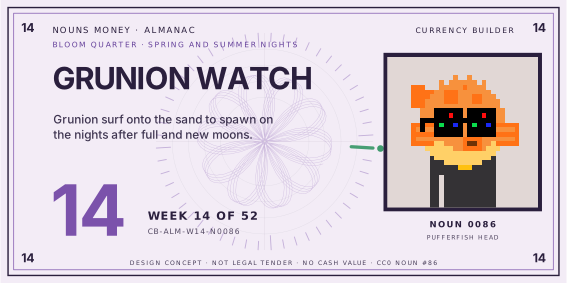
Week 14 · Noun #86 · pufferfish
Spring and summer nights
Grunion surf onto the sand to spawn on the nights after full and new moons.
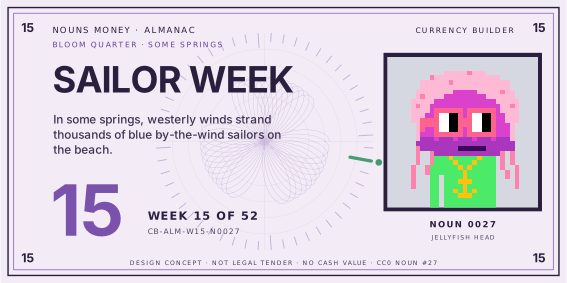
Week 15 · Noun #27 · jellyfish
Some springs
In some springs, westerly winds strand thousands of blue by-the-wind sailors on the beach.
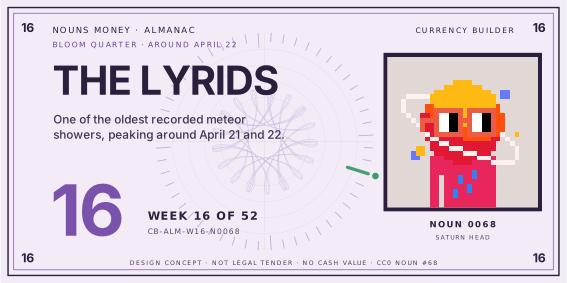
Week 16 · Noun #68 · saturn
Around April 22
One of the oldest recorded meteor showers, peaking around April 21 and 22.
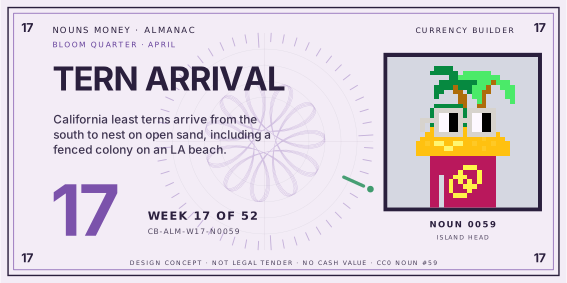
Week 17 · Noun #59 · island
April
California least terns arrive from the south to nest on open sand, including a fenced colony on an LA beach.
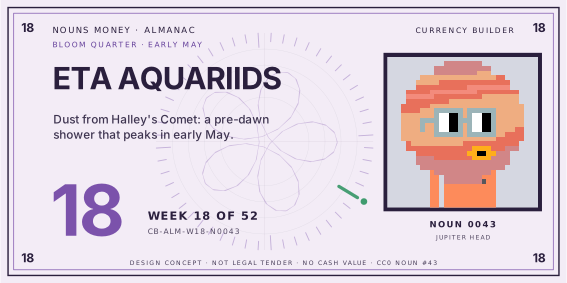
Week 18 · Noun #43 · jupiter
Early May
Dust from Halley's Comet: a pre-dawn shower that peaks in early May.
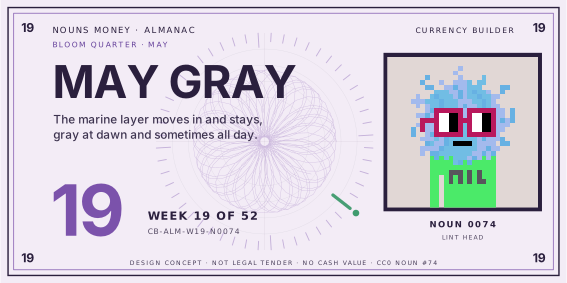
Week 19 · Noun #74 · lint
May
The marine layer moves in and stays, gray at dawn and sometimes all day.
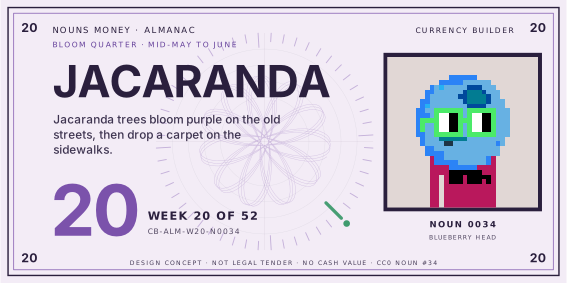
Week 20 · Noun #34 · blueberry
Mid-May to June
Jacaranda trees bloom purple on the old streets, then drop a carpet on the sidewalks.
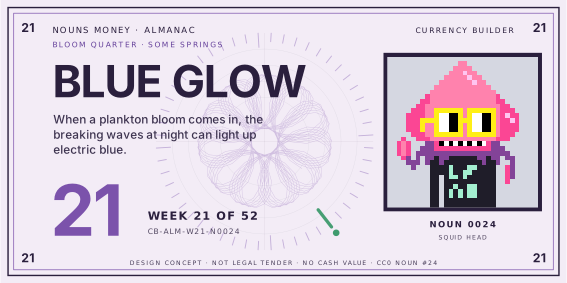
Week 21 · Noun #24 · squid
Some springs
When a plankton bloom comes in, the breaking waves at night can light up electric blue.
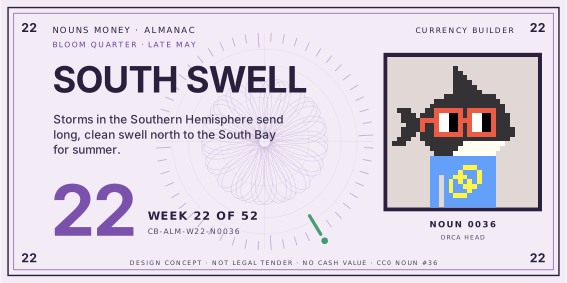
Week 22 · Noun #36 · orca
Late May
Storms in the Southern Hemisphere send long, clean swell north to the South Bay for summer.
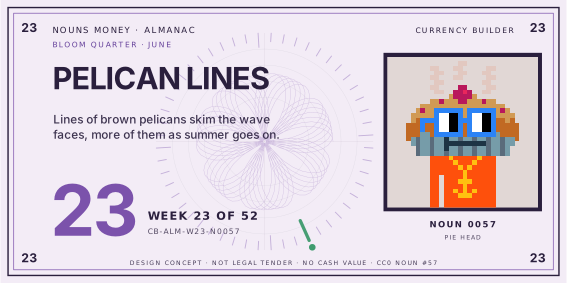
Week 23 · Noun #57 · pie
June
Lines of brown pelicans skim the wave faces, more of them as summer goes on.
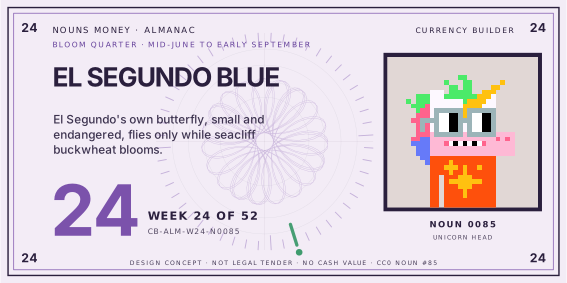
Week 24 · Noun #85 · unicorn
Mid-June to early September
El Segundo's own butterfly, small and endangered, flies only while seacliff buckwheat blooms.
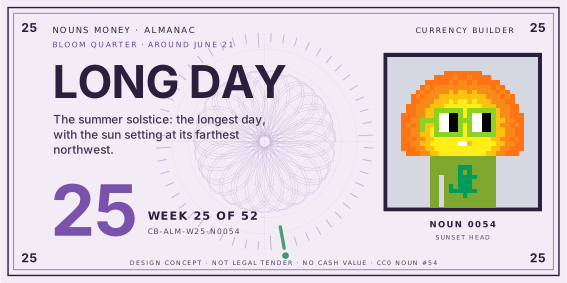
Week 25 · Noun #54 · sunset
Around June 21
The summer solstice: the longest day, with the sun setting at its farthest northwest.
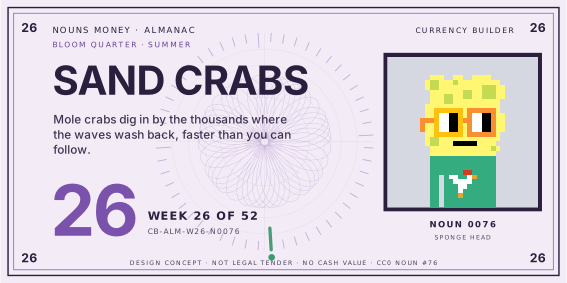
Week 26 · Noun #76 · sponge
Summer
Mole crabs dig in by the thousands where the waves wash back, faster than you can follow.
July to September: warm water, the Perseids, hurricane swell, shorebirds and the fall equinox.
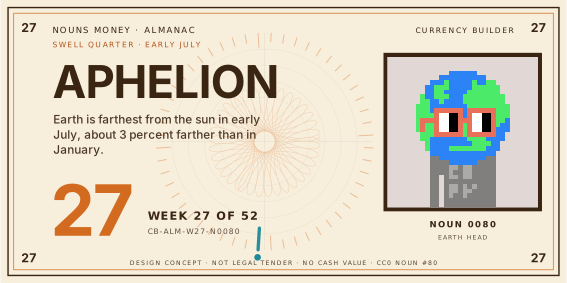
Week 27 · Noun #80 · earth
Early July
Earth is farthest from the sun in early July, about 3 percent farther than in January.
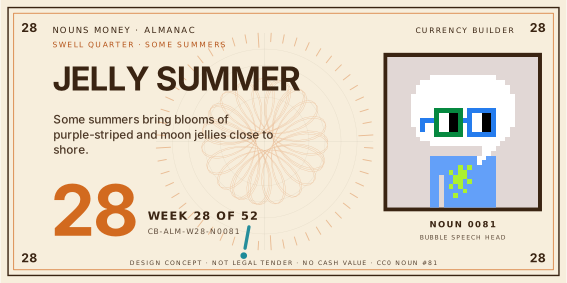
Week 28 · Noun #81 · bubble speech
Some summers
Some summers bring blooms of purple-striped and moon jellies close to shore.
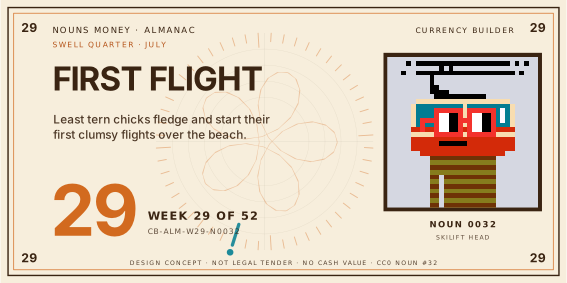
Week 29 · Noun #32 · skilift
July
Least tern chicks fledge and start their first clumsy flights over the beach.
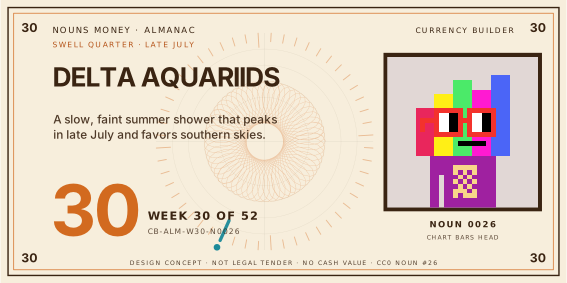
Week 30 · Noun #26 · chart bars
Late July
A slow, faint summer shower that peaks in late July and favors southern skies.
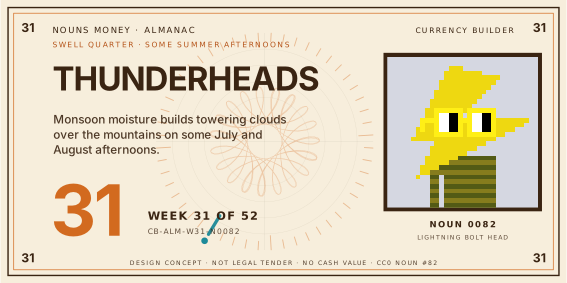
Week 31 · Noun #82 · lightning bolt
Some summer afternoons
Monsoon moisture builds towering clouds over the mountains on some July and August afternoons.
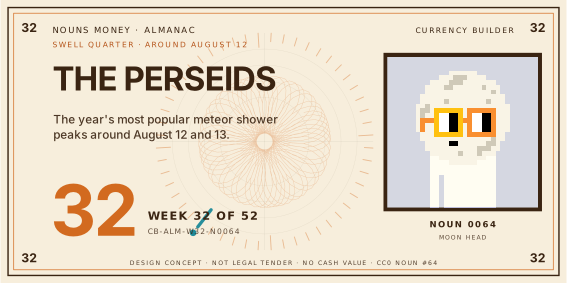
Week 32 · Noun #64 · moon
Around August 12
The year's most popular meteor shower peaks around August 12 and 13.
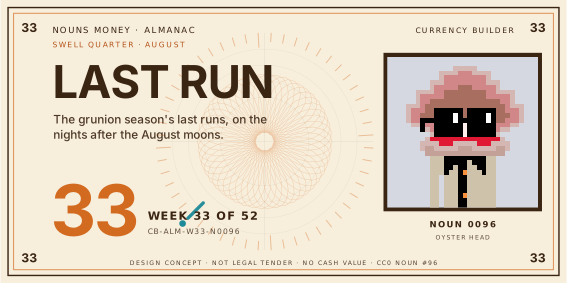
Week 33 · Noun #96 · oyster
August
The grunion season's last runs, on the nights after the August moons.
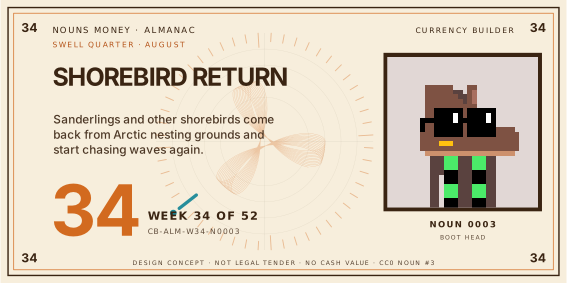
Week 34 · Noun #3 · boot
August
Sanderlings and other shorebirds come back from Arctic nesting grounds and start chasing waves again.
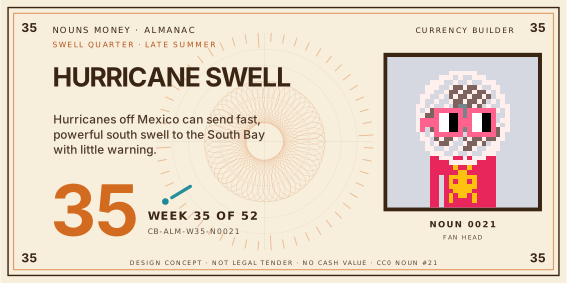
Week 35 · Noun #21 · fan
Late summer
Hurricanes off Mexico can send fast, powerful south swell to the South Bay with little warning.
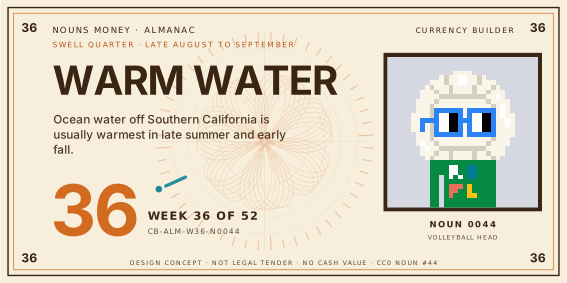
Week 36 · Noun #44 · volleyball
Late August to September
Ocean water off Southern California is usually warmest in late summer and early fall.
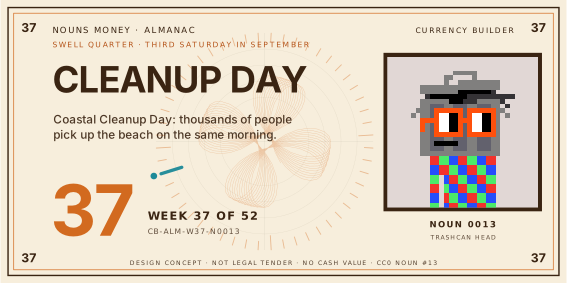
Week 37 · Noun #13 · trashcan
Third Saturday in September
Coastal Cleanup Day: thousands of people pick up the beach on the same morning.
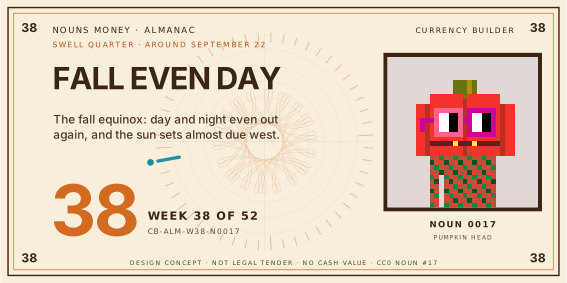
Week 38 · Noun #17 · pumpkin
Around September 22
The fall equinox: day and night even out again, and the sun sets almost due west.
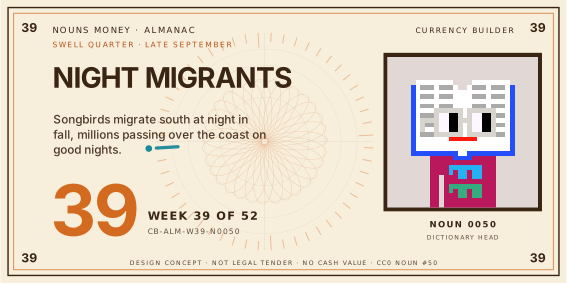
Week 39 · Noun #50 · dictionary
Late September
Songbirds migrate south at night in fall, millions passing over the coast on good nights.
October to December: Santa Anas, monarchs, first rain, the earliest sunset and the Christmas count.
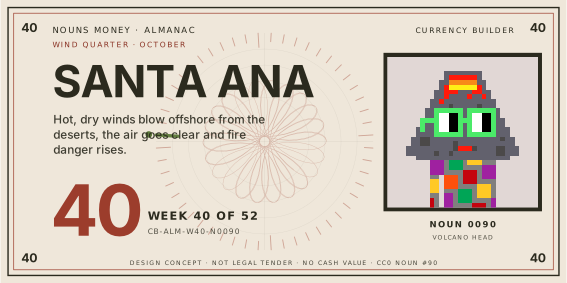
Week 40 · Noun #90 · volcano
October
Hot, dry winds blow offshore from the deserts, the air goes clear and fire danger rises.
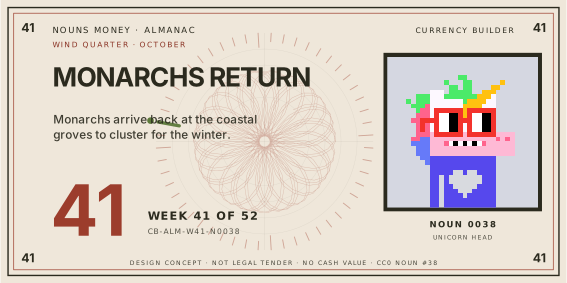
Week 41 · Noun #38 · unicorn
October
Monarchs arrive back at the coastal groves to cluster for the winter.
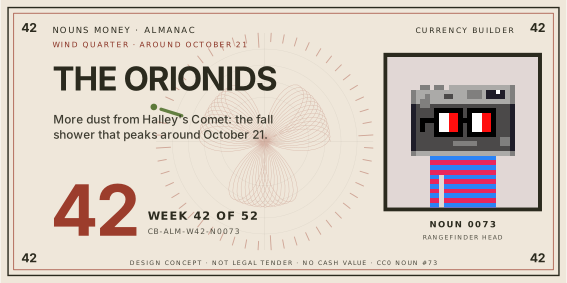
Week 42 · Noun #73 · rangefinder
Around October 21
More dust from Halley's Comet: the fall shower that peaks around October 21.
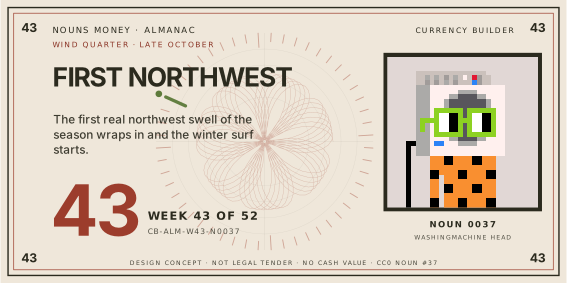
Week 43 · Noun #37 · washingmachine
Late October
The first real northwest swell of the season wraps in and the winter surf starts.
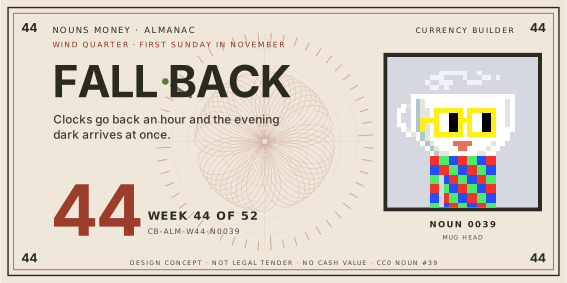
Week 44 · Noun #39 · mug
First Sunday in November
Clocks go back an hour and the evening dark arrives at once.
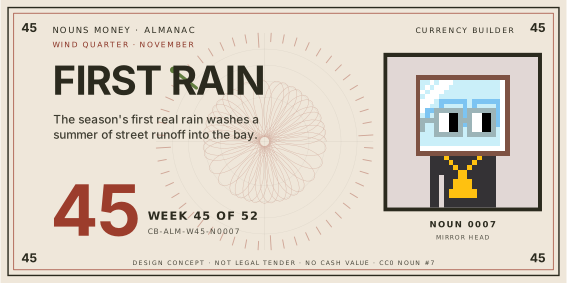
Week 45 · Noun #7 · mirror
November
The season's first real rain washes a summer of street runoff into the bay.
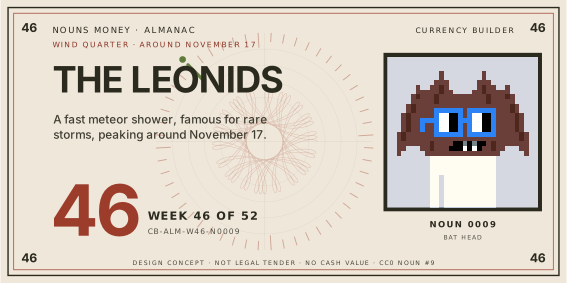
Week 46 · Noun #9 · bat
Around November 17
A fast meteor shower, famous for rare storms, peaking around November 17.
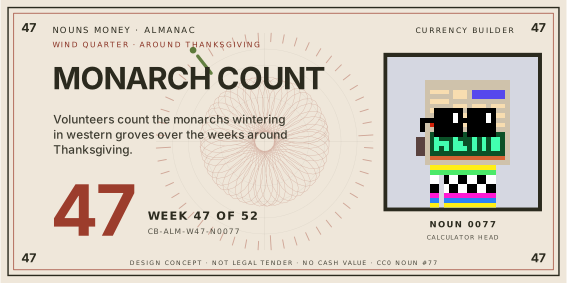
Week 47 · Noun #77 · calculator
Around Thanksgiving
Volunteers count the monarchs wintering in western groves over the weeks around Thanksgiving.
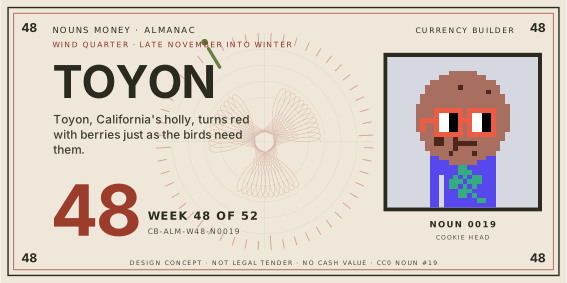
Week 48 · Noun #19 · cookie
Late November into winter
Toyon, California's holly, turns red with berries just as the birds need them.
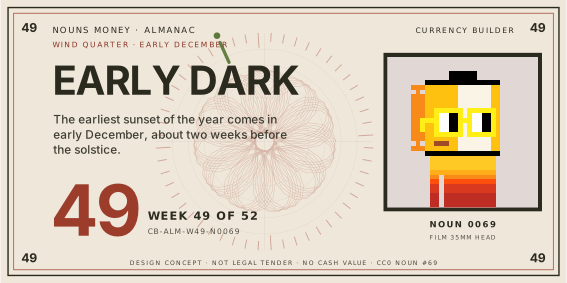
Week 49 · Noun #69 · film 35mm
Early December
The earliest sunset of the year comes in early December, about two weeks before the solstice.
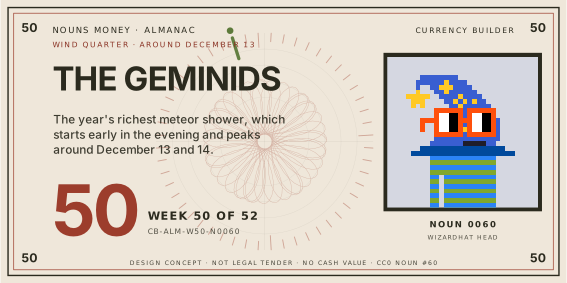
Week 50 · Noun #60 · wizardhat
Around December 13
The year's richest meteor shower, which starts early in the evening and peaks around December 13 and 14.
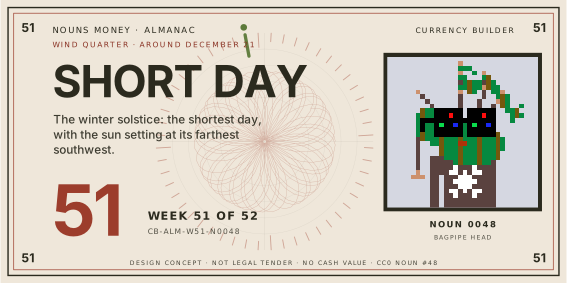
Week 51 · Noun #48 · bagpipe
Around December 21
The winter solstice: the shortest day, with the sun setting at its farthest southwest.
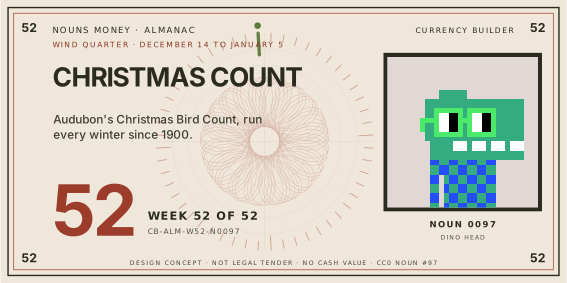
Week 52 · Noun #97 · dino
December 14 to January 5
Audubon's Christmas Bird Count, run every winter since 1900.
One note per person who logs that week's sign in the town almanac: a count, a photo, a time and a place. Zero meteors still counts.
Missed the Perseids? Trade a spare week for it. A full year is 52 notes, and every week is worth the same.
No one sells a note and no one redeems one for anything. The only thing a note proves is that someone was paying attention that week.
Fences, trails and closed seasons outrank any note. Plovers, terns and the El Segundo blue are watched from outside the fence, and grunion are never taken.
Each week's Noun is chosen for its head or accessory: a whale for each gray whale passage, a jellyfish for the by-the-wind sailors, a trash can for Coastal Cleanup Day, a field-guide dictionary for the night migrants and a dinosaur for the Christmas Bird Count. No Noun appears twice.
The pixels are drawn from the official CC0 Nouns trait data using each Noun's on-chain seed, as recorded in the Nouns #0–99 provenance file. Every note's reverse lists the traits and links to the Noun itself, and every week's page links the source for its natural event.