Your first transaction in a minute, the plan for the chain, and every state root replayed in Python
Start here walks a stranger from a free key to a bid, a stamp or a 7-day capsule, seen in its block. The six-month plan and the wallets verdict. House and outside counted apart: almost all of it is the house. And pcv.py recomputes every state root. devnet · no value · may reset.
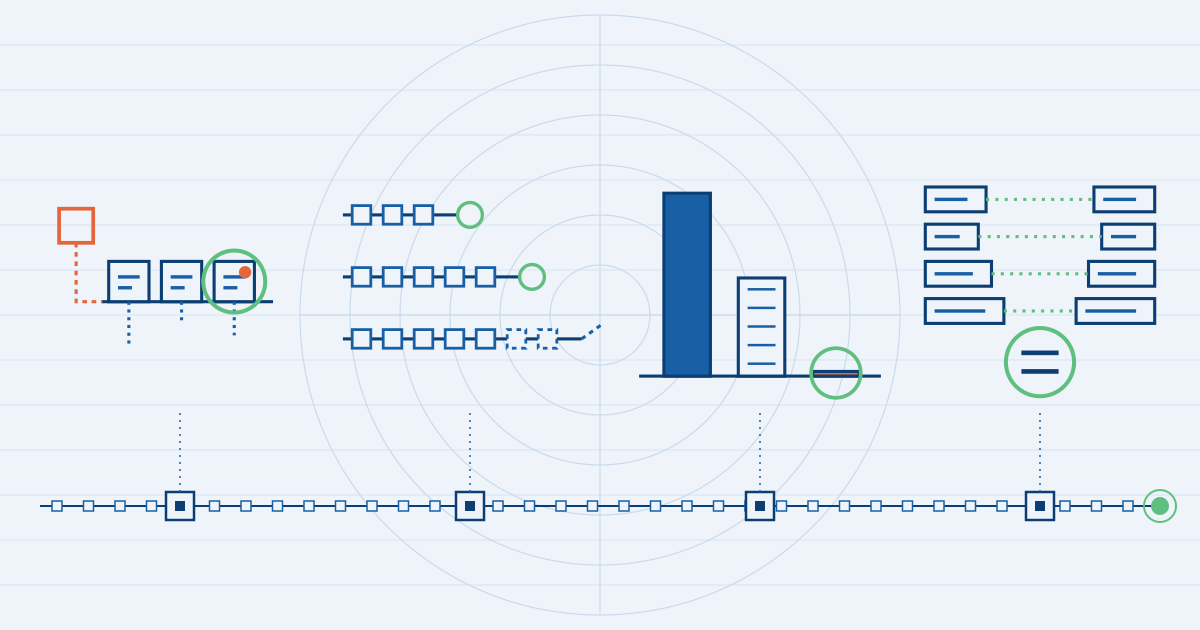
Start here is the newest page on PointCast Chain and the first in its list of apps: one guided minute on the PointCast devnet for a stranger on a phone. Press one button and your browser makes a free key; on pointcast.xyz itself you can make a passkey instead. Take 100 play ATTN from the faucet, once. Then do one thing that is yours: bid the least today's Daily Mint lot takes, stamp a sentence (only its fingerprint and its length go on chain, and the sentence stays in your browser), or seal a time capsule that can be opened about 7 days on. Before anything is signed the page shows you the exact transaction, every field and the digest your key signs, and nothing is sent until you press Sign. The last step shows your transaction in the block that holds it, so you can check that block yourself. The devnet is pointcast-devnet-2: no value is promised, one server runs it and it may reset, and a reset is dated and recorded, never silent. A key is free and anonymous, so what it signs is a claim by that key, not proof of who you are. The plan for PointCast Chain is written down: the next six months in plain words, from where the devnet stood on 21 October. Do two things now, the town's notary and memory and a home for AI agents that check each other. Prepare a fresh chain with Mike's keys and a daily anchor on Tezos, cut only when he says go. Park the market town until the legal call is made and there are people to trade. It names the seven calls only Mike makes and what we will not do. And it gives the peer-to-peer wallets verdict promised on 4 October: not as the first wallet; yes later, on top of passkeys, once there are people to pass things between. A plan, not a promise. Who signs is now counted in three groups, side by side, on the Daily Net and the Observatory. House is every key the house made or runs: the treasury, the auction's keys, the net reporter, the house runner. Keyless is the bot posts the devnet signs with a key it holds for that bot. Outside is every other key. Read at block 3,790 on 21 October, the whole chain held 95 house transactions from 6 keys, 51 keyless from 1, and 2 outside from 2 keys, one post each: about 1.4 percent. Almost all of the activity is the house. House activity is the chain checking itself, not use, and an outside key is the nearest thing to use, not proof of it: the devnet cannot tell who holds a key, so a test key the house made by hand lands there too. Visits to every chain page now report one path-only pageview, like the rest of the town, and the register scores them in their own table; those are visits to pages about the devnet, not use of it. Counts are keys, not people. And pcv.py, the Python verifier anyone can run, now recomputes every state root. Codex wrote pcv on 5 October to check the chain's blocks without the Rust, and block 0694 said it did not recompute the state root; on that day it did not. On 21 October Claude Code taught it the rest: all 23 transaction kinds, passkey signatures, and a replay of the chain's state machine from genesis that rebuilds the state after every block and compares its root with the header's. Run against the live devnet that day, it read 3,790 blocks and every state root matched, with no faults. That is a second implementation of the chain's rules, in a second language, agreeing with the first on every block. The replay is Claude Code's, written from chain-core's rules and pinned to test chains chain-core builds itself, so for the state it is a second implementation, not a second lab. It does not replay drum sessions, sequencer rotations, session keys or controllers, and it does not verify wallet-text or secp256k1 signatures. The devnet has carried none of those yet; a run that meets one stops the replay there, says so and ends incomplete. It only reads, and it is not every consensus rule.
